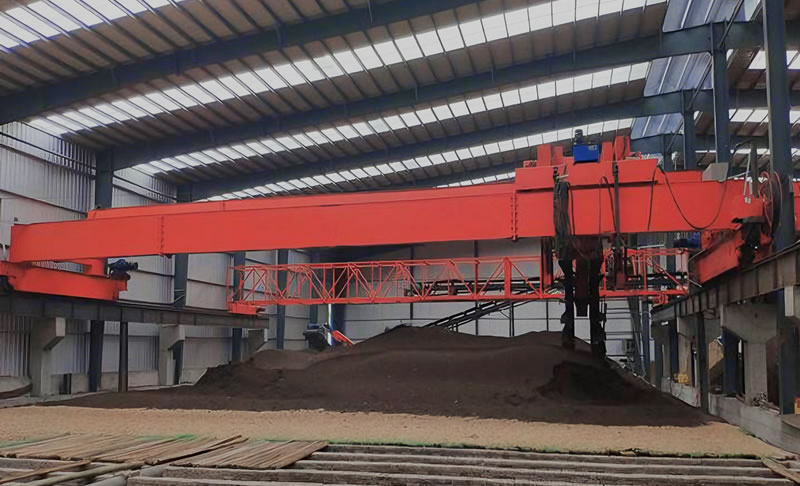
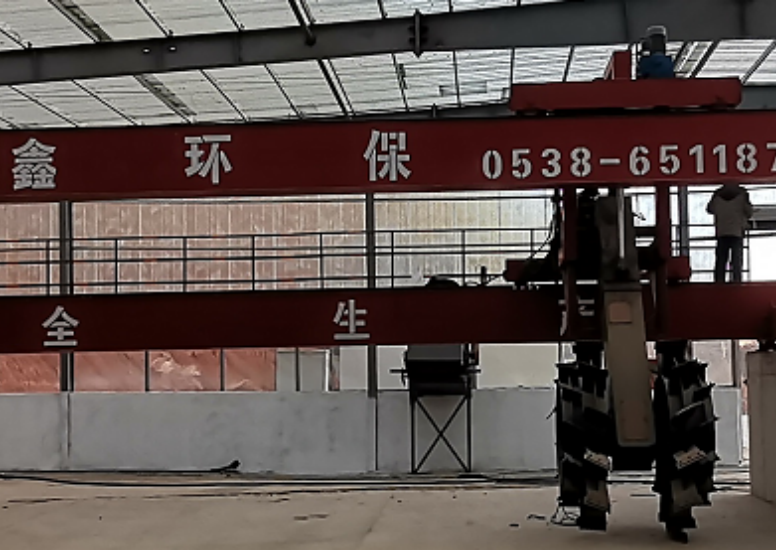
Installation and commissioning site of wheel flipping machine in Malaysia factory
2025-12-26 10:59:40
By : root
At the installation and commissioning site of the wheel flipping machine in the Malaysian factory, our company’s product quality ranks among the top in the industry, and every detail is strictly controlled. Its main features include high flipping depth, large span, low energy consumption, no dead corners flipping, and high automation. It is commonly used for fermentation and moisture removal operations in organic fertilizer plants, compound fertilizer plants, sludge and garbage dumps, horticultural fields, mushroom plantations, breeding farms, and other occasions.
The wheeled compost turner is the core fermentation equipment in organic fertilizer production lines, primarily designed for the aerobic composting of organic materials such as livestock and poultry manure, crop straw, and sludge. By turning, mixing, and aerating the materials, it accelerates the conversion of organic waste into high-quality organic fertilizer. Its performance characteristics are detailed across four key dimensions: operational performance, structural & operational performance, adaptability & expandability, and energy-saving & environmental performance.
I. Core Operational Performance
- High Turning Efficiency & Large Processing Capacity
- Adopting a tire-mounted travel system + high-speed rotating turning teeth structure, the machine features an operating width of 2–8m and a working depth of 0.6–1.5m.
- Single-unit daily processing capacity ranges from 500 to 5,000 m³ (depending on model size).
- The turning action lifts, crushes, and mixes materials, effectively breaking compaction layers. Compared to trough-type turners, it is more suitable for large-scale open-air composting yards.
- Uniform Aeration & Short Fermentation Cycle
- Rotating turning teeth force air into the material pile, maintaining an oxygen content of 5%–15% (the optimal range for aerobic fermentation).
- Inhibits the growth of anaerobic bacteria, reducing emissions of odorous gases such as ammonia and hydrogen sulfide.
- Dissipates excess heat (preventing temperatures exceeding 70℃, which deactivates beneficial microbes), shortening the fermentation cycle from 30–60 days (natural composting) to 10–20 days.
- Strong Material Adaptability
- Handles organic materials with a moisture content of 40%–70%, including chicken manure, cow dung, sheep manure, food waste, traditional Chinese medicine residues, and mushroom dregs.
- Adjustable turning speed and travel speed accommodate different material properties, preventing caking and ensuring uniform composting.
II. Structural & Operational Performance
- High Mobility & Flexible Transfer
- Tire-mounted design eliminates the need for fixed tracks, enabling free movement within the composting site.
- Suitable for both large-scale piles and flexible adjustment of working areas, adapting to production sites of all sizes (from small farms to large-scale fertilizer plants).
- High Automation & Easy Operation
- Equipped with a PLC control system, supporting both manual and automatic operation modes:
- Automatic mode: Preset turning paths, operation time, and frequency for unattended operation.
- Advanced models integrate GPS positioning and remote monitoring for real-time operation status tracking and fault alerts.
- Durability & Low Maintenance Costs
- Core components (turning teeth, transmission system, tires) are made of high-strength wear-resistant steel with sealed designs, adapting to harsh outdoor conditions (high temperature, high humidity, corrosive materials).
- Wear parts (e.g., turning teeth) are easy to replace. Daily maintenance only requires regular lubrication and component inspections, with maintenance costs significantly lower than those of trough-type turners with equivalent capacity.
III. Adaptability & Expandability
- Compatibility with Multiple Composting Processes
- Perfectly matches the windrow composting process and can be used with composting sheds or troughs.
- Integrates seamlessly with front-end preprocessing equipment (e.g., crushers, mixers) and back-end processing equipment (e.g., granulators, sieves) to form a complete organic fertilizer production line.
- Diversified Models for Customized Selection
- Classified by operating width:
- Small-scale (2–3m width): Suitable for on-farm self-use.
- Medium-scale (4–5m width): Ideal for small-to-medium organic fertilizer plants.
- Large-scale (6–8m width): Designed for large-scale organic fertilizer production bases.
- Users can select models based on daily processing capacity and site size.
IV. Energy-Saving & Environmental Performance
- Driven by diesel engines or electric motors, with an energy consumption of 0.5–1.2 kW·h/m³ per unit of material processed—30% more energy-efficient than traditional turning equipment.
- Some electric models support new energy power supply, further reducing carbon emissions.
- Significant Environmental Benefits
- Thorough composting kills over 90% of pathogenic microorganisms and parasite eggs, minimizing the risk of pollutant leakage.
- Reduces the concentration of odorous gas emissions, complying with national environmental discharge standards for organic fertilizer production.
V. Limitations
- Requires a relatively flat operating site: Slopes exceeding 15° or uneven terrain will affect travel stability and turning efficiency.
- For materials with ultra-high moisture content (>70%), auxiliary materials (e.g., straw, sawdust) must be added to adjust moisture levels, preventing material adhesion and blockage.
 WhatsApp
 Email
Email
 + 8613905485429