Professional Fertilizer Equipment, Straw Processing Equipment, Waste Processing Equipment and Mining Equipment Manufacturer.
Contact Info
Apartemen Neo Soho Lantai 10 Unit 10, Jl. Letjan S parman kav.28, Kel. Tanjung Duren Selatan Kec.
Professional Fertilizer Equipment, Straw Processing Equipment, Waste Processing Equipment and Mining Equipment Manufacturer.
Apartemen Neo Soho Lantai 10 Unit 10, Jl. Letjan S parman kav.28, Kel. Tanjung Duren Selatan Kec.
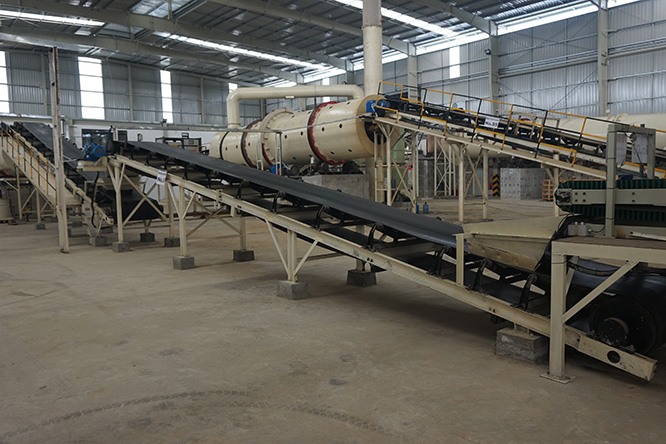
Our company has sent customer cases to Vietnam. Our product quality is among the best in the industry, and every detail is strictly controlled. The company is a well-known professional manufacturer of ammonia granulation equipment, with products exported to multiple countries. It can provide one-stop services such as process design, equipment manufacturing, installation and commissioning.
The amino acid granulation complete set of equipment is a crucial device for producing granular compound fertilizers, with its core mechanism relying on the heat and viscosity generated from the neutralization reaction of amino acids to achieve material granulation. Below is a detailed introduction regarding this equipment:
The primary ammonia-based granulation processes include the direct reaction in a rotary drum granulator using the ammonia method and the semi-slurry method with a tubular reactor. The former involves directly introducing liquid ammonia and sulfuric acid into the bed of the rotary drum granulator, where they react with a mixture of raw materials such as nitrogen, phosphorus, and potassium fertilizers along with recycled material. The reaction heat maintains the drum temperature at the granulation level, while the generated diammonium phosphate enhances the material’s viscosity, thereby achieving granulation. In the semi-slurry method with a tubular reactor, the tail gas from granulation is first used to dissolve the raw material ammonium phosphate, producing a slurry that is then fed into the tubular reactor. Here, it reacts with sulfuric acid and gaseous ammonia to form a diammonium phosphate slurry, which is subsequently sprayed into the granulator bed for rolling granulation.
Raw material supply system: Includes electronic belt scales, aggregate belt conveyors, and bucket elevators, which are used to accurately measure and transport nitrogen, phosphorus, potassium, and other raw materials to the granulator.
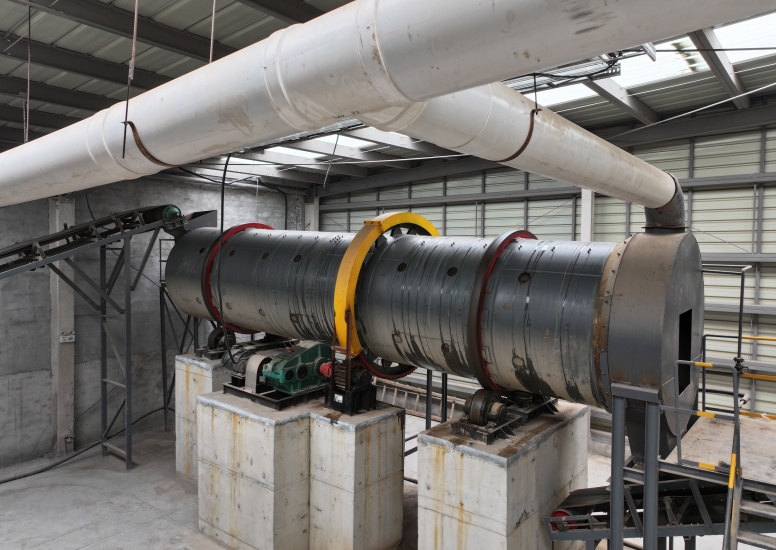
Reaction and Granulation System: The main equipment is the drum granulator, which serves as the key site for the neutralization reaction and granulation of materials. Additionally, it includes a tubular reactor (semi-paste process), acid pumps, ammonia distributors, and other components, which are used to uniformly add reactants such as sulfuric acid and liquid ammonia into the material.
Dry and Cool System: The dryer typically employs a rotary drum dryer, which utilizes heat sources such as flue gas to dry the granulated material and reduce its moisture content. The cooler primarily adopts a counterflow cooling method, allowing the material to cool to room temperature for subsequent packaging.
Screening and Crushing System: Composed of components such as vibrating screens and crushers, this system screens the dried and cooled material. Qualified particles proceed to the packaging process, while unqualified large particles are crushed and returned to the granulator for regranulation.
Emission Treatment System: This includes components such as cyclone dust collectors, bag filters, and scrubbers, designed to process exhaust gases generated during processes like granulation and drying. It recovers ammonia and removes dust to ensure environmentally compliant emissions.
Energy-saving and high-efficiency: Utilizing the heat from the ammonia neutralization reaction reduces the consumption of external heat sources, thereby lowering coal and electricity usage.
High greening rate: Enhanced material viscosity increases the single-pass greening rate by 20%-30%, with low re-circulation rate. The resulting product particles exhibit high density and smooth surface finish.
High product quality: It enables precise control of material pH, effectively increasing nitrogen content by 1%-1.5%, and can produce compound fertilizers with various formulations while being resistant to caking.
Environmental Protection and Energy Saving: The exhaust gas undergoes two-stage scrubbing, with the scrubbing liquid recycled. The heat from diluting concentrated sulfuric acid can be utilized for the vaporization of liquid ammonia, ensuring efficient energy utilization.
 WhatsApp
 Email
Email
 + 8613905485429