Professional Fertilizer Equipment, Straw Processing Equipment, Waste Processing Equipment and Mining Equipment Manufacturer.
Contact Info
Apartemen Neo Soho Lantai 10 Unit 10, Jl. Letjan S parman kav.28, Kel. Tanjung Duren Selatan Kec.
Professional Fertilizer Equipment, Straw Processing Equipment, Waste Processing Equipment and Mining Equipment Manufacturer.
Apartemen Neo Soho Lantai 10 Unit 10, Jl. Letjan S parman kav.28, Kel. Tanjung Duren Selatan Kec.
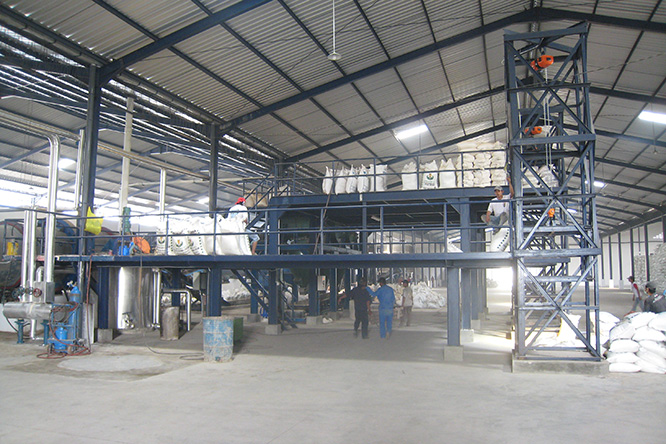
Install a urea melting granulation production line for a Malaysian client, who is a large-scale fertilizer production enterprise. This new production line has expanded the production scale and contributed to the local agricultural development.
Urea – based Compound Fertilizer Drum Spray Granulation Production Line:
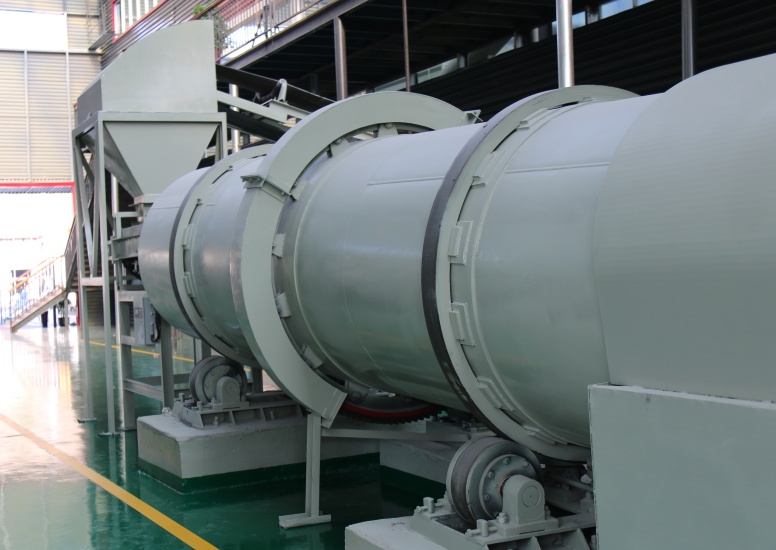
Process Flow: Part of the urea is continuously added to the urea melter, and steam (or heat – conducting oil) from a boiler is used to heat and melt the urea into a liquid state. The urea slurry is pressurized by a special pump and atomized and sprayed onto the material curtain in the drum granulator. At the same time, part of the urea, monoammonium phosphate, potassium chloride, filler and other qualified raw materials are transported to the relevant weighing equipment. After weighing, the powdery raw materials are transported to the mixer for intensive stirring and uniform mixing, and then transported to the drum granulator to fully contact with the melted slurry from the urea melter. Saturated steam is introduced at the same time, and the material forms a rolling bed by the friction generated when the drum granulator rotates. The extrusion force generated by rolling and the cohesive force of the urea slurry make the material agglomerate into balls. The formed particles are transported to a rotary dryer for heat exchange with the heat from the hot – blast stove, and then sent to a hot screen for particle sorting. The fine particles are directly returned to the drum granulator as cores to continue to participate in the agglomeration and ball – forming process. The screened semi – finished product particles are transported to a rotary cooler for cooling, the large particles are crushed by a crusher and then returned to the drum granulator to participate in the ball – forming process. The qualified products after screening are transported to a coater for film – coating treatment, and finally transported to an automatic packaging scale for weighing, packaging, and warehousing.
Key Equipment: Main equipment includes urea melters, drum granulators, rotary dryers, rotary coolers, screens, and coaters.
Mature and Reliable Process with High Operational Stability
This technology has undergone long-term industrial validation, featuring a simple and highly standardized process flow with a low equipment failure rate. It enables continuous, large-scale production, with the daily output of a single production line reaching hundreds or even thousands of tons, which can meet the mass production demands of large-scale chemical fertilizer enterprises.
Uniform Product Quality and Excellent Granule Properties
Molten urea droplets fall uniformly from top to bottom inside the prilling tower, where they fully contact and are evenly cooled and solidified by cold air. The resulting granules exhibit uniform particle size, smooth surface and high mechanical strength, which are resistant to breakage and have stable solubility—meeting the core quality requirements of urea granules for agricultural fertilization.
Relatively Low Energy Consumption with Significant Cost Control Advantages
The granulation process mainly relies on natural air cooling, eliminating the need for additional investment in large quantities of cooling media or complex cooling equipment. The energy consumption is only for heating urea to the molten state, and a small amount of electrical energy to power delivery pumps and fans. Compared with other granulation processes (such as extrusion granulation), it has lower overall energy consumption, which effectively reduces production costs.
High Degree of Automation with Minimal Manual Intervention
The production line can realize full-process automated control, ranging from urea melting, atomization and spraying, cooling and forming, to screening and return of off-spec materials. It requires little manual operation, which not only cuts labor costs but also avoids the impact of human factors on product quality, ensuring production consistency.
Good Environmental Performance with Low Pollution Emissions
No complex chemical reactions occur during the production process. The main emission is the cooled tail gas, which can meet discharge standards after simple dust removal treatment. In addition, off-spec granules can be directly returned to the melter for re-granulation, achieving a material utilization rate close to 100% with almost no raw material waste, which complies with the requirements of clean production.

 WhatsApp
 Email
Email
 + 8613905485429