Professional Fertilizer Equipment, Straw Processing Equipment, Waste Processing Equipment and Mining Equipment Manufacturer.
Contact Info
Apartemen Neo Soho Lantai 10 Unit 10, Jl. Letjan S parman kav.28, Kel. Tanjung Duren Selatan Kec.
Professional Fertilizer Equipment, Straw Processing Equipment, Waste Processing Equipment and Mining Equipment Manufacturer.
Apartemen Neo Soho Lantai 10 Unit 10, Jl. Letjan S parman kav.28, Kel. Tanjung Duren Selatan Kec.
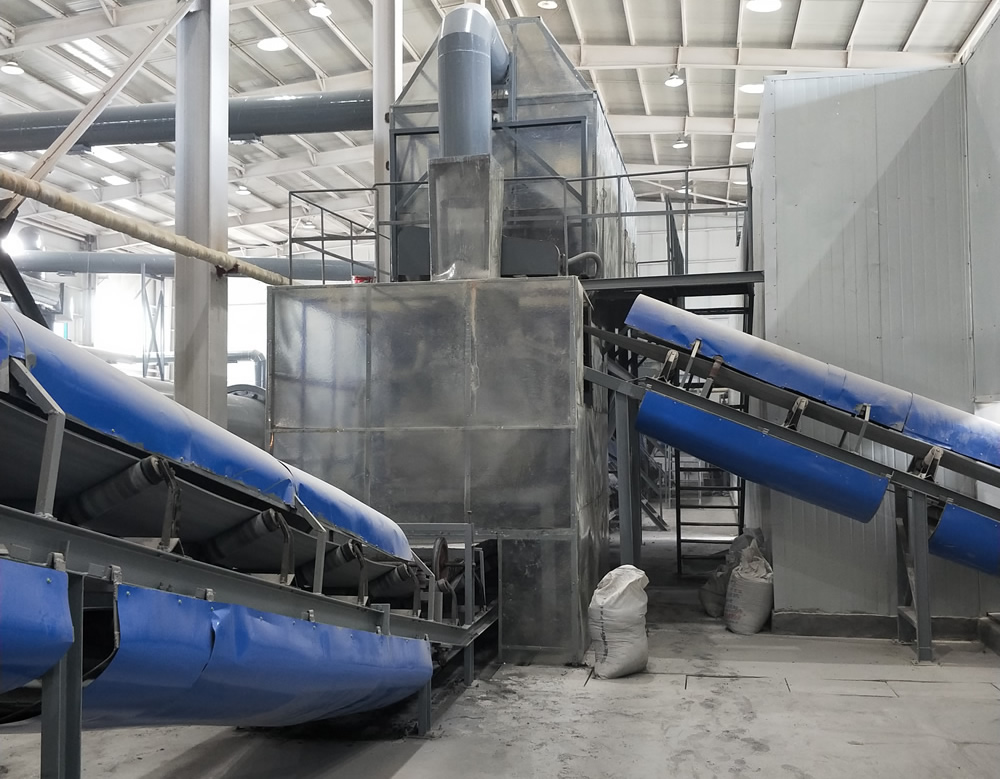
We have installed and debugged conveyor belt equipment for a Vietnamese customer who has been producing organic fertilizers for many years. The customer has advanced equipment advantages in the local fertilizer market, and the produced fertilizers are in short supply. In order to improve production efficiency, we have newly installed conveyor belt equipment.
Belt conveyor equipment “usually refers to a belt conveyor, which is a mechanical device that uses a conveyor belt as a load-bearing and traction component to continuously transport materials.
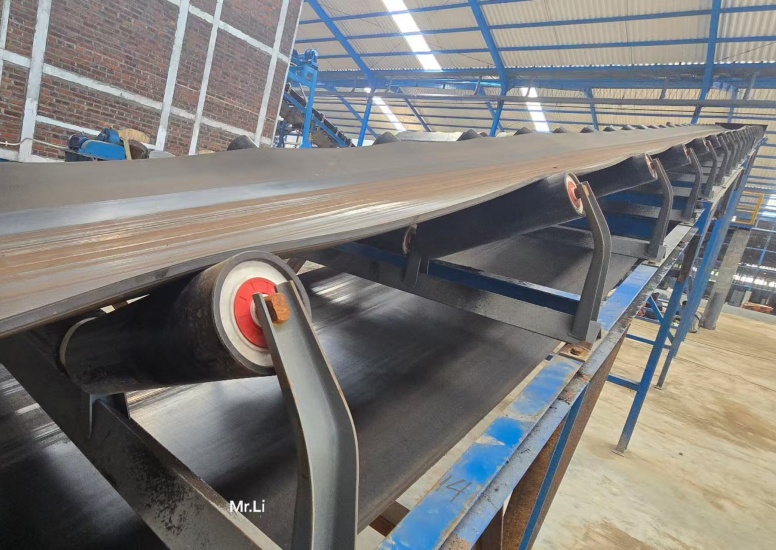
Simply put, it consists of a conveyor belt (carrying materials), a driving device (providing power), a drum (changing the direction of the conveyor belt and transmitting power), a bracket (supporting the entire structure), and other parts. The drum is driven by a motor to rotate, driving the conveyor belt to circulate and transport materials from one location to another.
Core features and advantages
-Continuous and efficient: capable of achieving continuous and automated material handling with high efficiency.
-Strong adaptability: It can be transported horizontally, obliquely (even at large angles), and can also form complex spatial transportation routes.
-Widely used: It has a large number of applications in various industries such as mining, ports, factories, logistics, food, medicine, and chemical engineering.
-Low cost: Compared to other transportation methods, its initial investment and operation maintenance costs are relatively low.
-Easy to operate: The structure is relatively simple, easy to operate and maintain.
Main components
1. Conveyor belt: a circular belt that directly carries materials, with various materials such as rubber PVC、PU、 Nylon, stainless steel, etc. are selected based on the characteristics of the conveyed material, such as temperature, corrosiveness, and weight.
2. Drive device: usually composed of a motor, a reducer, and a drive drum, it is the power source of the equipment.
3. Driven drum: located at the end of the conveyor belt, used to change the direction of the conveyor belt and tension it.
4. Roller: Installed on a bracket, it is used to support the conveyor belt and the materials on it, reducing running resistance.
5. Tensioning device: Ensure that the conveyor belt has sufficient tension to prevent slipping.
6. Rack and bracket: support the entire conveyor system.
Common types (classified by conveyor belt)
-Ordinary conveyor belt: such as rubber conveyor belt, suitable for general materials.
-Heat resistant conveyor belt: used for conveying high-temperature materials such as cement and coke.
-Cold resistant/oil resistant/acid alkali resistant conveyor belt: suitable for material transportation in special environments.
-Food grade conveyor belt: made of materials such as PVC and PU, meeting hygiene standards, used in the food processing industry.
-Metal mesh belt/chain plate conveyor belt: used for high-temperature drying, cooling, cleaning and other processes.
In summary, conveyor belt equipment is one of the essential core equipment in modern industrial material handling systems, which greatly improves production automation and logistics efficiency.
 WhatsApp
 Email
Email
 + 8613905485429