Install and debug electronic batching machines for Laotian customers
2026-01-14 11:07:29
By : root
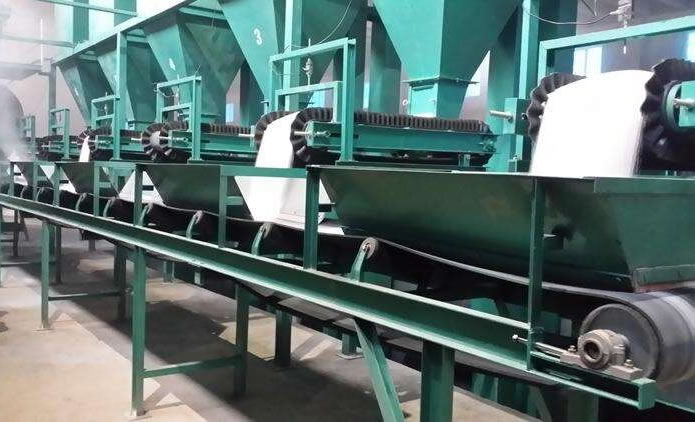
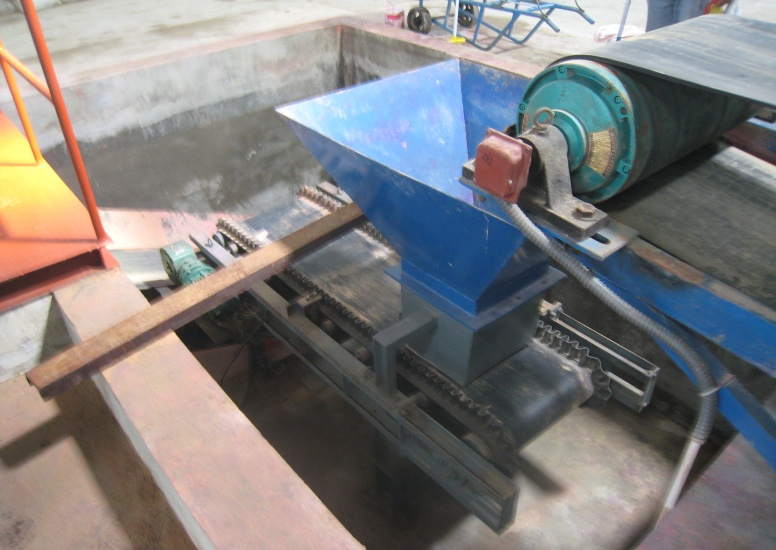
We installed and debugged the electronic batching machine for Laos customers. Our company sent installation personnel to work overtime to install and debug the new China Laos railway transportation equipment. By adding this equipment, the efficiency of the fertilizer plant was greatly improved.
The fertilizer electronic batching machine is an automated device that integrates electronic weighing and intelligent control technologies for precise proportioning of multiple raw materials in fertilizer production. It can largely replace manual operations, improve the efficiency and quality of fertilizer production, and serves as one of the core equipment in modern fertilizer production lines. Below is its detailed introduction:
Core Components
- Storage Module: Mostly designed with a multi-bin structure, it can simultaneously store main materials such as nitrogen, phosphorus, and potassium, as well as auxiliary materials including medium and trace elements and microbial agents. Some equipment adopts a detachable structure for storage bins, which can be flexibly adjusted according to the types of raw materials. For example, the Heda Intelligent Fertilizer Batching Machine is equipped with 5 raw material hoppers plus an additional hopper for medium and trace elements.
- Measurement and Sensing Module: Its core consists of high-precision load cells, combined with metering devices like electronic belt scales or nuclear scales. The static metering accuracy of some equipment can reach ±0.5%, and even the error margin of organic fertilizer batching machines can be controlled within 0.1%. It captures the weight data of materials in real time and feeds it back to the control system.
- Control Module: It usually takes PLC (Programmable Logic Controller) or industrial computer as the core. Many devices are also equipped with touch screens and support voice interaction. It can store hundreds of fertilizer formulas, connect to cloud-based soil databases and crop expert models to automatically generate customized formulas, and adjust the feeding volume in real time to correct batching deviations.
- Conveying and Mixing Module: Raw materials are transported via belt conveying or auger conveying devices. Some are designed with anti-adhesion coatings for adhesive raw materials and adopt closed conveying for lightweight raw materials. The mixing chamber is responsible for evenly stirring the proportioned raw materials. Some equipment can also be equipped with liquid spraying systems to realize uniform addition of pesticides and liquid additives.
Main Advantages
- Accurate Batching: With electronic sensing and intelligent regulation, it avoids the 5%-10% error of traditional manual batching, ensures consistent nutrient ratio of each batch of fertilizer, and guarantees stable fertilizer efficiency. For instance, when applied in the production of special fertilizer for sugar oranges, it helps improve fruit quality and yield.
- Significant Efficiency Improvement: The automated process greatly reduces labor input. For example, the Heda Fertilizer Batching Machine only requires 2-5 operators, with a production capacity of 4-7.2 tons per hour, which is 3-5 times higher than that of traditional equipment, and it supports 24-hour continuous operation.
- Strong Adaptability: It can handle raw materials of different forms such as granular and powdered, and is suitable for the production of various fertilizers including compound fertilizer, organic fertilizer, and slow-release fertilizer. Its modular design allows adjusting the number of bins and conveying methods according to production scale.
- Environmentally Friendly and Easy to Maintain: Material-contacting parts are mostly made of stainless steel, featuring corrosion resistance and long service life. Some equipment is equipped with dust removal ports or dust collection devices to reduce dust pollution during production. Meanwhile, most equipment is easy to maintain, and the service life of core components can reach 5-10 years.
Typical Application Scenarios
-
- Agricultural Materials Service Stations: Small intelligent fertilizer batching machines can formulate customized formulas on-site and batch fertilizers quickly according to farmers’ soil test results and planted crops, meeting their personalized needs.
- Large-scale Fertilizer Plants: Large multi-bin dynamic batching machines can be integrated into production lines to achieve continuous batching of compound fertilizer and organic fertilizer, ensuring the stability of large-batch production. For example, Morocco’s OCP Group has purchased such equipment for African smart agriculture projects.
- Agricultural Projects: When governments or agricultural departments carry out soil testing and formulated fertilization as well as soil improvement projects, they can establish fertilizer batching stations through such equipment to realize safety traceability of agricultural input products and unified and precise supply of fertilizers in the region.
 WhatsApp
 Email
Email
 + 8613905485429