Installation of High Tower Spray Granulation Equipment for Egyptian Clients
2026-01-09 11:02:18
By : root
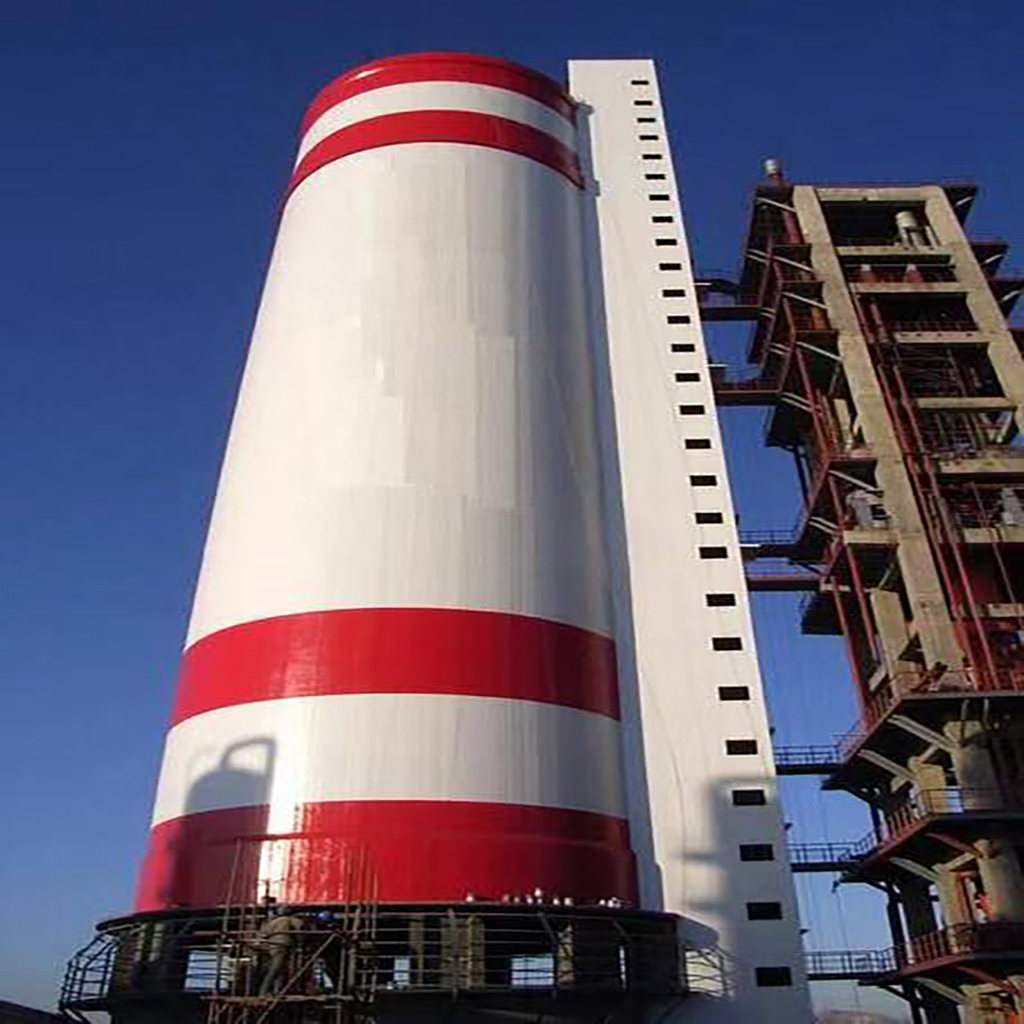
The Egyptian client has been operating an organic fertilizer factory for many years, collaborating with our company on multiple occasions to explore and implement new fertilizer production technologies. They have invested in new equipment to provide technical support for the company’s development. This time, to enhance production efficiency, they have newly installed a high-tower spray granulation unit
High-Tower Slurry Spray Granulation Equipment: Core Equipment for Compound Fertilizer Production
Basic Definition and Core Principle
High-tower slurry spray granulation equipment (also known as high-tower molten slurry spray granulation system) is an advanced process equipment for the production of urea-based/nitramine-based compound fertilizers. Its core principle is to spray molten fertilizer slurry from a high altitude, and complete cooling and solidification by gravity and counter-current air to form uniform granular products.
Core Working Principle
- Raw Material Melting and Mixing: Melt urea (or ammonium nitrate) at high temperature (above about 132.7℃), and fully mix it with raw materials such as ammonium phosphate and potassium chloride to form a uniform slurry.
- High-Altitude Spray Atomization: The slurry is delivered to the top of the high tower through a conveying system, and sprayed into tiny droplets at high speed through a rotary nozzle (the diameter of the nozzle hole is usually 2.5-3.0mm).
- Cooling, Solidification and Forming: During the falling process (the tower height is usually 90-120m), the droplets contact the cold air rising from the bottom of the tower in counter-current to complete heat exchange and cool and solidify into spherical particles.
- Finished Product Processing: The particles fall into the bottom of the tower, and after screening and surface treatment (such as anti-caking coating), the final product is obtained.
Equipment System Composition
| System Module |
Core Equipment |
Main Function |
| Tower Structure |
Granulation tower (90-120m high, 10-18m in diameter) |
Provide sufficient cooling space to ensure full solidification of particles |
| Melting and Mixing System |
Melting tank, mixing tank, agitator, steam jacket |
Melt and uniformly mix raw materials, maintain slurry temperature and fluidity |
| Conveying System |
Bucket elevator (maximum lifting height 120m), thermal insulation pipeline |
Safely deliver slurry to the top of the tower to prevent solidification and blockage |
| Core Granulation Equipment |
Rotary nozzle (with anti-sticking wall structure), granulator |
Atomize slurry to form uniform droplets |
| Cooling System |
Air inlet, air outlet, air distributor |
Control air velocity and temperature in the tower to ensure cooling effect |
| Finished Product Processing System |
Vibrating screen, coating machine, packaging machine |
Screening and classification, anti-caking treatment, finished product packaging |
| Control System |
DCS control system, temperature/pressure sensor |
Full automatic control to ensure process stability |
Performance Characteristics and Advantages
Product Advantages
- Excellent Particle Quality: The particles are uniform and round (particle size 2-4mm), with smooth and dense surface, high compressive strength (≥25N), and not easy to pulverize and break.
- Good Physicochemical Properties: Low moisture content (<1%), low caking rate, acicular pores inside the particles, fast dissolution rate and high water solubility (≥90%).
- Uniform Nutrient Distribution: Each particle has consistent nutrients without stratification, ensuring stable fertilization effect.
Process Advantages
- No Drying Process Required: Utilize natural cooling and solidification, relatively low energy consumption, and reduce exhaust gas emission.
- High Degree of Automation: Full computer control, reduce manual intervention, and ensure stable product quality.
- Continuous Production: Can operate continuously for 24 hours with large production capacity (1000-3000 tons per day for a single tower).
Application Scope and Raw Material Limitations
Application Scope
- Mainly used for the production of high-concentration urea-based compound fertilizers (N≥22%), especially suitable for formulas with balanced NPK ratios.
- Suitable for producing water-soluble compound fertilizers for efficient fertilization methods such as drip irrigation and sprinkler irrigation.
- A supported agricultural project encouraged by the state, in line with the development direction of agricultural modernization.
Raw Material Limitations
- Liquid Phase Requirement: The proportion of molten urea (or ammonium nitrate) shall not be less than 30% to ensure slurry fluidity.
- Phosphorus Content Limit: Phosphorus content ≤15%. Excessively high phosphorus content is prone to cause high slurry viscosity and nozzle blockage.
- Raw Material Purity Requirement: High-purity raw materials are required. Excessively high impurity content will affect product quality and equipment operation.
- Formula Limit: Not suitable for low-nitrogen, high-phosphorus/high-potassium formulas, which are difficult to form stable slurry.
Advantages and Disadvantages Comparison
| Advantages |
Disadvantages |
| Uniform and round particles, good marketability |
High equipment investment (tens of millions yuan for a single tower) and long construction period |
| Low moisture content, low caking rate, good storage stability |
High energy consumption, strict requirements for power and steam supply |
| Uniform nutrient distribution, good fertilizer efficiency |
Strict restrictions on raw material formulas and narrow application scope |
| No drying process required, good environmental protection |
Nozzles are prone to blockage and require regular maintenance and cleaning |
| High degree of automation, high production efficiency |
High tower body, strict requirements for geological conditions and wind load |
Industry Development Trends
- Technical Optimization: Improvement of nozzle structure (anti-blocking and corrosion-resistant) to enhance equipment operation stability; optimization of mixing tank (adding thermal insulation and improving agitator) to improve slurry uniformity.
- Development of Low-Tower Technology: Development of 60-80m low-tower process to reduce construction cost and technical difficulty while ensuring product quality.
- Intelligent Upgrading: Introduction of AI control system to real-time monitor parameters such as slurry temperature, viscosity and air velocity to achieve precise control.
- Environmental Protection Improvement: Optimization of tail gas treatment system to reduce dust emission; development of low-energy-consumption process to reduce carbon footprint.
- Formula Expansion: Expanding the scope of applicable formulas through additive technology to produce low-nitrogen, high-phosphorus/high-potassium compound fertilizers.
Comparison with Other Granulation Processes
| Process Type |
Core Differences |
Product Characteristics |
Investment Cost |
| High-tower slurry spray granulation |
High-altitude cooling and solidification, no drying required |
Round particles, high water solubility, low caking rate |
High (tens of millions yuan for a single tower) |
| Rotary drum granulation |
Coating and granulation in the drum, drying required |
High particle strength, suitable for base fertilizer, flexible formula |
Medium |
| Spray granulation and drying |
Slurry spraying on return materials, hot air drying |
Round particles, high hardness, suitable for mechanical sowing |
Medium-high |
Key Technical Parameter Reference
| Parameter Item |
Typical Value |
Impact |
| Tower Height |
90-120m |
Determine cooling time and affect particle solidification degree |
| Nozzle Rotating Speed |
150-300rpm |
Affect droplet size and uniformity |
| Slurry Temperature |
135-145℃ |
Ensure fluidity and prevent crystallization and blockage |
| Air Velocity |
0.3-0.5m/s |
Control cooling rate and avoid particle deformation |
| Particle Size |
2-4mm |
Affect product applicability and marketability |
| Production Capacity |
1000-3000 tons/day |
Equipment scale and economic benefit index |

 WhatsApp
 Email
Email
 + 8613905485429