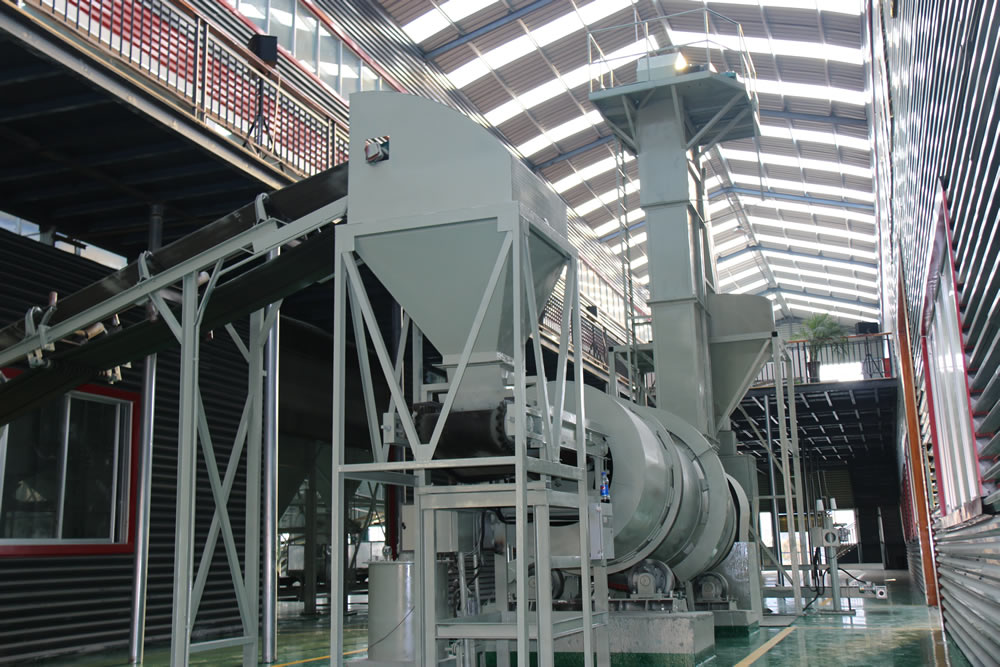
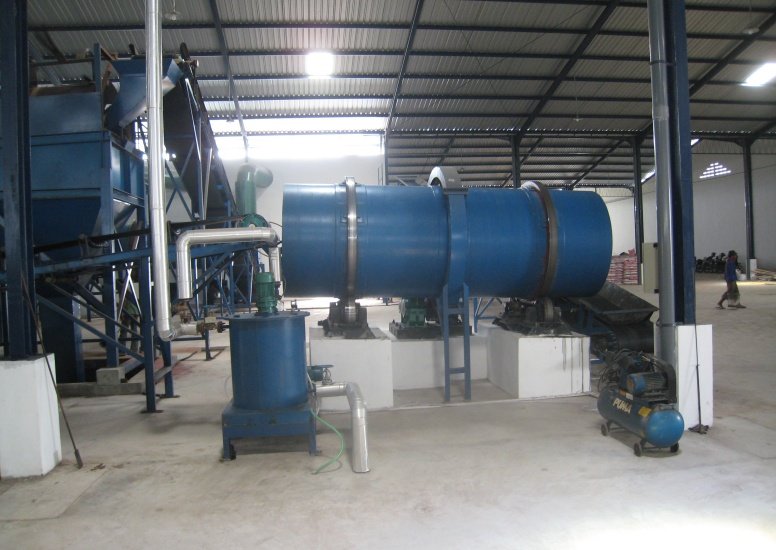
Malaysian customer installs and debugs drum coating machine.
2026-01-06 11:19:20
By : root
The Malaysian customer contacted our company through the internet to install and debug the drum coating machine. The drum coating machine has become a core equipment for fertilizer enterprises to improve product quality and enhance market competitiveness. From anti caking to slow-release, from appearance optimization to functional enhancement, its application value runs through the entire process of fertilizer production. Choosing appropriate equipment configuration and process solutions can help customers achieve triple benefits of product premium, cost reduction, and environmental compliance, helping enterprises seize the opportunity in the transformation of green agriculture.
The rotary drum coating machine (also known as rotary coating machine or drum coater) is a core equipment in the deep processing of fertilizers. Through an inclined rotating drum and precision spraying system, it uniformly coats functional layers on particle surfaces, solving problems such as caking, moisture absorption, and nutrient loss, while enhancing product added value and market competitiveness. Widely used in production lines for compound fertilizers, organic fertilizers, bio-fertilizers, and slow-release fertilizers, it is an essential equipment for large-scale fertilizer enterprises.
Core Application Fields & Scenarios
1. Compound/Mixed Fertilizer Industry (Accounting for ~85%)
- Anti-caking Coating: Coating with paraffin, mineral oil, diammonium phosphate, etc., to isolate air and moisture, solving the storage caking problem of high-concentration compound fertilizers (e.g., NPK ≥ 45%). A large-scale compound fertilizer plant reduced the caking rate from 35% to below 5% after application.
- Appearance Optimization: Improving particle brightness and uniformity to enhance market attractiveness, with a premium of 50-100 RMB per ton.
- Nutrient Regulation: Adding trace elements (zinc, boron, iron, etc.) to produce customized formula fertilizers for different crops.
2. Organic/Bio-organic Fertilizer Industry (Growth Rate +15%)
- Microbial Inoculant Coating: Protecting beneficial bacteria such as Bacillus subtilis and Bacillus amyloliquefaciens, increasing bacterial survival rate by 30%+ and extending product shelf life.
- Humic Acid/Amino Acid Coating: Enhancing organic fertilizer stability, reducing nutrient loss, and improving soil improvement effects.
- Deodorization: Coating with plant essential oils to reduce odors, improving storage and application experience.
3. Slow/Controlled-release Fertilizer Industry
- Polymer Coating: Producing sulfur-coated urea and resin-coated compound fertilizers to achieve 3-6 months of slow nutrient release, reducing fertilization frequency and increasing utilization rate by 30%+.
- Urea-formaldehyde/Monoammonium Phosphate Coating: Forming slow-release layers through chemical reactions, suitable for field crops, cash crops, and landscape applications.
4. Other Special Applications
- Feed Additives: Coating vitamins and probiotics to prevent oxidation and deliquescence, applicable to large-scale breeding enterprises.
- Industrial Particles: Such as refractory materials and catalyst carriers, improving fluidity and wear resistance.
- Saline-alkali Soil Special Fertilizers: Coating modifiers to reduce soil salinity damage and enhance crop stress resistance.
Customer Value & Benefit Analysis
| Value Dimension |
Specific Benefits |
Data Reference |
| Economic Benefits |
Product premium, loss reduction, cost saving |
Value-added 50-200 RMB per ton, annual revenue increase up to millions of RMB |
| Quality Improvement |
Reduced caking rate, increased bacterial survival rate, optimized appearance |
Caking rate ≤5%, bacterial survival rate ≥85%, product qualification rate 99%+ |
| Market Competitiveness |
Differentiated products, customized services |
Customer repurchase rate increased by 20%, new customer growth by 35% |
| Environmental Benefits |
Reduced nutrient loss, decreased environmental pollution |
Nutrient utilization rate increased by 30%, reduced non-point source pollution |
Equipment Selection & Configuration Recommendations
1. Capacity Matching (Based on Customer Annual Output)
| Annual Output |
Recommended Specification |
Capacity Range |
Applicable Customers |
| 50,000-100,000 Tons |
Φ1.5×4m~Φ1.8×5m |
1-3 t/h |
Small and medium-sized organic fertilizer plants |
| 100,000-200,000 Tons |
Φ2.0×6m~Φ2.2×6m |
3-8 t/h |
Medium-sized compound fertilizer plants |
| 200,000-500,000 Tons |
Φ2.4×7m~Φ2.6×8m |
8-15 t/h |
Large-scale fertilizer enterprises |
| Above 500,000 Tons |
Customized large model |
15-50 t/h |
Group production bases |
2. Material Selection
- Ordinary Fertilizers: Q235B + anti-corrosion coating, cost-effective.
- Bio-fertilizers/Acidic Fertilizers: 304 stainless steel, corrosion-resistant, ensuring product purity.
- High-end Slow-release Fertilizers: 316L stainless steel, meeting GMP standards, suitable for food-grade coating materials.
3. Core Configuration Recommendations
- Dual-spray Gun System: Liquid + powder composite spraying, suitable for various coating processes.
- Temperature Control Device: Low-temperature system (≤40℃) for bio-fertilizers, heating system (80-120℃) for slow-release fertilizers.
- Frequency Conversion Speed Regulation: Adapting to different particle sizes (2-5mm) and coating thickness requirements.
- Dust Removal System: Reducing dust pollution and improving workshop environment quality.
Key Success Factors for Customers
- Process Matching: Select appropriate coating agents (liquid/powder/composite) based on fertilizer type; e.g., low-temperature liquid spraying is preferred for bio-fertilizers.
- Operational Standards: Control drum speed (8-15 rpm), inclination angle (3°-5°), and material residence time (15-30 minutes) to ensure coating uniformity.
- Maintenance: Regularly clean nozzles and inspect flight wear. A customer reduced equipment failure rate by 65% and extended service life to 8+ years through standardized maintenance.
- Customized Solutions: Provide personalized equipment and process design based on customer product characteristics and market positioning.
Industry Development Trends & Customer Opportunities
- Green Environmental Protection: Water-based coating agents replacing solvent-based ones to reduce VOC emissions, complying with environmental policies.
- Intelligent Upgrading: PLC control system + online detection, realizing automatic adjustment of coating thickness and reducing manual intervention.
- Multifunctional Integration: Granulation-coating integrated equipment, reducing investment costs and saving 30%+ workshop space.
- Customization Demand: Small-batch, multi-variety coating services, adapting to family farms and characteristic planting industries.
 WhatsApp
 Email
Email
 + 8613905485429