Professional Fertilizer Equipment, Straw Processing Equipment, Waste Processing Equipment and Mining Equipment Manufacturer.
Contact Info
Apartemen Neo Soho Lantai 10 Unit 10, Jl. Letjan S parman kav.28, Kel. Tanjung Duren Selatan Kec.
Professional Fertilizer Equipment, Straw Processing Equipment, Waste Processing Equipment and Mining Equipment Manufacturer.
Apartemen Neo Soho Lantai 10 Unit 10, Jl. Letjan S parman kav.28, Kel. Tanjung Duren Selatan Kec.
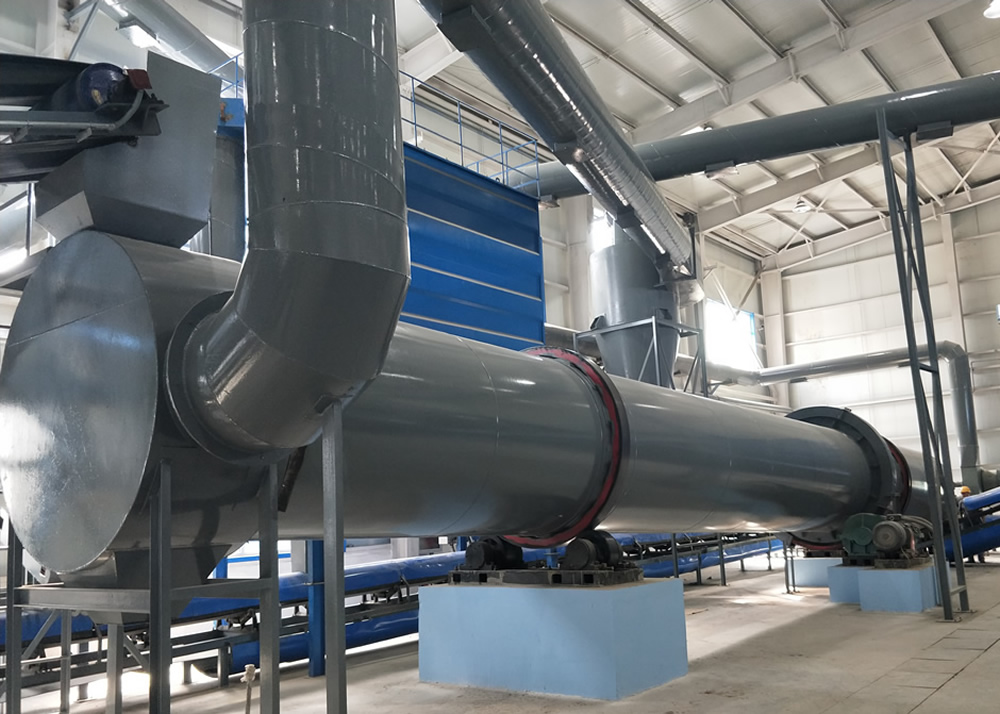
The Malaysian customer installed and debugged fertilizer cooling equipment. The customer has maintained close cooperation with our company for many years. In order to improve product quality and production efficiency, we have newly installed fertilizer cooling equipment, providing technical support for the development of the customer’s company.
Fertilizer cooling equipment is the core post-treatment equipment in the production lines of organic fertilizers, compound fertilizers, blended fertilizers, slow-release fertilizers, water-soluble fertilizers, etc. Its main function is to rapidly reduce the temperature of high-temperature fertilizers that have just been granulated and dried, while removing moisture, preventing caking, and ensuring the quality and storage safety of the finished products. It is widely used in various fertilizer production scenarios.
Core function of equipment
Rapid cooling: The temperature of freshly dried and granulated fertilizer is usually between 60-90℃. Direct packaging can easily cause burns from high temperatures and damage to packaging bags. Cooling equipment can quickly reduce the temperature to room temperature or slightly above (≤35-40℃), meeting the packaging requirements.
Anti-caking and quality assurance: Residual heat and moisture from high-temperature fertilizers can cause moisture absorption, softening, and adhesion during storage, leading to caking. After cooling, the particles can solidify, reducing moisture activity, avoiding caking, ensuring particle integrity, and enhancing product appearance.
Eliminate excess moisture: During the cooling process, the free moisture on the surface of the particles is carried away by the airflow, further stabilizing the moisture content of the fertilizer, preventing mold growth and nutrient evaporation during storage, and extending the shelf life.
Facilitating subsequent processes: The cooled fertilizer has better hardness and fluidity, which is more conducive to subsequent operations such as screening, coating, metering, and packaging, reducing equipment wear and material loss.
Ensure production safety: Prevent high-temperature materials from accumulating heat in silos and packaging processes, which could lead to safety hazards such as spontaneous combustion and packaging fires. This is especially applicable to organic fertilizer and fertilizer production lines with high carbon content.
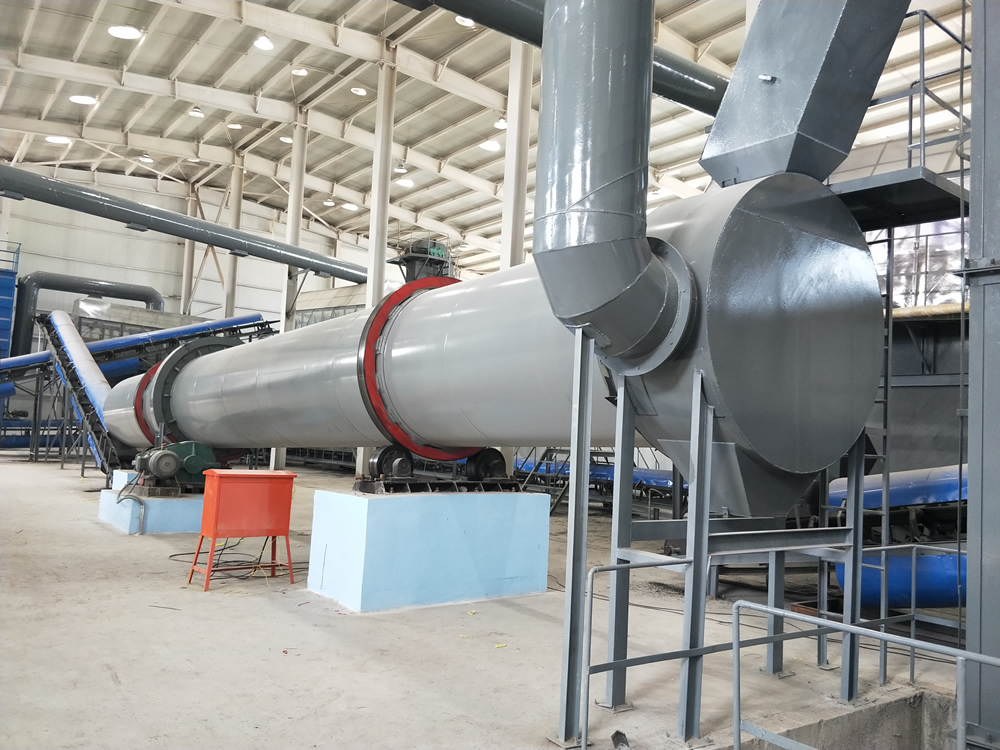
Specific application scenarios and process locations
The fertilizer cooling equipment, a core device in the latter stage, is fixedly connected after the drying and granulation processes and before the screening, coating, and packaging processes. It serves as a crucial node in the production line, with specific application scenarios as follows:
Compound fertilizer production line
Raw material batching → granulation (disc, rotary drum, extrusion) → drying → cooling by roller / vertical cooler → screening → coating → packaging.
Compound fertilizer granules have high hardness and large production volume, making the roller cooler a mainstream choice. It can be matched with continuous production, and after rapid cooling, coating is carried out to prevent the coating agent from failing due to high temperature, thereby enhancing the slow-release effect.
Organic fertilizer production line
Fecal fermentation → crushing → batching → granulation → drying → cooling by cooling equipment → screening → packaging.
Organic fertilizer particles are loose and have a relatively high moisture content. The cooling process not only reduces temperature but also further removes moisture, preventing secondary fermentation, heat generation, and agglomeration of the finished product during storage. At the same time, it eliminates the slight odor remaining from fermentation.
Slow/controlled release fertilizer production line
Base material granulation → drying → precise cooling → coating (resin, sulfur coating) → secondary curing → packaging.
This type of fertilizer is highly sensitive to temperature. High temperatures can damage the coating material, leading to the loss of its slow-release function. Therefore, vertical or fluidized bed coolers are typically used to ensure uniform cooling and precise temperature control, thereby guaranteeing the quality of the coating.
Bulk Blend Fertilizer (BB Fertilizer) Production Line
Monomer raw material screening → metering and blending → cooling and conditioning → packaging.
During the blending and conveying process, some monomer raw materials (such as urea) may heat up due to friction. Cooling equipment can quickly reduce the temperature of the mixture, preventing chemical reactions and moisture absorption and agglomeration between different raw materials, thus ensuring the stability of fertilizer nutrients.
Waste fertilizer regeneration and recycling production line
Crushing of waste fertilizer → dissolution / granulation → drying → cooling → purification / reprocessing → finished product.
Recycled fertilizers often contain impurities and have irregular particles. Cooling equipment can quickly solidify the recycled particles, enhancing the strength of the finished product and facilitating subsequent processing and utilization.
Key supporting facilities and precautions for equipment application
Supporting system
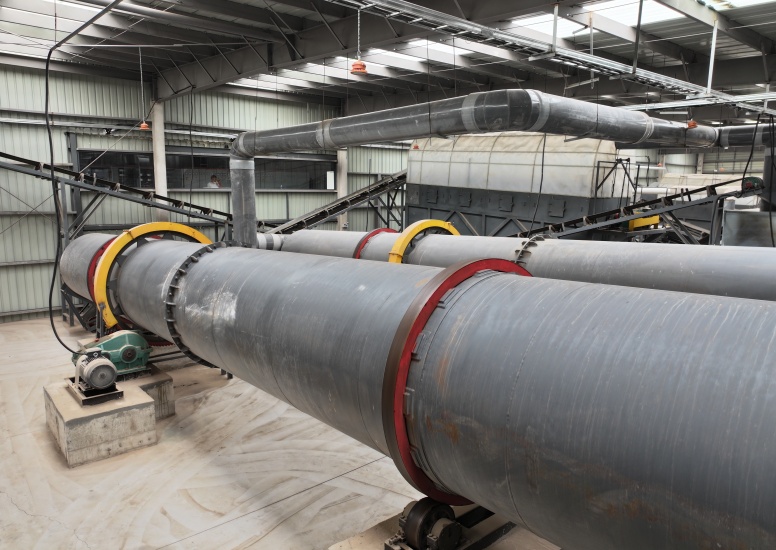
Ventilation and dust removal system: The cooler needs to be equipped with an induced draft fan and a blower to form an airflow circulation. At the same time, a bag filter is used to collect the dust generated during the cooling process, meeting the environmental emission requirements.
Temperature control and monitoring system: Install temperature sensors to monitor the temperature of incoming and outgoing materials in real time, automatically adjust the fan air volume and cylinder speed, and achieve precise temperature control.
Conveying equipment: Equipped with belt conveyors and bucket elevators, it achieves seamless connection with the preceding and following processes, ensuring continuous operation of the production line.
Operation and maintenance and application key points
Based on the type of fertilizer, production capacity, and particle characteristics, select a suitable cooling equipment to avoid incomplete cooling and particle crushing due to improper equipment selection.
Control the feeding speed and material thickness to ensure sufficient contact between the material and the cooling airflow, thereby enhancing cooling efficiency.
Regularly clean the adhering materials on the inner walls of the equipment, as well as on the plate and screen to prevent blockages and ensure optimal cooling efficiency.
The cooled fertilizer should be packaged promptly to prevent prolonged exposure to air, which could lead to moisture absorption and subsequent temperature rise.
Summary of application value
The fertilizer cooling equipment is not an auxiliary device, but a core equipment that determines the qualification rate, storage stability, and commercial value of finished fertilizers. It not only solves the safety and quality issues of high-temperature fertilizer packaging and storage, but also connects the entire production line, enhancing production efficiency. At the same time, it is compatible with different types of fertilizers, such as organic fertilizers, chemical fertilizers, and specialty fertilizers, making it an indispensable key equipment in modern fertilizer production.
 WhatsApp
 Email
Email
 + 8613905485429