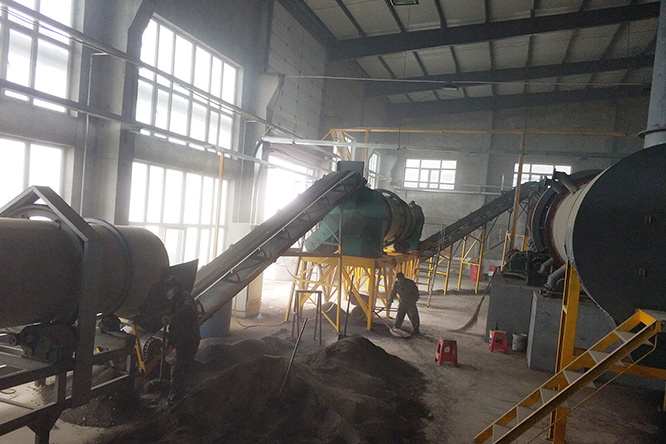
Stock transfer and gear stirring granulation construction site
2025-12-19 10:33:23
By : root
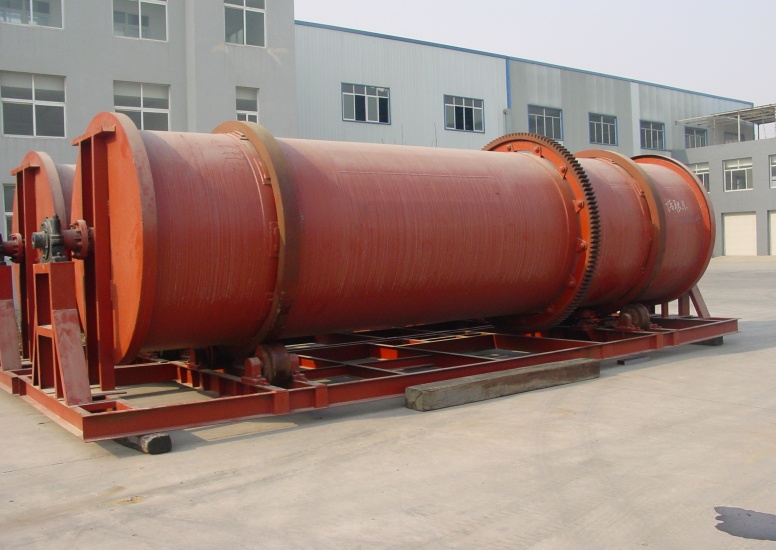
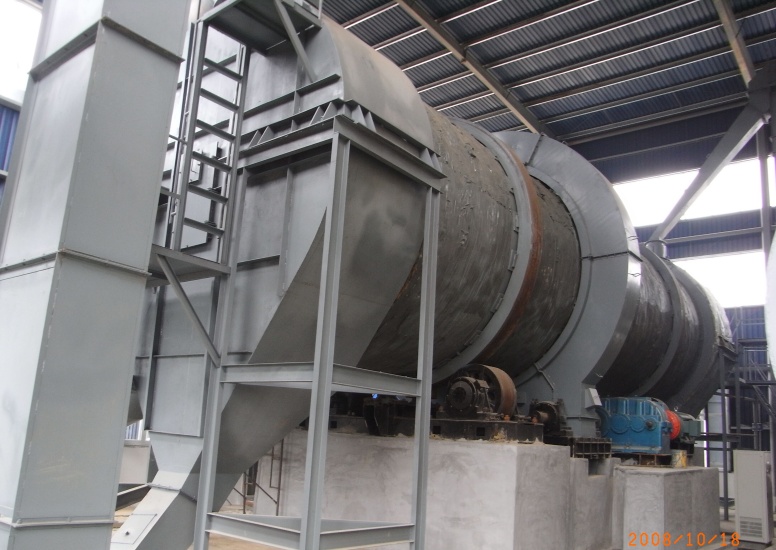
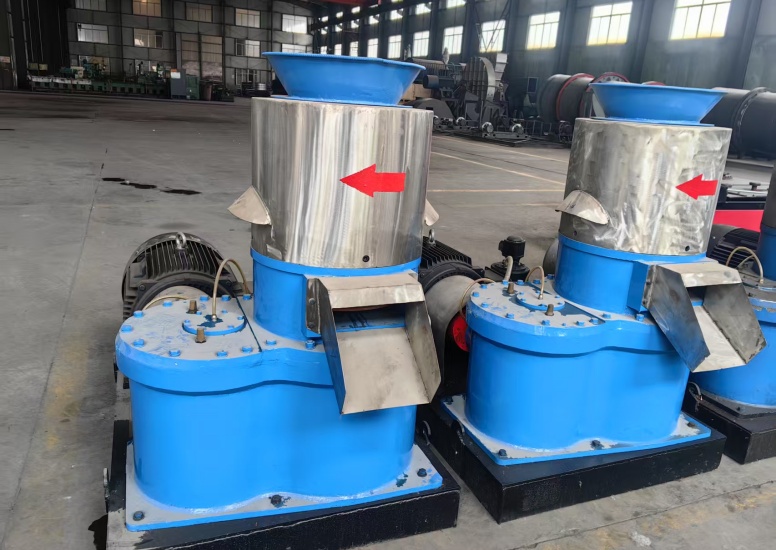
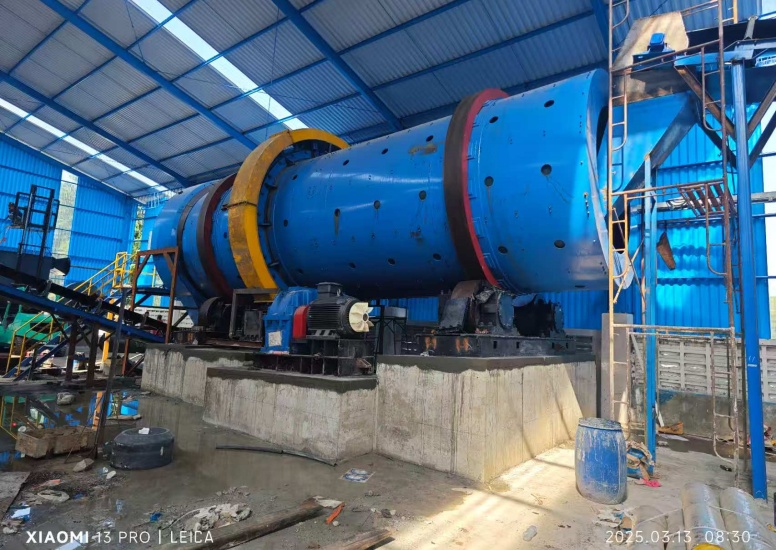
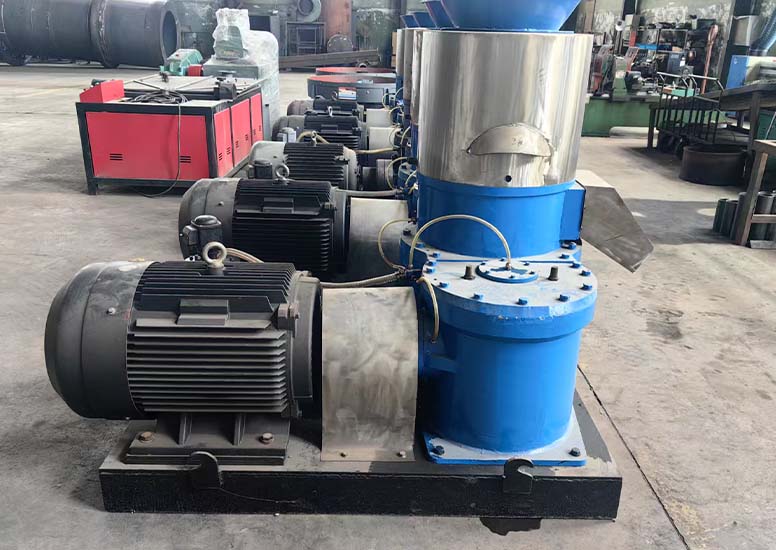
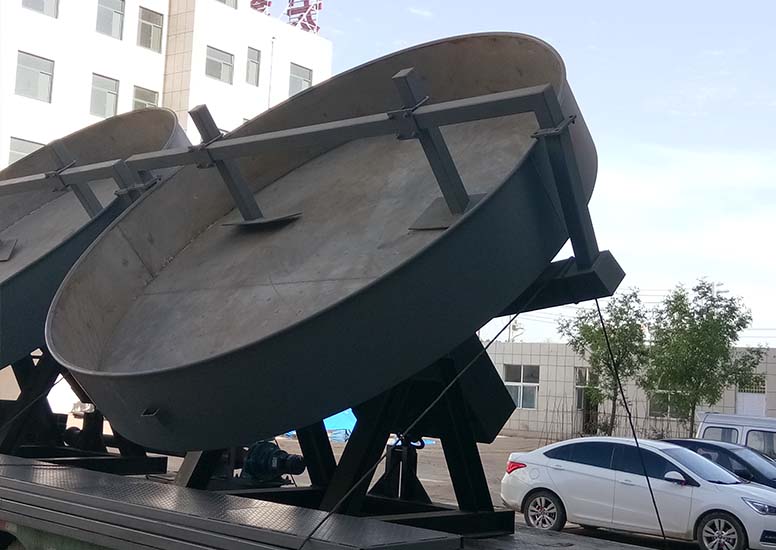
The corresponding equipment is Rotary Drum Gear Stirring Granulator, a mainstream granulation device in organic fertilizer/compound fertilizer production. Its core principle is to achieve material granulation through the compound motion of “rotary drum revolution + gear stirring rotation”. Below is a detailed explanation of its construction methods and characteristics, combined with fertilizer production scenarios (e.g., organic fertilizer from livestock manure such as cow dung or sheep manure, or NPK compound fertilizer).
- Raw Material Pretreatment:
Fermented and decomposed raw materials (e.g., cow dung) must be crushed to a particle size of 1-2mm, with the moisture content controlled at 40%-50% (if too dry, atomized humidification is required; if too wet, caking and clogging may occur). For compound fertilizer production, mix nitrogen, phosphorus, potassium raw materials and binders (e.g., bentonite, addition amount: 3%-5%) according to the formula.
- Equipment Commissioning:
- Check the coaxiality of the rotary drum and stirring gears (allowable deviation ≤ 0.5mm) to avoid excessive vibration during operation.
- Adjust the rotary drum speed (generally 8-12r/min) and gear stirring speed (150-200r/min), ensuring adequate lubrication of the transmission system (gears, chains).
- Preheat the equipment (for compound fertilizer production, the rotary drum temperature should be raised to 40-60℃ to improve bonding effect).
- Inspect the linkage between dust removal equipment (e.g., pulse dust collector), raw material conveying system (screw conveyor), and the granulator.
- Site Layout:
The construction site must be flat with a bearing capacity ≥ 10t/㎡ (to adapt to equipment weight). Reserve areas for raw material storage, finished product temporary storage, and return material channels. A minimum operating space of ≥1.5m should be left around the equipment, and ventilation and dust removal facilities must be installed to meet environmental protection requirements.
- Operators must wear dust masks and gloves to avoid dust inhalation and mechanical injuries.
- Do not open the rotary drum door during equipment operation; shut down and cut off power before maintenance.
- Dust removal equipment must operate simultaneously to ensure the workshop dust concentration ≤ 10mg/m³ (complying with GBZ2.1-2019 “Occupational Exposure Limits for Hazardous Factors in the Workplace”).
- A small amount of wastewater generated during construction (e.g., cleaning wastewater) must be collected in a sedimentation tank, and reused for raw material humidification after sedimentation; direct discharge is prohibited.
- High Granulation Rate & Excellent Particle Quality:
The compound motion (gear shearing + rotary drum rolling) ensures uniform force on materials, with a granulation rate of 85%-95% (much higher than the 70%-80% of single disc granulators). The particles are spherical, high in strength (compressive strength ≥15N/particle), and not easily broken, suitable for long-distance transportation.
- Strong Raw Material Adaptability:
It can process various raw materials such as organic fertilizer from livestock manure (cow dung, sheep manure, etc.), straw organic fertilizer, NPK compound fertilizer, and bio-organic fertilizer. It is particularly suitable for high-fiber, high-moisture raw materials (e.g., incompletely crushed cow dung fiber—gear shearing can effectively crush and granulate them).
- Continuous Production & High Efficiency:
It can be linked with raw material conveying, drying, screening, and packaging equipment to realize automated continuous production. The hourly capacity of a single device ranges from 1t/h to 20t/h, suitable for small and medium-sized fertilizer plants (annual output: 10,000-100,000 tons).
- Low Energy Consumption & Controllable Cost:
The compound motion of gears and the rotary drum reduces friction resistance between materials and equipment, with a unit energy consumption of about 50-80kWh/t particles (30% lower than extrusion granulators). It does not require complex pre-compression links, and the binder addition amount is small (3%-5%), reducing raw material costs.
- Mainly used for organic fertilizer production (e.g., organic fertilizer from livestock manure such as cow dung, sheep manure, chicken manure, and decomposed straw organic fertilizer).
- Also applicable for compound fertilizer granulation (e.g., NPK blended fertilizer, slow-release compound fertilizer), especially for products requiring high particle sphericity.
- Not applicable for: High-viscosity, high-moisture (>55%) raw materials, or uneven particle size (>3mm) raw materials without pretreatment (prone to uneven granulation).
- Raw material particle size must meet the standard (1-2mm); otherwise, it may cause gear jamming and reduced granulation rate.
- Strictly control the moisture content (40%-50%); excessive moisture leads to “large mud clumps”, while insufficient moisture results in loose and easily broken particles.
- Regularly inspect the wear of stirring gears (the service life of 65Mn steel gears is about 800-1000 hours); replace severely worn gears in a timely manner to avoid affecting granulation effect.
- Regularly clean residual materials on the inner wall of the rotary drum (once a week) to prevent scratching the inner wall or affecting particle uniformity after caking.
The rotary drum gear stirring granulator is currently the “most cost-effective” granulation equipment in organic fertilizer production lines. Compared with disc granulators, it has a higher granulation rate and more uniform particles; compared with extrusion granulators, it has lower energy consumption and stronger adaptability. During construction, focus on “raw material pretreatment” and “equipment parameter matching” (e.g., speed, inclination angle, moisture content), as these two factors directly determine granulation efficiency and product quality.
 WhatsApp
 Email
Email
 + 8613905485429