what is a Chain Conveyor?
2025-11-13 11:27:38
By : root
A
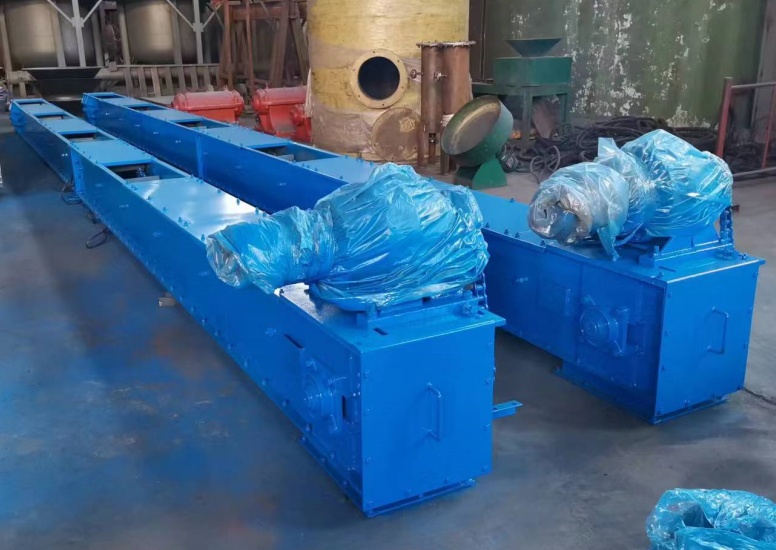
Chain Conveyor is a type of mechanical material handling equipment designed to transport bulk goods, unit loads, or heavy items horizontally, vertically, or at an incline using a continuous chain as the conveying medium. It relies on the traction and bearing capacity of the chain to move materials along a fixed path, making it widely used in industrial production, agriculture, logistics, and other fields.
- Chain: The key driving and carrying part (e.g., roller chain, leaf chain, engineering plastic chain). It may have attachments (e.g., flights, buckets, or plates) to hold or push materials.
- Drive Unit: Includes a motor, reducer, sprocket, and coupling—provides power to drive the chain’s movement.
- Idler/Tension Unit: A sprocket or tensioner at the tail end to maintain proper chain tension (prevents slack or derailment).
- Frame: Supports the chain, drive unit, idlers, and materials (typically made of steel for durability).
- Guards/Casings: Optional safety covers to protect operators and prevent material spillage.
- Carrying Surface: Some designs use slats, pans, or buckets attached to the chain to carry bulk materials (e.g., grain, coal) or unit loads (e.g., boxes, components).
- The motor drives the reducer, which rotates the drive sprocket.
- The drive sprocket engages with the chain, pulling the chain (and its attachments) along the frame.
- Materials are placed on the chain’s carrying surface (or pushed by chain attachments) and move with the chain to the target location.
- The idler/tension unit maintains chain tightness, ensuring smooth operation without slipping.
- High Load Capacity: Ideal for heavy, bulky, or abrasive materials (e.g., coal, ore, concrete blocks) that might damage belt conveyors.
- Versatile Conveying Paths: Can transport materials horizontally, vertically (vertical chain conveyors), or at steep inclines (up to 90° for vertical models).
- Durability: Chains are resistant to wear, high temperatures, and harsh environments (e.g., factories with dust, moisture, or chemicals).
- Precise Control: Offers stable speed and positioning, suitable for automated production lines.
- Low Maintenance: Simple structure with fewer vulnerable parts (compared to belt conveyors, which require frequent belt replacement).
- Apron Chain Conveyor (Slat Conveyor): Uses flat steel slats attached to chains—for heavy, sharp, or hot materials (e.g., foundry parts, 矿石).
- Bucket Chain Conveyor: Equipped with buckets to lift and transport bulk materials vertically (e.g., grain, fertilizer, cement).
- Drag Chain Conveyor: Chains with scrapers or flights drag materials along a trough—for powdery, granular, or viscous bulk goods (e.g., coal, ash, sludge).
- Roller Chain Conveyor: Uses standard roller chains with or without attachments—for unit loads (e.g., pallets, boxes) in logistics or assembly lines.
- Agriculture: Transporting grain, fertilizer (e.g., matching your earlier question about organic fertilizer production lines), or feed.
- Mining/Construction: Moving ore, coal, gravel, or concrete components.
- Manufacturing: Conveying raw materials, workpieces, or finished products (e.g., automotive parts, packaging lines).
- Waste Management: Handling garbage, recyclables, or sludge.
- Food Processing: Transporting bulk food (e.g., grains, fruits) or processed items (with food-grade chains).
Suppliers of Chain Conveyor:
Jinhua Machinery Provides High Quality And Effective Fertilizer Manufacturing Equipment, Straw Processing Equipment, Waste Processing Equipment, And Mining Equipment.If you are looking for fertilizer-making machines and production lines, feel free to contact us.Tel:0811-8185429 011-820-8086 E-mail:jinhuaindonesia@gmail.com
 WhatsApp
 Email
Email
 + 8613905485429