Professional Fertilizer Equipment, Straw Processing Equipment, Waste Processing Equipment and Mining Equipment Manufacturer.
Contact Info
Apartemen Neo Soho Lantai 10 Unit 10, Jl. Letjan S parman kav.28, Kel. Tanjung Duren Selatan Kec.
Professional Fertilizer Equipment, Straw Processing Equipment, Waste Processing Equipment and Mining Equipment Manufacturer.
Apartemen Neo Soho Lantai 10 Unit 10, Jl. Letjan S parman kav.28, Kel. Tanjung Duren Selatan Kec.
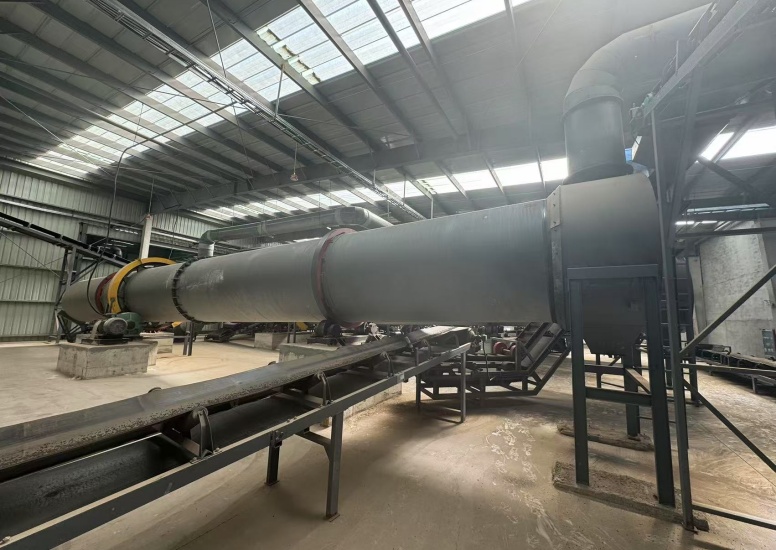
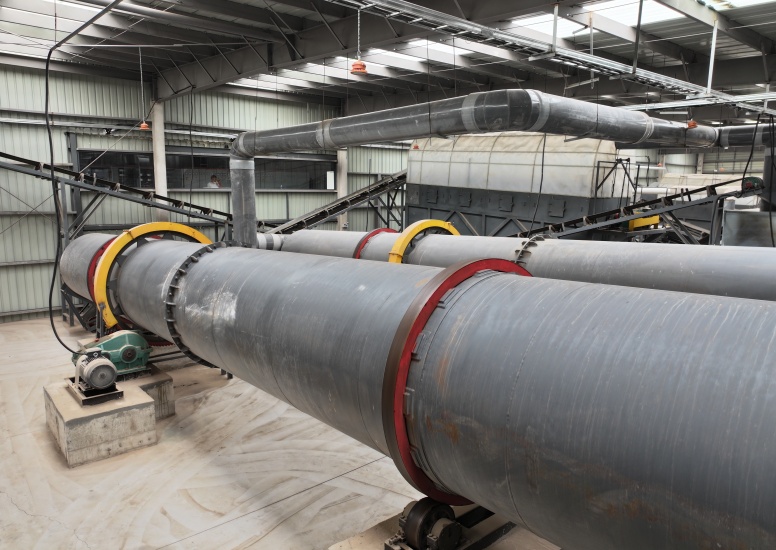
Fertilizer cooler is a core supporting equipment in the production process of granular fertilizers such as compound fertilizers and organic fertilizers. Its main function is to quickly and uniformly cool the high-temperature fertilizer particles after granulation and drying, while removing some residual moisture, providing a qualified material foundation for subsequent screening, coating, packaging and other processes. It is one of the key equipment to ensure the quality of fertilizer products and improve production efficiency.
1. Core role
After being processed by a dryer, the temperature of fertilizer particles is usually as high as 60-120 ℃, and there may still be some residual moisture inside the particles. If directly entering the subsequent process, it will cause the following problems:
Particles are prone to clumping: Under high temperature conditions, the surface of particles is prone to softening and adhesion, which can form large blocks during subsequent screening or packaging, affecting the uniformity of the product;
Poor coating effect: High temperature can damage the stability of coating agents (such as resin, paraffin, etc.), causing the coating layer to peel off or become uneven;
High storage risk: Direct packaging of high-temperature particles can cause the formation of water vapor inside the packaging bag, making long-term storage prone to mold and deterioration.
The fertilizer cooler can solve the above problems through physical cooling and moderate dehydration, and its specific functions include:
Cooling and shaping: Quickly cool high-temperature particles to 30-40 ℃ (close to room temperature) to avoid particle softening and adhesion;
Dehydration and quality improvement: During the cooling process, 5% -10% of the residual moisture on the surface and inside of the particles is synchronously taken away to improve the hardness of the particles (to avoid breakage during transportation);
Ensure subsequent processes: provide qualified materials for screening (to avoid clogging of the sieve), coating (to ensure firm adhesion of the coating layer), and packaging (to prevent moisture in the packaging bag).
2. Mainstream working principle
The most widely used in the industry currently is the rotary cooler (similar in structure to a rotary dryer, but with the opposite principle), and its workflow is as follows:
Feed: High temperature fertilizer particles enter the inclined rotary cylinder through the chute or conveyor at the feed end;
Reverse flow heat transfer: The cooling cylinder rotates slowly under the drive of the motor (usually at a speed of 3-8r/min), and there is a scraper (lifting blade) inside the cylinder, which can continuously pick up and scatter particles; At the same time, cold air enters the cooling cylinder in reverse from the discharge end, fully contacting with the scattered high-temperature particles, forming a “counter current heat exchange”;
Cooling and dehydration: Cold air absorbs the heat of particles, causing the temperature to rise while taking away residual moisture on the surface of the particles. Finally, it is discharged from the exhaust port at the feed end (wet exhaust gas needs to be treated before discharge);
Discharge: The cooled particles gradually move towards the discharge end under the influence of the inclination angle of the cylinder, and are finally discharged through the discharge port before entering the next process.
According to the type of fertilizer (compound fertilizer/organic fertilizer), production capacity, and cooling requirements, fertilizer coolers are mainly divided into the following two categories:
Features of rotary cooler: inclined rotary cylinder, built-in flap, counter current ventilation. Applicable scenarios: Large scale compound fertilizer production lines (such as NPK compound fertilizers and slow-release fertilizers), large-scale organic fertilizer factories, and scenarios that require continuous and stable production.
Characteristics of vertical cooler: vertical cylinder, multi-layer sieve plate/mixing device, lower inlet and upper outlet. Applicable scenarios: Small and medium-sized production lines, limited workshop space, or organic fertilizers with high cooling speed requirements (such as bio organic fertilizers, which need to avoid killing beneficial bacteria at high temperatures)
Matching fertilizer type: Compound fertilizer has high particle hardness and can be made of ordinary carbon steel material; It is recommended to choose stainless steel material for organic fertilizer (containing corrosive substances) to avoid rusting and contaminating the fertilizer;
Considering environmental requirements: The wet exhaust gas discharged from the cooler needs to be matched with a “cyclone dust collector+spray tower” to avoid dust and odor emissions;
Energy saving design: Priority should be given to equipment with “waste heat recovery devices” (such as using the discharged hot air to preheat the cold air of the dryer) to reduce the overall energy consumption of the production line.
 WhatsApp
 Email
Email
 + 8613905485429