Humic Acid Coating Production Line Term & Core Definition
English Standard Name: Humic Acid Coating Production Line
Industry Common Abbreviations: Humic Acid Coating Equipment Line; Humic Acid Fertilizer Coating Production Line
A
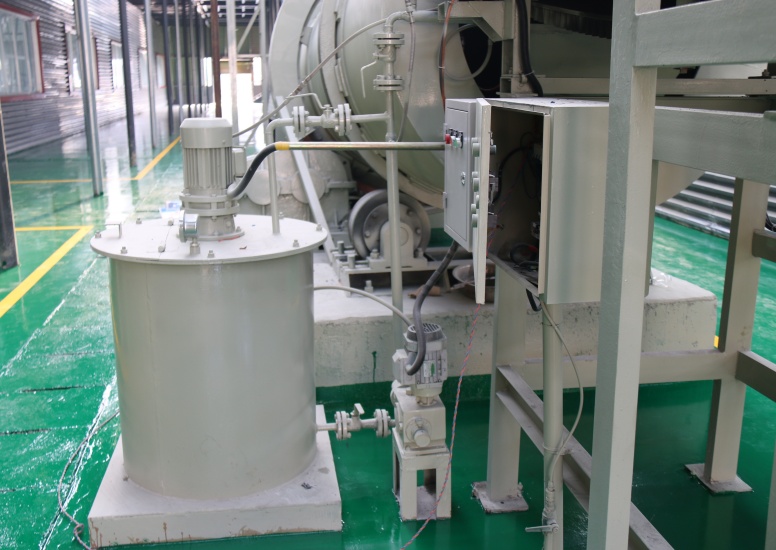
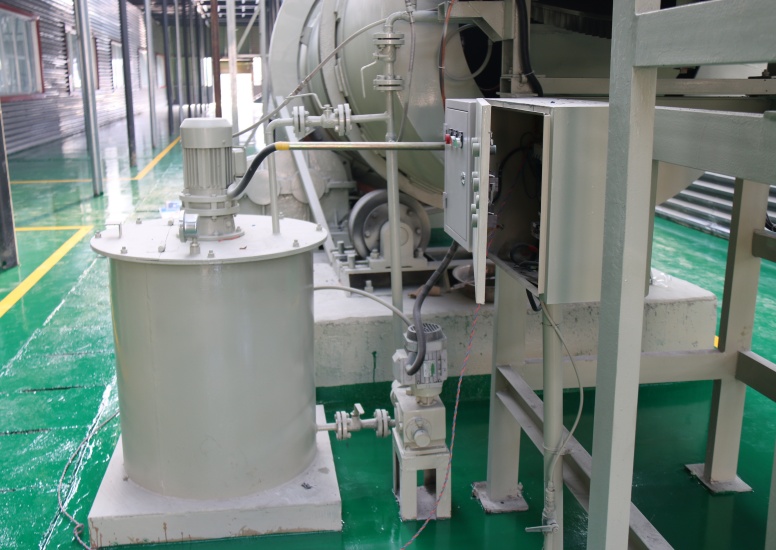
Humic Acid Coating Production Line refers to a set of integrated industrial equipment specifically designed for coating granular fertilizers (including compound fertilizers, organic fertilizers, and slow-release fertilizers) with a humic acid-based film. Its core function is to form a uniform, water-soluble coating on the surface of fertilizer particles, thereby improving fertilizer performance, extending the nutrient release cycle, and enhancing soil adaptability. This production line integrates multiple processes such as raw material pretreatment, coating solution preparation, coating reaction, and post-treatment, realizing automated and continuous production.
Humic Acid Coating Production Line Working Principle & Core Process
Core Process Flow
-
Raw Material Pretreatment: Granular fertilizers with a moisture content of 8-12% are screened through a vibrating screen to remove impurities (such as dust, clods, and oversized particles) and ensure uniform particle size (typically 2-4mm). This step lays the foundation for uniform coating.
-
Coating Solution Preparation: Humic acid (in powder or liquid form) is mixed with binders (e.g., starch, polyvinyl alcohol), dispersants, and deionized water in a special preparation tank. The mixture is stirred at a constant speed to form a stable coating solution with a solid content of 20-30%. The stability of the coating solution directly affects the adhesion and uniformity of the subsequent coating.
-
Coating Reaction: The pretreated fertilizer particles are continuously tumbled in a coating machine (common types: drum-type or fluidized bed-type). Meanwhile, the coating solution is uniformly sprayed onto the surface of the rolling particles through a high-pressure spray system. The particles are then subjected to heat curing (at a temperature of 60-80℃) or chemical cross-linking to form a firm and uniform humic acid coating.
-
Post-Treatment: The coated particles are first dried in a drying machine to reduce the moisture content to less than 10%, which helps to solidify the coating and prevent moisture absorption. After drying, the particles are cooled to room temperature by a cooling machine to avoid agglomeration due to high temperature. Finally, the cooled particles are re-screened to remove agglomerates and unqualified products, and then packaged into finished products through an automatic packaging machine.
Humic Acid Coating Production Line Key Components
|
Component Name
|
Core Function
|
|
Raw Material Silo
|
Stores the granular fertilizer to be coated, ensuring continuous and stable feeding for the production line.
|
|
Vibrating Screen
|
Performs impurity removal during raw material pretreatment and classification screening of finished products to ensure particle size uniformity.
|
|
Coating Solution Preparation Tank
|
Mixes humic acid, binders, dispersants, and water in a precise ratio to prepare a stable coating solution.
|
|
Coating Machine (Drum/Fluidized Bed Type)
|
Core equipment of the production line. It realizes the continuous tumbling of fertilizer particles and the uniform adhesion of the coating solution, ensuring coating quality.
|
|
Drying Machine (Rotary/Counterflow Type)
|
Removes excess moisture from the coated particles, solidifies the humic acid coating, and improves the storage stability of the finished product.
|
|
Cooling Machine
|
Cools the dried particles to room temperature quickly, preventing agglomeration caused by heat and moisture absorption.
|
|
Conveyor System (Belt/Screw Type)
|
Connects various equipment (silo, screen, coating machine, drying machine, etc.), realizing continuous transmission of materials and ensuring the continuity of the production process.
|
|
Control System (PLC)
|
Automatically controls key parameters such as temperature, rotation speed, spray volume, and feeding speed, improving production efficiency and product stability.
|
|
Packaging Machine
|
Performs quantitative packaging of finished products (common specifications: 25kg/bag, 50kg/bag, or ton bag), facilitating storage and transportation.
|
Humic Acid Coating Production Line Application Scope
1 Fertilizer Types
Suitable for various granular fertilizers with a particle size of 1-5mm, including compound fertilizers, organic-inorganic compound fertilizers, slow-release fertilizers, bio-organic fertilizers, and microbial fertilizers.
2 Industry Scenarios
Widely used in large-scale fertilizer production enterprises, agricultural technology companies, soil improvement material manufacturers, and other institutions engaged in the research and development, production, and promotion of eco-friendly fertilizers.
3 Agricultural Applications
Applicable to the planting of food crops (wheat, corn, rice), cash crops (cotton, vegetables, oilseeds), and fruit trees. It is particularly suitable for agricultural production in saline-alkali soil, low-fertility soil, water-scarce areas, and other problematic soil areas, as it can improve soil conditions while providing nutrients.
Humic Acid Coating Production Line Core Advantages
-
Enhanced Fertilizer Efficiency: The humic acid coating can slow down the release rate of nutrients in the fertilizer, extending the nutrient release cycle by 30-60 days. This reduces nutrient loss caused by leaching and volatilization, and improves the fertilizer utilization rate by 15-25%.
-
Soil Improvement: Humic acid, as a natural soil conditioner, can regulate soil pH, promote the activity of beneficial microorganisms in the soil, improve soil structure, and enhance the soil’s water and fertilizer retention capacity.
-
Environmental Friendliness: The production line reduces the leaching and runoff of chemical fertilizers, minimizing pollution to groundwater and surface water. The humic acid-based coating material is biodegradable and will not cause environmental pollution.
-
High Automation & Efficiency: Equipped with a PLC automatic control system, the production line can realize continuous and unmanned operation. The production capacity ranges from 5 to 50 tons per hour, which can meet the production needs of different scales of enterprises.
-
Cost-Effectiveness: The production process has low energy consumption (the drying temperature is ≤80℃, which saves energy compared to high-temperature drying). In addition, humic acid raw materials are widely available and low-cost, reducing the overall production cost of coated fertilizers.
Humic Acid Coating Production Line Selection Criteria
-
Capacity Matching: Select the production line with corresponding capacity according to the enterprise’s annual output. For example, medium-sized enterprises can choose a production line with a capacity of 10-20 tons per hour, while large-scale enterprises can choose a high-capacity line of 30-50 tons per hour.
-
Coating Uniformity: Prioritize coating machines with adjustable spray nozzles and controllable tumbling speed. Compared with drum-type coating machines, fluidized bed-type coating machines have higher coating uniformity and are suitable for products with higher quality requirements.
-
Raw Material Adaptability: Confirm whether the production line can handle both powder and liquid humic acid raw materials, and check its compatibility with different types of binders and dispersants to meet the needs of producing different types of coated fertilizers.
-
Energy Consumption Index: Compare the thermal efficiency of different types of drying machines. Counterflow-type drying machines have higher thermal efficiency and lower energy consumption than parallel-flow-type drying machines, which can reduce long-term production costs.
-
After-Sales Service: Choose manufacturers that provide perfect after-sales services, including technical training, supply of wearing parts (such as spray nozzles, drum liners), and on-site maintenance support. This ensures the stable operation of the production line.
Humic Acid Coating Production Line Market Prospects
With the global emphasis on green agriculture, ecological environmental protection, and soil remediation, the demand for eco-friendly and efficient fertilizers represented by humic acid-coated fertilizers is growing rapidly. As the core equipment for the production of humic acid-coated fertilizers, the humic acid coating production line has broad market potential.
Firstly, it is supported by policies. Many countries have introduced policies to promote the use of eco-friendly fertilizers (such as China’s “Zero Growth of Chemical Fertilizer Use” policy), which provides policy guarantees for the development of the industry. Secondly, the market demand is strong. The global humic acid fertilizer market has an annual growth rate of more than 12%, and the demand for supporting production equipment is also increasing. Finally, technological upgrading drives development. The future development trend of the production line will focus on intelligent control (such as IoT monitoring and data-driven production optimization) and multi-functional coating (integrating humic acid with trace elements, biological bacteria, etc.), which will further expand its application scenarios and market space.
 WhatsApp
 Email
Email
 + 8613905485429