What is a Liquid Fertilizer Production Line?
2025-12-03 13:40:11
By : root
A
liquid fertilizer production line is a set of
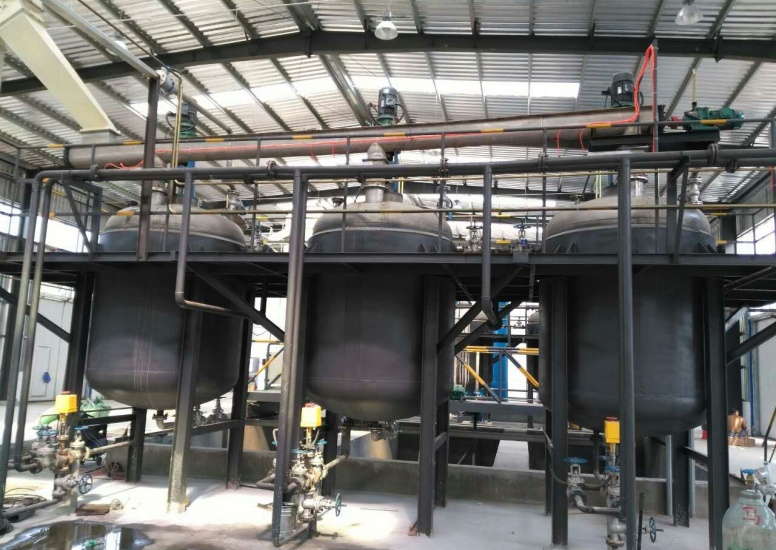
specialized, continuous, and automated equipment systems designed to process various organic, inorganic, or biological raw materials into flowable, homogeneous liquid fertilizers that meet agricultural application standards through processes such as raw material pretreatment, dissolution/mixing, homogenization, sterilization, filtration, metering, and filling. The end products, including water-soluble fertilizers, amino acid fertilizers, humic acid fertilizers, and compound liquid fertilizers, can be directly applied via drip irrigation, sprinkler irrigation, foliar spraying, or flood irrigation, and are widely used in modern intensive agriculture due to their rapid nutrient absorption and high utilization rate.
Core Composition and Process Flow
1. Core Equipment Composition
|
Process Stage
|
Key Equipment
|
Function
|
|
Raw Material Pretreatment
|
Raw material storage tanks, conveyors, crushers, filters, dissolving tanks
|
Store raw materials; crush solid raw materials (e.g., urea, potassium chloride); remove impurities (sediment, suspended solids); dissolve solid raw materials into liquid phase
|
|
Mixing and Blending
|
Agitator tanks, homogenizers, proportioning systems
|
Accurately mix various raw materials (e.g., nitrogen, phosphorus, potassium stock solutions, trace elements, additives) in a certain proportion; homogenize the mixture to ensure uniform nutrient distribution
|
|
Sterilization and Disinfection (Optional)
|
Ultraviolet sterilizers, pasteurizers, ozone sterilizers
|
Kill harmful bacteria, viruses, and pathogens in organic liquid raw materials (e.g., livestock and poultry manure extract) to avoid crop diseases; ensure product safety and stability
|
|
Filtration and Purification
|
Precision filters, ultrafiltration membranes, centrifuges
|
Remove undissolved particles, colloids, and impurities from the mixed liquid to improve product clarity and prevent clogging of irrigation equipment
|
|
Metering and Filling
|
Automatic metering pumps, filling machines (bottle filling, bag filling, drum filling), capping machines, labeling machines
|
Quantitatively fill liquid fertilizers into different packaging containers (bottles, flexible bags, drums); complete capping and labeling to ensure packaging tightness and product traceability
|
|
Finished Product Storage
|
Insulated storage tanks, corrosion-resistant tanks
|
Temporarily store finished liquid fertilizers; maintain stable temperature and prevent product deterioration or precipitation
|
2. Typical Process Flow
Raw Materials (Solid/Liquid) → Pretreatment (Crushing/Impurity Removal/Dissolution) → Mixing & Blending (Adding Additives/Trace Elements) → (Sterilization & Disinfection) → Filtration & Purification → Metering & Filling → Capping & Labeling → Finished Product Storage/Transportation Note: Organic liquid raw materials (e.g., crop straw extract, animal manure fermentation broth) need additional “fermentation and purification” pretreatment; inorganic liquid raw materials can be directly dissolved and mixed.
Scope of Application
1. Types of Raw Materials
-
Inorganic raw materials: Urea solution, ammonium phosphate solution, potassium nitrate solution, potassium chloride solution, and other inorganic salt solutions or acid-base raw materials;
-
Organic raw materials: Humic acid solution, amino acid solution, seaweed extract, livestock and poultry manure fermentation broth, crop straw extract, etc.;
-
Composite raw materials: Mixed solutions of inorganic salts and organic matter, biological agents (beneficial bacteria) mixed with liquid fertilizers, trace element (iron/zinc/boron/manganese) compound liquid raw materials.
2. Application Scenarios
-
Modern agriculture: Greenhouse vegetables, facility fruits, flowers, medicinal herbs, and other cash crops that require precise fertilization;
-
Large-scale planting bases: Field crops (wheat, corn, rice) with drip irrigation or sprinkler irrigation systems; fruit orchards, tea gardens, and nursery stock bases;
-
Specialized fertilization scenarios: Foliar fertilization, seed soaking, root irrigation, and other efficient fertilization methods; saline-alkali land improvement and water-saving agriculture;
-
Fertilizer processing enterprises: Production of commercial liquid fertilizers (water-soluble fertilizers, organic liquid fertilizers, compound liquid fertilizers) and customized liquid fertilizers for specific crops.
Key Advantages and Disadvantages
1. Advantages
-
Rapid nutrient absorption: Liquid form allows direct absorption by crop roots and leaves without decomposition, with fast efficacy and high nutrient utilization rate (up to 80%-90%, significantly higher than solid fertilizers);
-
Precise fertilization: Easy to adjust nutrient ratio and concentration, suitable for customized fertilization according to crop growth stages and soil conditions;
-
Convenient application: Compatible with drip irrigation, sprinkler irrigation, and other water-saving irrigation systems, realizing integration of water and fertilizer, reducing labor intensity;
-
Environmental friendliness: Less residue, no soil compaction; organic liquid fertilizers can improve soil structure and promote soil microbial activity;
-
Simple production process: No drying or granulation processes, low energy consumption in the production process.
2. Disadvantages
-
High storage and transportation costs: Low density, large volume, requiring corrosion-resistant packaging and transportation equipment (e.g., plastic drums, special tank trucks), resulting in higher transportation costs than solid fertilizers;
-
Strict storage conditions: Prone to deterioration, precipitation, and freezing at extreme temperatures; need to be stored in a sealed, cool, and dry environment, and some products require adding preservatives;
-
High equipment requirements: Production equipment and storage tanks need to be corrosion-resistant (to acid, alkali, and salt solutions), with high initial investment cost;
-
Dependence on irrigation systems: Effective application requires matching water-saving irrigation facilities; it is inconvenient to apply in areas lacking irrigation conditions.
Key Technical Parameters (Reference Range)
|
Parameter Type
|
General Indicators
|
Customization Range
|
|
Production Capacity
|
2-10 tons/hour
|
0.5-50 tons/hour (small laboratory → large-scale industrialization)
|
|
Product Concentration
|
30%-50% (organic liquid fertilizer); 20%-60% (inorganic liquid fertilizer)
|
10%-80% (adjustable according to product type)
|
|
Mixing Uniformity
|
≥98%
|
≥99% (high-end customized products)
|
|
Filtration Precision
|
50-100 mesh
|
100-500 mesh (high-clarity product requirements)
|
|
Power Consumption
|
10-30kW (5 tons/hour capacity)
|
5-150kW (capacity-matched on demand)
|
|
Automation Level
|
Semi-automatic/full-automatic
|
PLC intelligent control system, realizing automatic proportioning, mixing, and filling
|
Application Value and Market Positioning
With “high nutrient utilization rate, precise fertilization, and water-saving efficiency” as its core advantages, the liquid fertilizer production line is in line with the development trend of modern intensive agriculture and ecological agriculture. It is suitable for investment and construction by medium and large fertilizer enterprises, specialized agricultural technology companies, and large-scale planting bases. It can meet the market demand for high-efficiency, environmentally friendly, and customized liquid fertilizers. Especially in facility agriculture, cash crop planting, and water-scarce areas, liquid fertilizers are favored due to their unique application advantages. With the promotion of water-saving irrigation projects and the improvement of agricultural modernization level, the market demand for liquid fertilizer production lines is showing a growing trend.
Suppliers of Liquid Fertilizer Production Line:
Jinhua Machinery Provides High Quality And Effective Fertilizer Manufacturing Equipment, Straw Processing Equipment, Waste Processing Equipment, And Mining Equipment.If you are looking for fertilizer-making machines and production lines, feel free to contact us.Tel:0811-8185429 011-820-8086 E-mail:
jinhuaindonesia@gmail.com
 WhatsApp
 Email
Email
 + 8613905485429