Professional Fertilizer Equipment, Straw Processing Equipment, Waste Processing Equipment and Mining Equipment Manufacturer.
Contact Info
Apartemen Neo Soho Lantai 10 Unit 10, Jl. Letjan S parman kav.28, Kel. Tanjung Duren Selatan Kec.
Professional Fertilizer Equipment, Straw Processing Equipment, Waste Processing Equipment and Mining Equipment Manufacturer.
Apartemen Neo Soho Lantai 10 Unit 10, Jl. Letjan S parman kav.28, Kel. Tanjung Duren Selatan Kec.
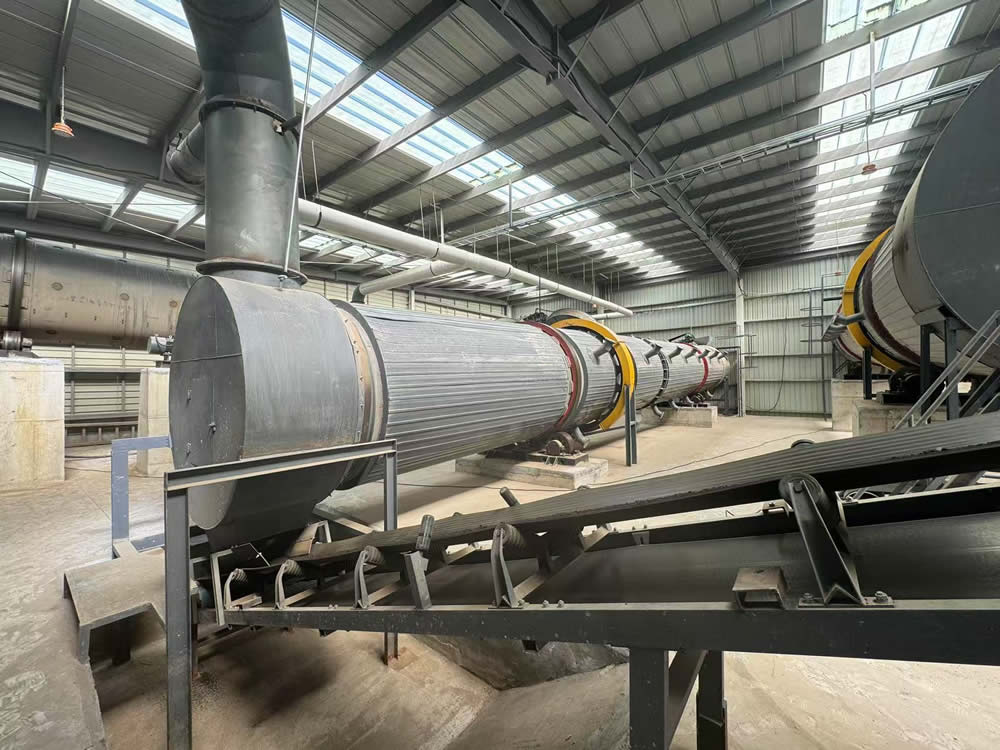
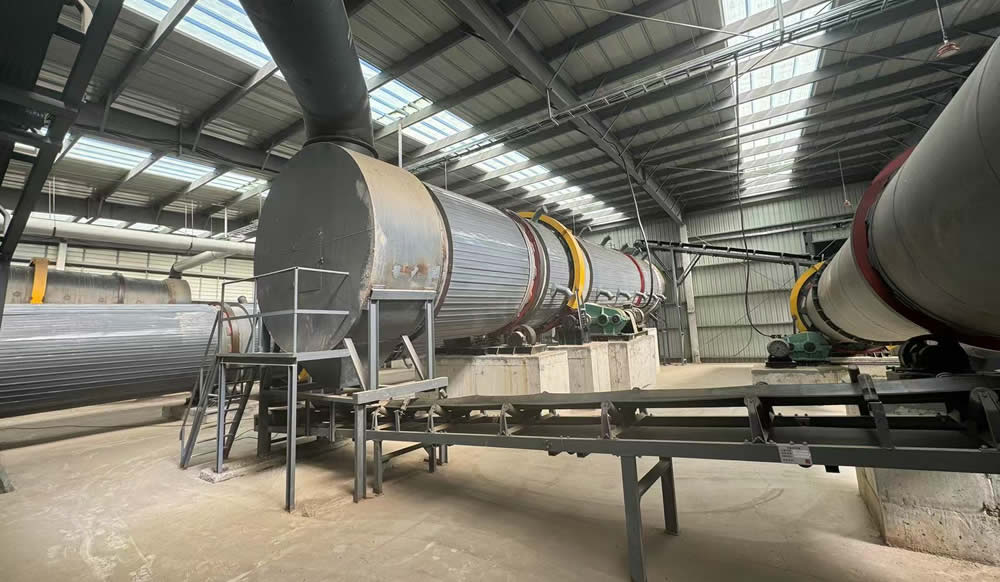
Rotary dryer also known as drum dryer or continuous convection drying equipment, is commonly used in organic fertilizer production lines and is suitable for drying large quantities of granular, powdery, and block materials.
The cylinder is horizontally inclined at 3 ° to 5 ° and rotates at low speed; Wet materials are fed from the high-end, and the lifting plate inside the cylinder continuously picks up and scatters the materials to form a material curtain, which fully exchanges heat with hot air; The material moves slowly towards the lower end by tilting and rotating the cylinder, and the moisture is carried away by the hot air. The dry material is discharged from the discharge end; Tail gas matching cyclone+bag dust removal system.
There are two types of airflow:
-Parallel flow: Hot air and material flow in the same direction, with the highest temperature at the feeding end, suitable for materials that are sensitive to high temperatures, high humidity, and sticky walls (organic fertilizers, chicken manure)
-Reverse flow: Hot air and material flow in opposite directions, resulting in higher temperature at the discharge end and higher thermal efficiency, suitable for high-temperature mineral sand and coal slurry
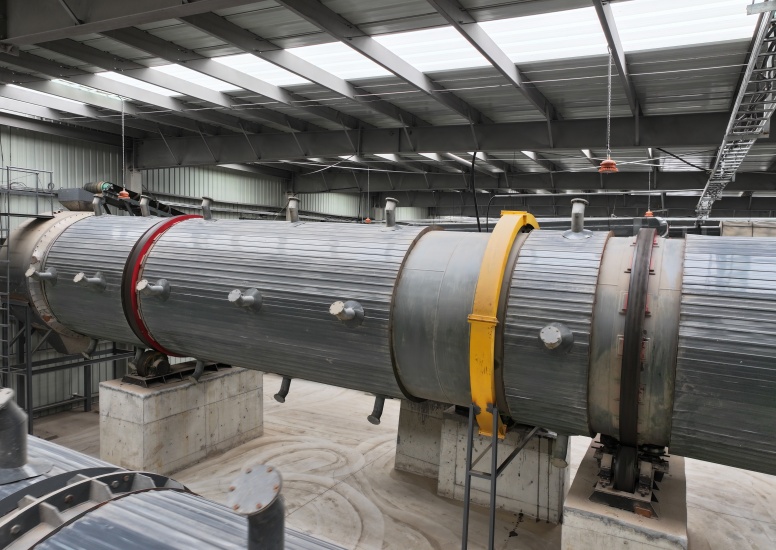
1. Rotary cylinder body (boiler steel plate, internal lifting plate, can be used as anti sticking cleaning plate)
2. Support the supporting wheel set and blocking wheel
3. Transmission: motor+reducer+large gear ring
4. Feeding and discharging devices
5. Hot blast stove (heat source: biomass, natural gas, coal, steam), induced draft duct
6. Head and tail sealing, dust removal system (cyclone+bag)
-Cylinder rotation speed: 2-6 r/min
-Stay time: 20-60 minutes
-Filling rate: 8% to 15%
-Heat source inlet air: co current generally 400-600 ℃, outlet air temperature 60-110 ℃
-Specifications: Φ 1.0 × 10m, Φ 1.5 × 12m, Φ 2.0 × 16m, etc; There is also a three-layer rotary dryer (a three cylinder dryer with smaller footprint and better insulation)
1. Direct heating type (mainstream organic fertilizer): Hot air directly contacts the material, with fast heat exchange and high production capacity; Disadvantage: There is a lot of dust, so it is necessary to do a good job of dust removal
2. Indirect heating/steam bundle rotary dryer: steam heat exchange tubes are arranged inside the cylinder, and hot air does not come into contact with the material; Suitable for materials that are prone to oxidation, afraid of pollution, and have solvents, with higher investment
>Pay attention to differentiation: The double cone rotary vacuum dryer is an intermittent, vacuum low-temperature device commonly used in the pharmaceutical and chemical industries, and is not the same type of equipment as the continuous drum mentioned above
-Large production capacity, continuous and stable operation, suitable for supporting fertilizer production lines
-Strong adaptability: Organic fertilizer granules, sludge, distiller’s grains, sawdust, mineral powder, and sand can all be dried
-Easy to maintain, sturdy and durable, with low failure rate
-Flexible selection of heat source, compatible with biomass hot blast stove, very cost-effective for fertilizer factories
Drying of organic fertilizer and compound fertilizer granules reduces the moisture content of the fermented material from 30% -40% to 10% -15%, meeting the requirements for granulation, packaging, and storage; Often paired with granulators, drum screening machines, and coating machines to form a complete fertilizer line.
 WhatsApp
 Email
 + 8613905485429