Professional Fertilizer Equipment, Straw Processing Equipment, Waste Processing Equipment and Mining Equipment Manufacturer.
Contact Info
Apartemen Neo Soho Lantai 10 Unit 10, Jl. Letjan S parman kav.28, Kel. Tanjung Duren Selatan Kec.
Professional Fertilizer Equipment, Straw Processing Equipment, Waste Processing Equipment and Mining Equipment Manufacturer.
Apartemen Neo Soho Lantai 10 Unit 10, Jl. Letjan S parman kav.28, Kel. Tanjung Duren Selatan Kec.
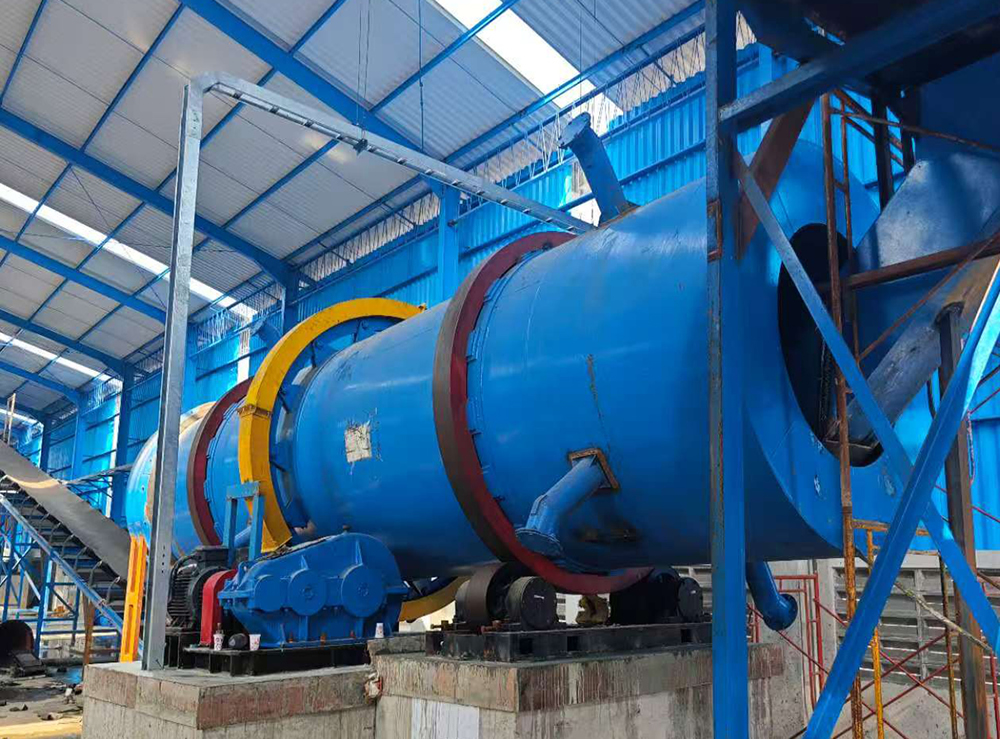
Rotary dryer is a continuous large-scale convection drying equipment, which is a commonly used back-end drying equipment in organic fertilizer and compound fertilizer production lines.
The cylinder has a tilt angle of 3 ° to 5 ° and rotates at low speed (2-8 r/min); Wet materials are fed from the high-end, and the material is continuously lifted and scattered by the lifting plate (copying plate) inside the cylinder to form a material curtain, which fully exchanges heat with hot air; The material relies on the tilting of the cylinder and the pushing of the lifting plate to slowly flow towards the low-end discharge port; The water vapor is carried away by the induced draft, and the exhaust gas is equipped with dust removal (cyclone+bag) to meet the emission standards.
Parallel flow (co current): Hot air and material flow in the same direction, suitable for high moisture, heat sensitive, and viscous materials, with low discharge temperature
Reverse flow: Hot air flows in the opposite direction to the material, resulting in a lower final moisture content. This is suitable for granular materials that require very low final water and are not afraid of high temperatures (organic fertilizer particles are commonly used in reverse flow)
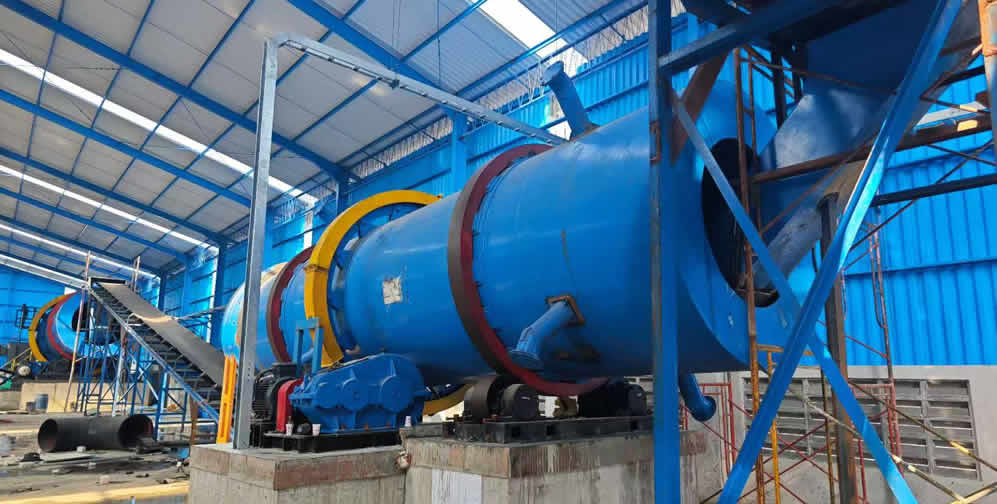
1. Rotary cylinder body (carbon steel/304 stainless steel, with insulation layer)
2. Supporting wheel, gear wheel, and large gear ring transmission system
3. Internal lifting plate (L-shaped, curved, anti sticking chain type, combination type, anti sticking structure is generally selected for sticky organic fertilizers)
4. Feeding device, discharge seal, head and tail seal (flexible seal to prevent air leakage)
5. Hot blast stove/heat source (biomass, coal, natural gas, steam heat exchange)
6. Induced draft dust removal system, electric control frequency conversion cabinet
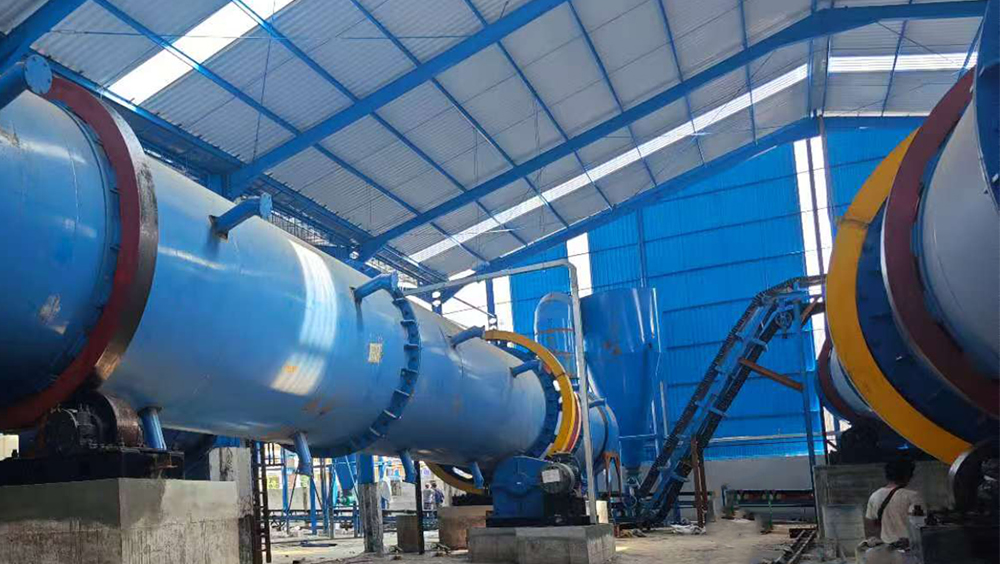
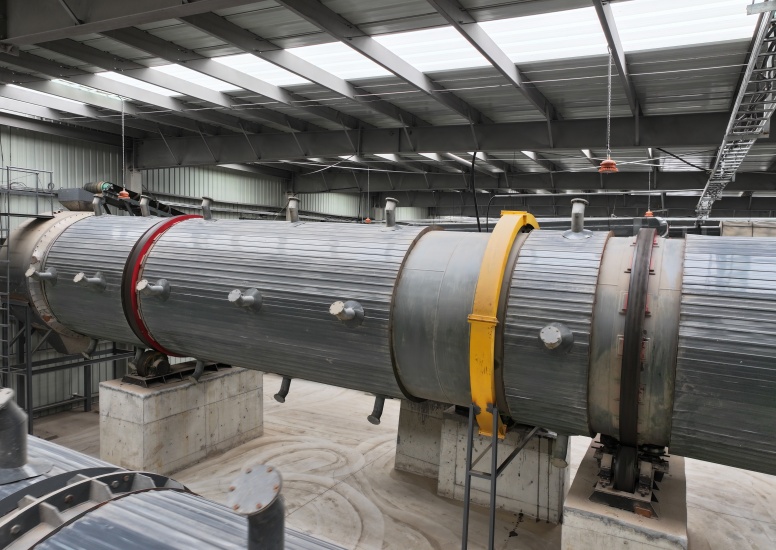
Direct heating: The flue gas from the hot blast stove is directly fed into the cylinder, with high thermal efficiency, making it the mainstream in the organic fertilizer industry
Indirect heating: Steam tube rotary dryer (with steam tube bundle inside the cylinder, the flue gas does not come into contact with the material, suitable for materials that are afraid of pollution and prone to oxidation)
Continuous drying of large quantities of organic fertilizer, animal manure, biogas residue, sludge, distiller’s grains, straw particles, compound fertilizer particles, mineral powder, sand, coal slurry and other particles and small block materials;
Attention: Not suitable for materials that are extremely fine, prone to powder flying, strongly thermally sensitive, and have a paste like texture that is not easily dispersed (such materials should be given priority for flash evaporation and vacuum drying)
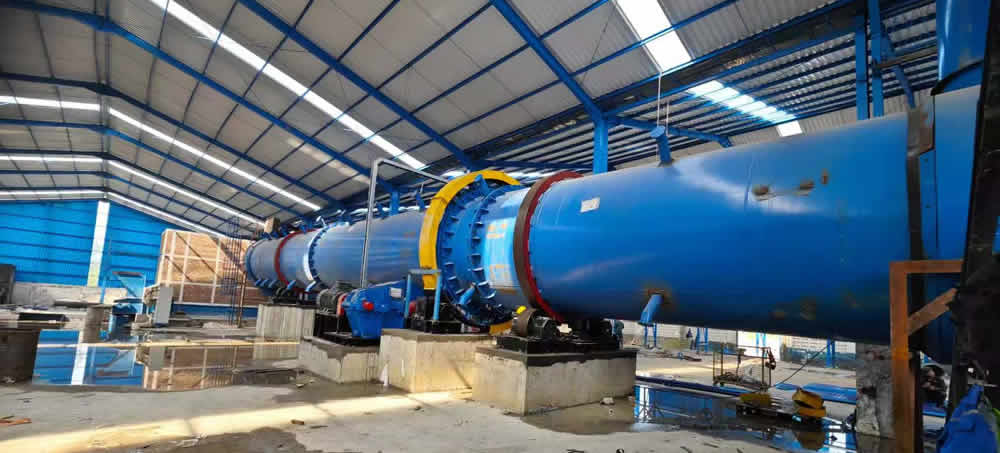
Cylinder diameter: 1.2-4.8 m; length: 8-40 m
Speed: 2-8 r/min, variable frequency adjustable
Material retention time: 20-60 minutes
Filling rate: 8% to 15%
Thermal efficiency: 50% to 80%
Feeding hot air temperature: adjustable between 150-600 ℃ depending on the material; Discharge material 60-120 ℃
Advantages
Large output, continuous operation, stable operation, suitable for large-scale fertilizer production lines
Strong adaptability, capable of handling viscous and high humidity materials, and customizable lifting plate structure
Simple maintenance, low failure rate, and controllable operating costs
shortcoming
The equipment occupies a long area and requires a large one-time investment
There is a large amount of air leakage and exhaust dust, and it is necessary to provide complete dust removal facilities
Low thermal efficiency compared to fluidized bed, not cost-effective for low production capacity conditions
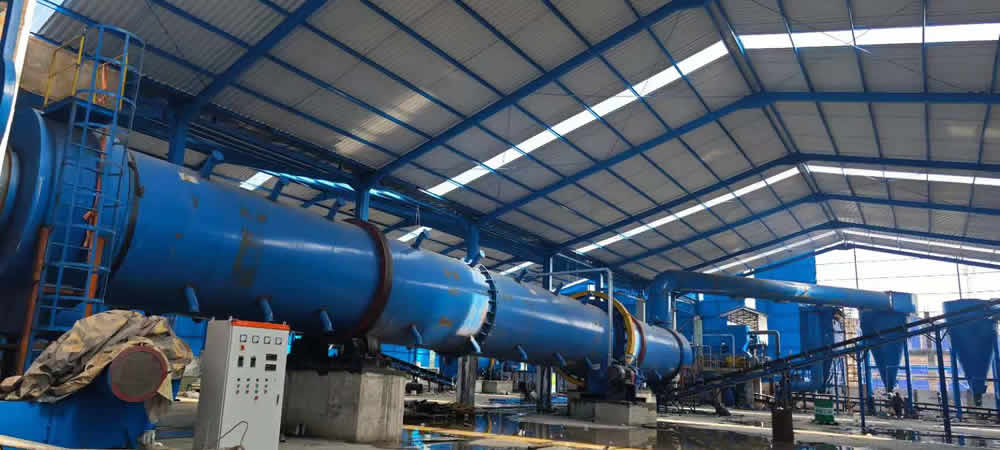
Organic fertilizer process: fermentation → crushing → granulation (disc/extrusion) → rotary dryer → cooling machine → screening → coating → after the finished product is dried, it is generally connected in series with a rotary cooling machine to cool the particles and prevent moisture regain and agglomeration.
1. Raw materials: chicken manure/sheep manure/sludge, initial moisture content, target final moisture content
2. Hourly production capacity (t/h)
3. Is it sticky? → Choose a chain anti sticking lifting plate
4. Heat source selection (biomass hot blast stove is the most common in organic fertilizer plants in Shandong)
5. Environmental requirements for exhaust gas and determination of dust removal configuration
 WhatsApp
 Email
 + 8613905485429