Professional Fertilizer Equipment, Straw Processing Equipment, Waste Processing Equipment and Mining Equipment Manufacturer.
Contact Info
Apartemen Neo Soho Lantai 10 Unit 10, Jl. Letjan S parman kav.28, Kel. Tanjung Duren Selatan Kec.
Professional Fertilizer Equipment, Straw Processing Equipment, Waste Processing Equipment and Mining Equipment Manufacturer.
Apartemen Neo Soho Lantai 10 Unit 10, Jl. Letjan S parman kav.28, Kel. Tanjung Duren Selatan Kec.
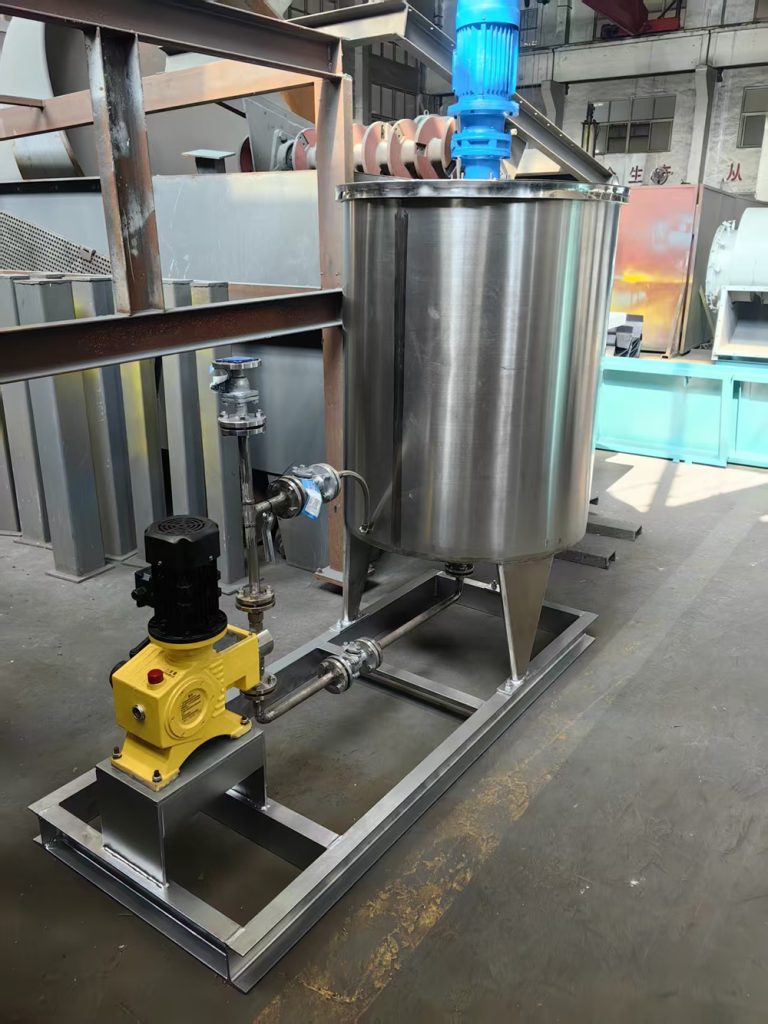
Stirring tank: a vertical tank equipment with a stirring impeller, used for solid-liquid slurry mixing, chemical dissolution, suspension, leaching, slurry adjustment, and widely used in mineral processing, organic fertilizer, chemical, and wastewater industries.
The motor and reducer drive the impeller to rotate, forming an up and down circulation flow, allowing solid particles to suspend without settling, ensuring thorough mixing of slurry and chemicals, and prolonging the reaction time; The model with a central circulation tube has a stronger circulation effect.
1. Tank body: Carbon steel (lined with rubber/anti-corrosion), stainless steel PP, Flat bottom/cone bottom;
2. Drive: motor, reducer, transmission (belt/direct connection);
3. Stirring impellers: propeller type (most commonly used in mineral processing), turbine, propeller type, anchor type;
4. Central circulation cylinder (only available for RJ type, not available for RJW), baffle, feed inlet, overflow outlet, and drain outlet.
1. Pulp agitation tank (RJ): top note pulp, pulp+reagent mixing, with circulating cylinder;
2. Drug mixing tank (RJW): for dispensing and dissolving drugs, without a circulation cylinder;
3. Mixing storage tank: Long term storage of slurry to prevent sedimentation;
4. Lifting the mixing tank: mixing+slurry lifting, lifting height ≤ 1.2m, used when the self flow height difference is insufficient.
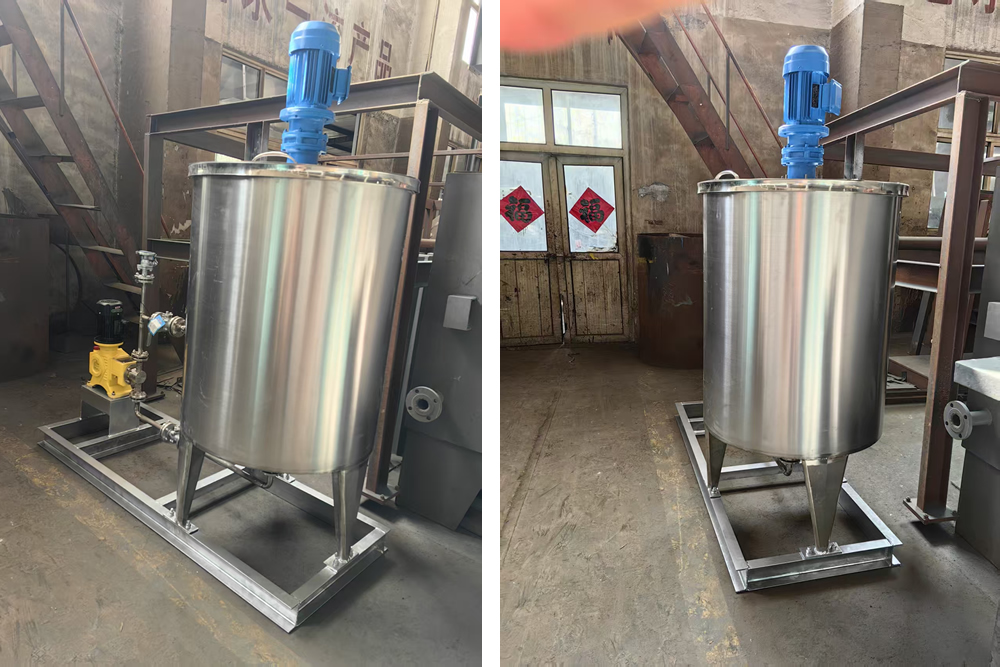
Mining: flotation, leaching, cyanide extraction of gold;
Organic fertilizer/water-soluble fertilizer: liquid fertilizer slurry adjustment, bacterial agent mixing, fermentation slurry adjustment;
Chemical industry, wastewater treatment, wet metallurgy;
Suitable for slurry concentration generally ≤ 40% and particle size < 1mm.
Propeller (propulsion type): low viscosity, large circulation, mineral slurry, fertilizer slurry (mainstream)
Vortex type: high shear, gas dispersion
Anchor/frame type: high viscosity, anti stick wall
1. Effective volume (m ³);
2. Material: ordinary carbon steel, rubber lining, 304/316 stainless steel, PP anti-corrosion;
3. Is it equipped with a circulation cylinder;
4. Slurry concentration, acidity and alkalinity, temperature;
5. Do you need to heat the jacket, liquid level, and dosing port.
 WhatsApp
 Email
 + 8613905485429