A
Urea formaldehyde fertilizer coating production line is a specialized industrial system engineered for surface modification of urea-formaldehyde resin-based fertilizers. Its primary function is to deposit a uniform, controlled-release film on the surface of UF fertilizer particles, thereby regulating nutrient release kinetics, extending fertilizer efficacy duration, and minimizing nutrient losses such as nitrogen volatilization and leaching. As a core production facility for high-value-added controlled-release fertilizers, it plays a pivotal role in modern precision agriculture.
The production line integrates material pretreatment, coating, drying, curing, and post-processing modules, featuring a modular design for flexible configuration. The standard operational workflow is structured as follows:
- Controlled-Release Mechanism: The UF resin coating forms a semi-permeable membrane. In soil environments, water penetrates the membrane to dissolve internal nutrients, which are then released slowly via diffusion—synchronizing with crop nutrient absorption cycles.
- Coating Formulation: The core component is modified UF resin (low formaldehyde content, excellent film-forming properties) blended with additives (e.g., waxes, inorganic minerals) to adjust film thickness (50-200μm) and porosity. This enables customizable release periods ranging from 30 to 180 days.
- Equipment Adaptability:
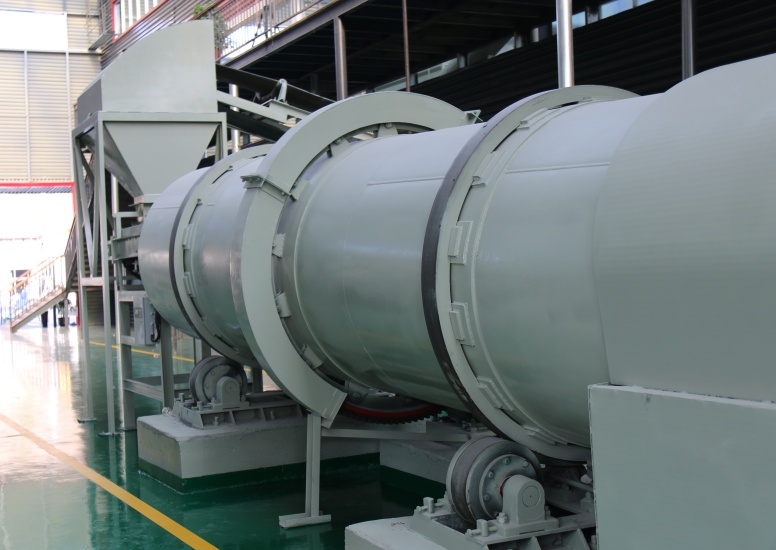
- Rotating Drum Coaters: Suitable for large-scale production (capacity 5-20 tons/hour) with low operational costs and high stability.
- Fluidized Bed Coaters: Ideal for high-precision coating applications (uniform film thickness) and small-to-medium batches of high-end products.
- Environmental Compliance: Equipped with closed-loop dust collection systems and VOCs treatment technologies (e.g., activated carbon adsorption, catalytic combustion) to mitigate formaldehyde emissions and dust pollution.
- Crop Suitability: Designed for cash crops (fruits, vegetables, flowers), field crops (wheat, corn, rice), and economic forests requiring sustained nutrient supply and reduced fertilization frequency.
- Agricultural Objectives: Aligns with the demands of precision agriculture, water-saving agriculture, and ecological agriculture—reducing fertilization frequency from 3-4 times to 1 time per growing season and increasing nutrient utilization rates from 30% to over 60%.
- Market Focus: Targets high-end agricultural markets, including organic-inorganic compound fertilizers, slow-release fertilizers, and crop-specific customized fertilizers.
 WhatsApp
 Email
Email
 + 8613905485429