Professional Fertilizer Equipment, Straw Processing Equipment, Waste Processing Equipment and Mining Equipment Manufacturer.
Contact Info
Apartemen Neo Soho Lantai 10 Unit 10, Jl. Letjan S parman kav.28, Kel. Tanjung Duren Selatan Kec.
Professional Fertilizer Equipment, Straw Processing Equipment, Waste Processing Equipment and Mining Equipment Manufacturer.
Apartemen Neo Soho Lantai 10 Unit 10, Jl. Letjan S parman kav.28, Kel. Tanjung Duren Selatan Kec.
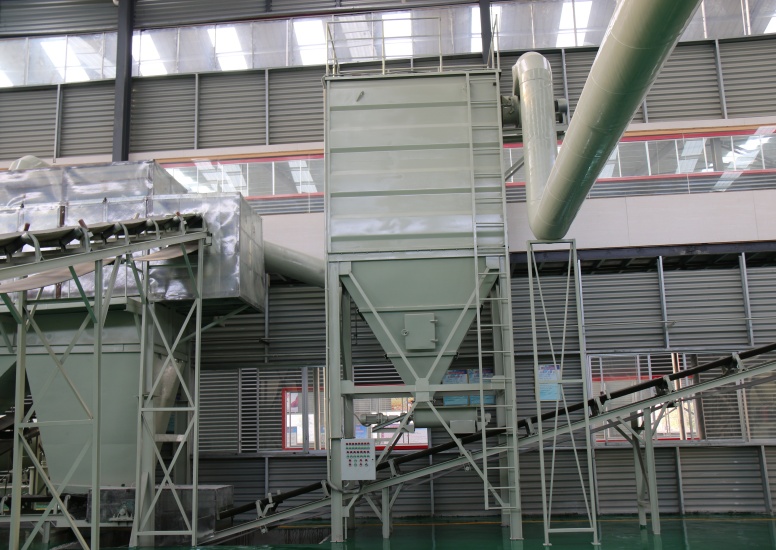
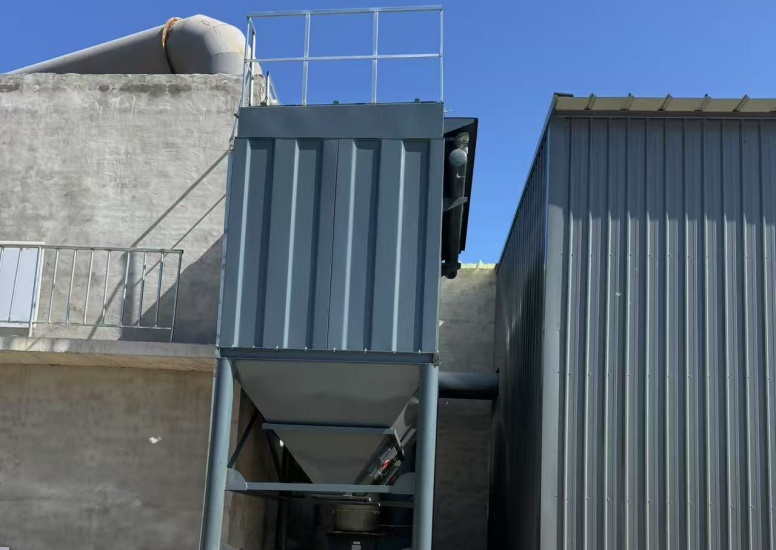
Pulse dust collector (also known as pulse jet bag filter) is an efficient and automatic industrial dust removal equipment that removes dust from the airflow through filter bags and periodic compressed air pulses.
The working process of a pulse bag filter is divided into two cycles: filtration and dust cleaning. Simply put, it first blocks the dust and then blows it off with air, and the cycle works.
1. Filtration stage (normal dust removal)
The exhaust gas containing dust enters the dust collector through the air inlet under the suction of the fan.
When the airflow passes through the filter bag, dust is intercepted on the outer surface of the filter bag, and clean air passes through the filter bag.
The purified air is discharged from the air outlet to complete dust removal.
2. Dust cleaning stage (automatic cleaning of filter bags)
As the surface area of the filter bag becomes increasingly dusty and the resistance of the equipment increases, the automatic dust cleaning system starts:
The controller opens the pulse valve, and the high-pressure compressed air in the air bag is instantly sprayed out.
High pressure airflow quickly sprays into the interior of the filter bag, causing it to instantly expand and vibrate.
The dust adhering to the outside was shaken off and fell into the ash hopper below.
After the dust cleaning is completed, the filter bag resumes its filtering ability and continues to work.
3. Ash unloading stage
The dust collected in the ash hopper is discharged through devices such as ash discharge valves and screw conveyors to complete the entire process.
Upper box (clean air chamber)
Install spray pipes, pulse valves, and clean air outlets to discharge purified air.
Central box (filter bag chamber)
The core filtration area is equipped with filter bags and bag cages, where dusty gases are removed through the filter bags.
Lower box (ash hopper)
Collecting fallen dust is usually equipped with unloading devices (such as ash discharge valves, screw conveyors, etc.).
Pulse cleaning system
Composed of an air bag, pulse valve, spray pipe, and electrically controlled dust cleaning controller, it regularly sprays compressed air to clean the dust on the filter bag.
Air inlet and outlet
Inlet air: dusty gas enters; Exhaust: Clean gas is discharged after purification.
Bracket and maintenance platform
Support the entire machine for easy maintenance and replacement of filter bags.
Induced draft system (fan)
Provide negative pressure to facilitate the smooth passage of dusty airflow through the dust collector.
Extremely high dust removal efficiency
Good capture effect on fine dust, low emission concentration, and can easily meet environmental emission standards.
Can work continuously online
Using pulse blowing for dust cleaning, it can automatically clean the dust without stopping the machine, suitable for 24-hour continuous production.
Good dust cleaning effect and stable resistance
Compressed air pulse strong dust cleaning, filter bag is not easy to block, and the equipment has stable operating resistance.
Handling large air volume and wide applicability
It can handle high air volume dusty gases and is suitable for most industries such as woodworking, metallurgy, building materials, chemical engineering, and machinery.
Easy maintenance and low operating costs
The filter bag has a long service life and is easy to replace; High degree of automation and low daily maintenance workload.
Compact structure and small footprint
Modular design, flexible layout, customizable according to on-site space, suitable for installation in the workshop.
Temperature resistance and strong adaptability
Choosing different filter media can adapt to normal temperature, medium temperature, and high temperature working conditions, and is suitable for both dry and wet, coarse and fine dust.
Pulse bag filter is the most versatile and widely used equipment in industrial dust removal, which can be used in almost all working conditions that generate dry dust. The common scenarios are as follows:
1. Building materials and mining industry
Cement plant: crushing, grinding, packaging, kiln tail dust removal
Sandstone factory and quarry: crushing, screening, and transporting dust
Dust treatment in lime plants, gypsum plants, and brick and tile plants
2. Metallurgy and Steel Industry
Dust removal of flue gas from electric furnaces and converters
Blast furnace tapping yard, raw material screening, and feeding system
Metal smelting, casting workshop shot blasting, grinding dust
3. Mechanical processing and manufacturing workshop
Welding smoke purification (centralized dust removal in welding workshop)
Laser cutting, plasma cutting smoke and dust
Grinding, polishing, sandblasting dust
Machine tool processing metal dust
4. Woodworking and Furniture Industry
Cutting, sawing, sanding, carving sawdust
Furniture factory, wooden flooring factory, wooden door factory central dust removal
5. Chemical, feed, and grain industries
Feed mill crushing, mixing, and granulation sections
Grain processing, flour mills, and dust removal for grain silo transportation
Grinding of chemical raw materials, packaging, and tail gas from reaction vessels
6. Electricity and garbage disposal
Coal fired boiler flue gas dust removal
Dust purification in garbage incineration plants
Biomass boiler dust removal
7. Pharmaceutical, plastic, and new energy industries
Raw material crushing, drying, and dust mixing in pharmaceutical factories
Plastic granulation, crushing dust
Lithium battery material processing, graphite dust
8. Other common scenarios
Dust from mixing plants and asphalt plants
Dust removal at storage, unloading, and belt transfer points
Workshop overall ventilation and dust removal, unorganized dust control
Simply put, pulse dust collector is an efficient industrial dust removal equipment that automatically cleans filter bags by blowing compressed air. It is currently one of the most widely used dust removal equipment.
 WhatsApp
 Email
Email
 + 8613905485429