Professional Fertilizer Equipment, Straw Processing Equipment, Waste Processing Equipment and Mining Equipment Manufacturer.
Contact Info
Apartemen Neo Soho Lantai 10 Unit 10, Jl. Letjan S parman kav.28, Kel. Tanjung Duren Selatan Kec.
Professional Fertilizer Equipment, Straw Processing Equipment, Waste Processing Equipment and Mining Equipment Manufacturer.
Apartemen Neo Soho Lantai 10 Unit 10, Jl. Letjan S parman kav.28, Kel. Tanjung Duren Selatan Kec.
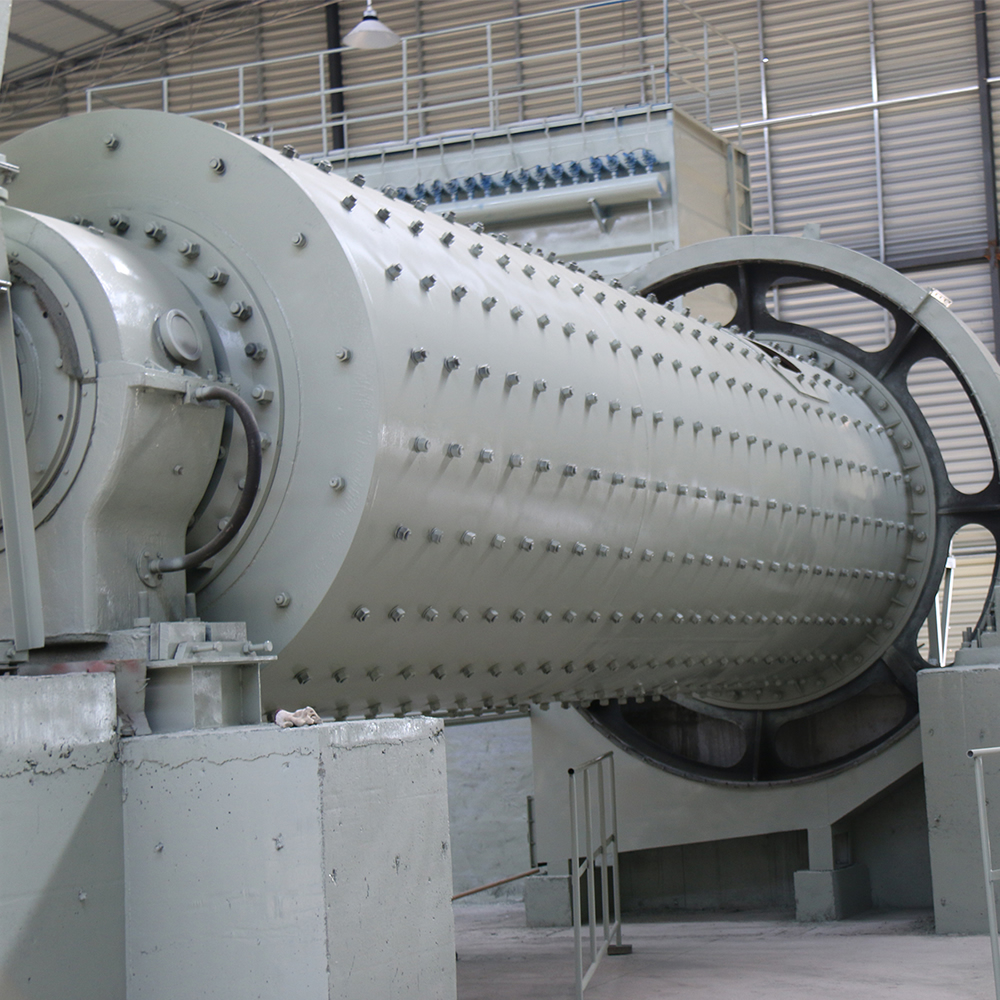
Ball mill is a key equipment for crushing materials after crushing, widely used in industries such as cement, mining, and chemical. It drives the movement of internal steel balls through the rotation of the cylinder, and uses impact and grinding to process ore and other materials into fine powder. It is one of the high precision grinding machines in industrial production.
The core structure of a ball mill includes a cylindrical cylinder, end caps, bearings, and a large gear ring for transmission. Steel balls or bars are filled inside the cylinder as grinding media.
1. Working principle: The equipment achieves crushing by driving the grinding medium movement through the rotation of the cylinder. When the cylinder rotates, the grinding medium is lifted and falls to impact the ore. At the same time, the revolution and rotation of the grinding medium form squeezing and grinding forces, and the comprehensive effect completes the crushing.
2. Effect of rotational speed: The rotation speed of the machine has its own requirements. If the speed is too fast, the steel ball will rotate against the barrel wall and lose its grinding effect. If the speed is too slow and the drop height is too low, the impact force is insufficient. Only at an appropriate speed can the steel ball fall close to a perfect parabola and produce mutual friction.
3. Medium filling: The amount of grinding medium usually accounts for 25% -50% of the effective volume of the cylinder. Too much or too little filling can affect the grinding efficiency.
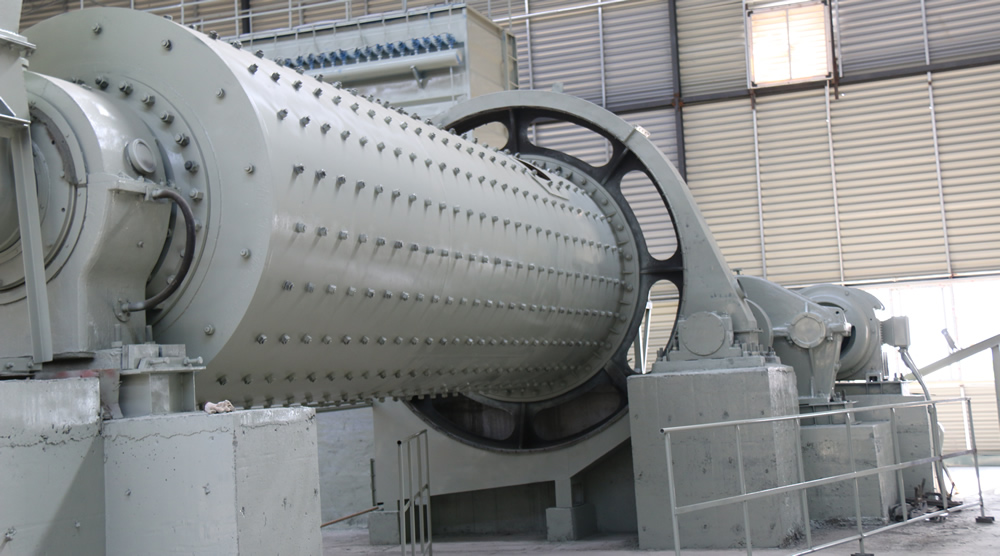
There are many types of ball mills, which can be classified into multiple types according to different standards and are suitable for different production needs.
1. According to the grinding method: it can be divided into dry and wet types. Wet type is commonly used for non-ferrous metals such as gold and copper, while dry type is suitable for refractory materials.
2. According to the ore discharge method: there are two types: grid type and overflow type. Grid type has a faster ore discharge speed, while overflow type has finer product fineness.
3. According to energy level: including ordinary ball mills and high-energy ball mills. High energy ball mills such as planetary and vibratory are suitable for new material preparation, mechanical alloying, and amorphous material synthesis.
4. Application scenarios: Widely used in production industries such as cement, silicate products, new building materials, refractory materials, fertilizers, black and non-ferrous metal beneficiation, and glass ceramics.
Ball mills are high energy consuming core equipment, and special attention should be paid to their daily maintenance and selection.
1. Lubrication and maintenance: If the bearing oil temperature rises, it should be stopped immediately for inspection. The injected lubricating oil must be clean and the seal must be good.
2. Regular inspection: Regularly check whether the connecting bolts and anchor bolts of the lining plate are loose. After replacement and installation, the bolts should be tightened again after running for a certain period of time.
3. Selection tips: Identify 2-5 strong manufacturers, check production capacity, shipping site, and after-sales service, and it is best to conduct on-site inspections at the manufacturers.
4. Energy saving trend: Small and medium-sized ball mills can use double row roller bearings instead of traditional sliding bearings, adopt air clutches to reduce starting current, and some equipment is equipped with IoT sensing modules to monitor operating parameters in real time.
 WhatsApp
 Email
 + 8613905485429