Professional Fertilizer Equipment, Straw Processing Equipment, Waste Processing Equipment and Mining Equipment Manufacturer.
Contact Info
Apartemen Neo Soho Lantai 10 Unit 10, Jl. Letjan S parman kav.28, Kel. Tanjung Duren Selatan Kec.
Professional Fertilizer Equipment, Straw Processing Equipment, Waste Processing Equipment and Mining Equipment Manufacturer.
Apartemen Neo Soho Lantai 10 Unit 10, Jl. Letjan S parman kav.28, Kel. Tanjung Duren Selatan Kec.
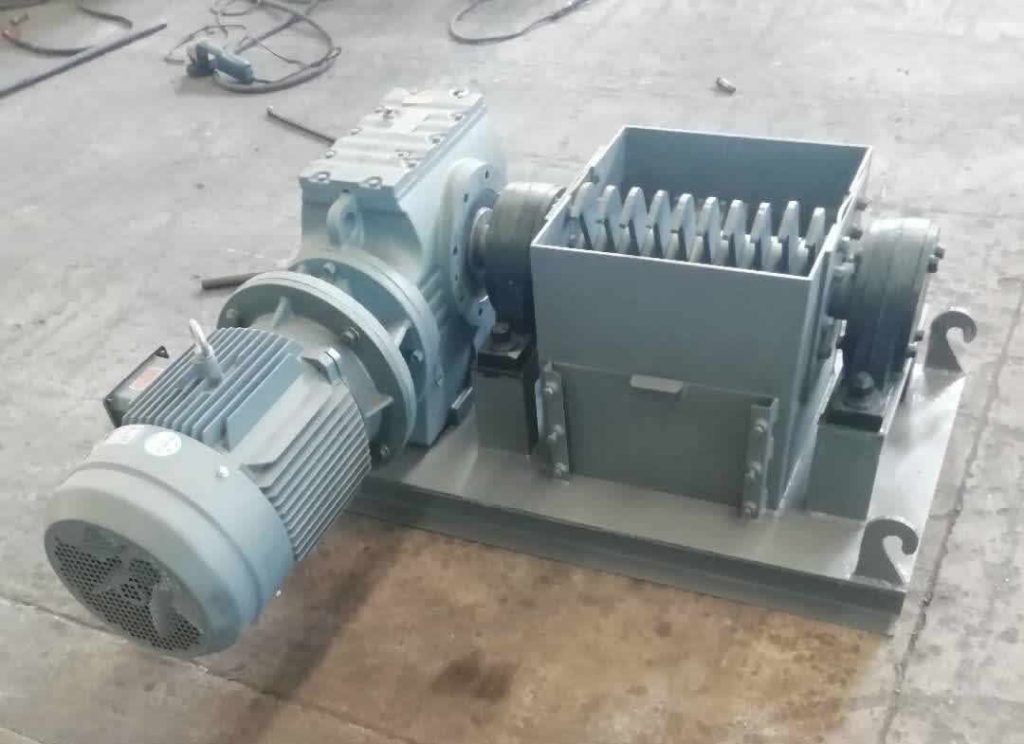
The bulk crusher generally refers to the first coarse crushing equipment on the production line, which is specialized in processing large-sized raw materials. It is commonly used for mining, construction waste, organic fertilizer lumps, and coal blocks. The mainstream is divided into four categories: jaw crusher, heavy hammer (box type) crusher, gyratory crusher, and biaxial shear crusher.
1. Jaw crusher (jaw crusher, most commonly used large head crusher)
Principle: The moving jaw plate oscillates back and forth, squeezes, bends and crushes materials, and has a V-shaped large feed inlet.
-Feed: up to 1200-1500mm stones;
-Advantages: Not afraid of hard materials (granite, iron ore), sturdy and durable, low failure rate;
-Disadvantages: Intermittent crushing, flattened particle shape;
-Applicable: mining stone materials, construction waste, hard soil blocks; Organic fertilizer production lines are rarely used.
2. Heavy hammer/box crusher (heavy hammer breaking)
Principle: The heavy-duty rotor drives the hammer head to impact and break large blocks at high speed, and the discharge is controlled by a grate strip.
-Feed: up to 800mm; one-time molding, completed in one step of coarse and medium crushing;
-Advantages: high crushing ratio, simple process;
-Disadvantages: Hard rocks wear out quickly, suitable for limestone, coal blocks, clumped soil, and soft materials;
-Suitable for: limestone, coal gangue, large mud cakes.
3. Rotary crusher (specialized for large mines)
Principle: Continuous squeezing and crushing with a rotating cone, continuous feeding and discharging.
-Feed: up to 1000mm or more; Extremely high production capacity, with an hourly output of several hundred tons;
-Advantages: Continuous operation, high output;
-Disadvantages: The equipment has a huge volume and high cost;
-Applicable: Coarse crushing of raw ore in large mines, no need for organic fertilizers/small factories.
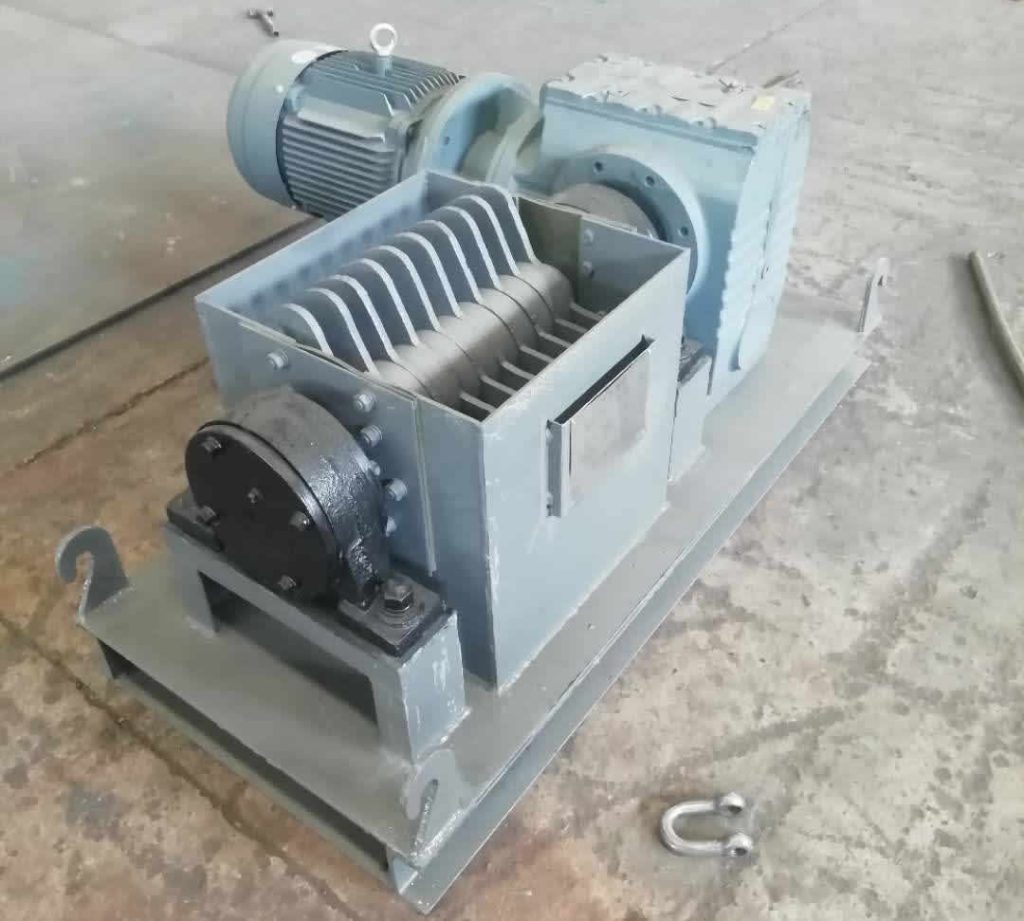
4. Dual axis shear crusher (organic fertilizer, solid waste chunks)
If you are making organic fertilizers, prioritize crushing large pieces of fermented compost, clumped manure, and sludge blocks
Principle: Two knife rollers rotate towards each other, cutting and tearing large pieces of material;
-Advantages: Wet material does not block the machine, not afraid of entanglement, low speed and low dust;
-Applicable: Bulk fermented organic fertilizers, sludge, straw bales, and solid waste.
Supporting facilities (reference for organic fertilizer production line)
After the large pieces are crushed, they are generally equipped with a drum screening machine, a belt conveyor, and a granulator (disc/extrusion granulator).
Supplementary points
-Fixed type: stable output, suitable for fixed factory areas;
-Mobile bulk crusher: The chassis is equipped with a walking belt, and the shovel directly loads the material. The construction site and site often change scenes;
-Vulnerable parts: jaw plate, hammer head, and blade teeth, which are the focus of daily maintenance.
 WhatsApp
 Email
Email
 + 8613905485429