Professional Fertilizer Equipment, Straw Processing Equipment, Waste Processing Equipment and Mining Equipment Manufacturer.
Contact Info
Apartemen Neo Soho Lantai 10 Unit 10, Jl. Letjan S parman kav.28, Kel. Tanjung Duren Selatan Kec.
Professional Fertilizer Equipment, Straw Processing Equipment, Waste Processing Equipment and Mining Equipment Manufacturer.
Apartemen Neo Soho Lantai 10 Unit 10, Jl. Letjan S parman kav.28, Kel. Tanjung Duren Selatan Kec.
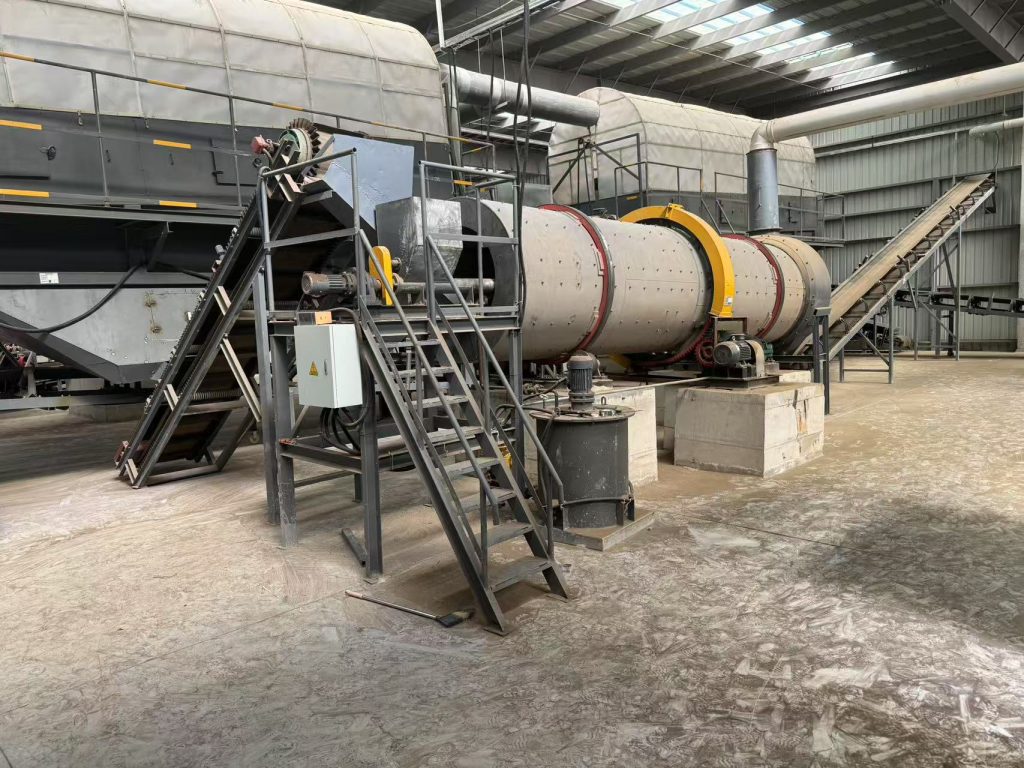
The drum coating machine, also known as the rotary drum coating machine, is a core equipment for deep processing in the later stage of organic fertilizer and compound fertilizer production lines. It is specifically designed to coat the surface of granular fertilizers with protective film, solving problems such as moisture absorption, clumping, and pulverization of fertilizers. At the same time, it can also be used for slow-release coating, coloring and brightening, improving the quality and storage period of fertilizer products .
The whole machine cylinder tilts at 3 °~5 ° and rotates slowly (at a speed of 5-15r/min), while the internal plate strip continuously rolls and rubs against the animal material;
Equipped with atomization spray system (liquid coating agent)/dry powder spreader (talcum powder, bentonite), evenly spray/cover coating materials;
The particles continuously roll and collide, and the coating material uniformly adheres to form a complete thin film; Optional low-temperature hot air drying (50-80 ℃), rapid curing of the coating, and direct discharge of the finished product into screening and packaging processes are popular agricultural inputs .
Main engine drum: carbon steel cylinder body, lined with 304 stainless steel/polypropylene/rubber plate, anti-corrosion and anti sticking materials; Built in copying board to enhance material rolling;
Supporting roller+blocking wheel: bear the weight of the drum, limit and prevent the cylinder from moving;
Transmission system: motor+reducer+large gear ring drive, smooth operation with low noise;
Coating spraying accessories: storage mixing tank, high-pressure oil pump, multiple sets of atomizing nozzles; Dry powder coating combined with spiral powder spreader;
Hot air drying system (optional): temperature controlled hot air, suitable for microbial fertilizers and resin slow-release coating;
Inlet/outlet: Connect with the front cooling screening and rear packaging equipment for continuous production.
Mainstream models and technical parameters of drum coating machine
table
Specification (diameter x length), output (t/h), matching motor (kW), applicable production line scale
Φ 1.2m × 4m 1-5 5.5 Small Organic Fertilizer Line (100000-30000 tons/year)
Φ 1.4m × 4m 4-7 7.5 Small and Medium sized Compound Fertilizer Line
Φ 1.6m × 6m 8-15-11 type production line (50000-100000 tons)
Large scale fertilizer plant with a diameter of 1.8m × 8m and dimensions of 12-25
Production line with an annual output of over 100000 tons, with a diameter of 2.0-2.4m x 7-9m, 30-50, 18-30, and an annual output of over 100000 tons
The inclination angle of the cylinder is generally 3.5 °, the uniformity of the coating is ≥ 98%, and the particle breakage rate is extremely low.
1. Liquid coating (anti caking/slow-release)
Paraffin oil, resin coating solution, humic acid solution, microbial solution, silicone oil, urea solution;
Function: slow-release and controlled release, prolong fertilizer efficiency, isolate water vapor and prevent clumping for 6-12 months.
2. Dry powder coating (low-cost moisture-proof)
Talc powder, bentonite, diatomaceous earth, light calcium carbonate;
Function: Surface drying and isolation, suitable for low-end organic fertilizers, reducing moisture absorption and bag sticking.
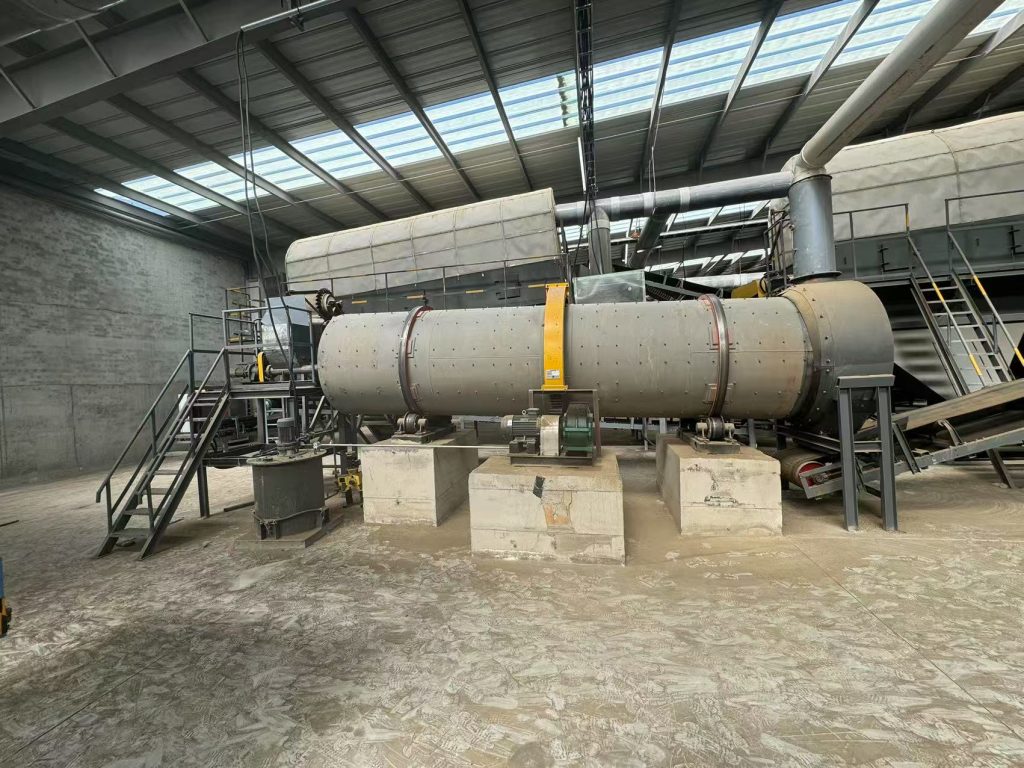
Uniform coating without dead corners: The drum rolls 360 degrees, without missing particles, and the finished particles are bright and round;
Small particle loss: Low speed flexible rolling, less prone to particle breakage compared to disc coating, resulting in a 15% -20% increase in particle strength;
Corrosion resistant and durable: lined with stainless steel, suitable for acidic organic fertilizers and compound fertilizers;
Continuous automation: can be linked with PLC for granulation, cooling, screening, and packaging, saving labor;
One machine for multiple purposes: it can handle organic fertilizer, compound fertilizer, urea, and feed pellet coating;
Easy maintenance: modular structure, easy to open and clean cylinder, detachable nozzle for cleaning blockages.
Organic fertilizer production line: anti caking and microbial encapsulation of chicken manure/cow manure/sludge particles;
Compound fertilizer, blended fertilizer, urea slow-release coating;
Deep processing of biological bacterial fertilizer and slow-release controlled release fertilizer;
Surface coating and polishing of feed particles and chemical particles.
Check the supporting wheel, spray pipeline, and lubricating oil of the reducer before starting up;
Prepare the coating solution in advance and stir it evenly to prevent sedimentation;
Start the drum idling first, then feed, and synchronously start the spray/powder spraying;
Adjust the drum speed, spray flow rate, and hot air temperature based on particle size and production yield;
Observe the thickness of the coating during discharge and adjust the dosage of the medication accordingly;
Stop the material and spray before stopping the machine. Run the cylinder idle for 5 minutes to empty the material and clean the nozzle and cylinder wall residue.
Add butter to the transmission gear ring and supporting wheel every week to reduce wear and tear;
The atomizing nozzle should be cleaned every shift to avoid blockage caused by dry coating agents;
Clean the adhesive material on the cylinder wall after production to prevent clumping from affecting the next coating effect;
When coating microbial agents, the hot air temperature should not exceed 60 ℃ to avoid the inactivation of live bacteria;
It is prohibited to open the cover or inspect the cylinder during operation to prevent material entanglement.
Standard process: Granulator → Drum cooling machine → Drum coating machine → Screening machine → Automatic packaging scale
Small and medium-sized production lines often use 1.2-1.6 meter drum coating machines, while large compound fertilizer factories are equipped with 1.8-2.4 meter large-diameter models.
 WhatsApp
 Email
Email
 + 8613905485429