Professional Fertilizer Equipment, Straw Processing Equipment, Waste Processing Equipment and Mining Equipment Manufacturer.
Contact Info
Apartemen Neo Soho Lantai 10 Unit 10, Jl. Letjan S parman kav.28, Kel. Tanjung Duren Selatan Kec.
Professional Fertilizer Equipment, Straw Processing Equipment, Waste Processing Equipment and Mining Equipment Manufacturer.
Apartemen Neo Soho Lantai 10 Unit 10, Jl. Letjan S parman kav.28, Kel. Tanjung Duren Selatan Kec.
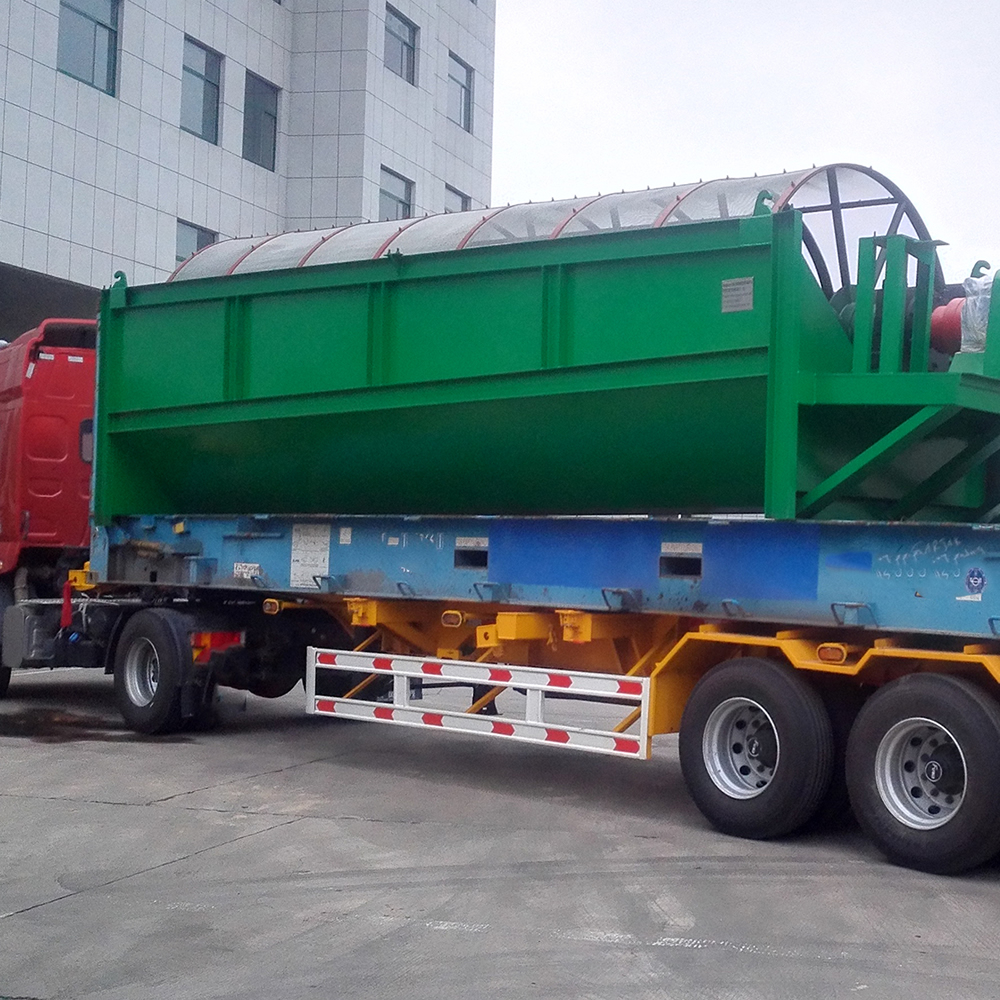
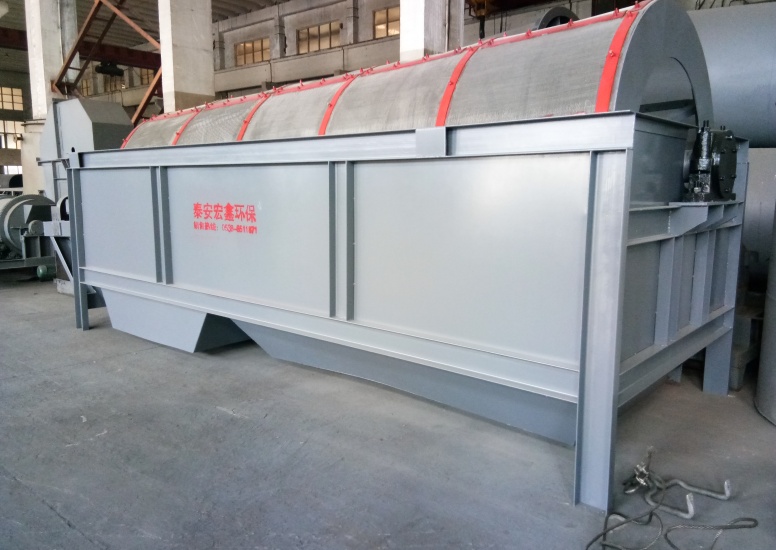
The drum screening machine is a low-speed rotary grading and screening equipment that relies on the rotation of inclined drums to achieve material size separation. Dry and wet sticky materials are not easily blocked in the net, and are widely used for grading organic fertilizers, sand and gravel, coal, household waste, and ores. It is also a standard equipment for organic fertilizer production lines
The six core components of the whole machine are:
Screen cylinder body: inclined installation (inclination angle 3 °~8 °), divided into two types: axial and non axial; The screen mesh is a segmented combination, made of manganese steel/stainless steel material, with customized aperture sizes (1-100mm) as needed; The double-layer tube can separate fine, medium, and coarse materials at once.
Drive system: motor+reducer+coupling, low-speed smooth rotation, low noise.
Rack base: welded with channel steel for load-bearing, can be equipped with mobile tires to make a mobile drum screen.
Inlet and outlet hopper: front-end feeding, downstream fine material discharge, and drum tail coarse material discharge.
Dust proof sealing cover: closes the cylinder, reduces dust, and meets environmental standards.
Self cleaning device: Equipped with a built-in rubber racket ball/brush, the drum rotates automatically to clean blocked materials.
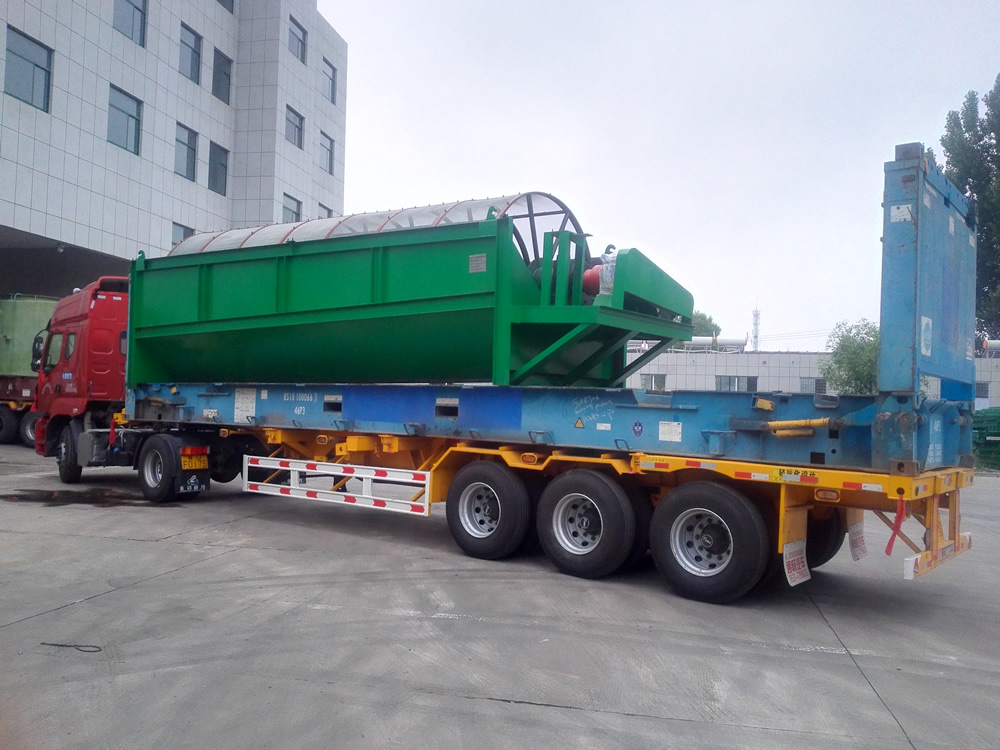
The material is fed into the inclined drum from the feeding port;
The motor drives the drum to rotate at low speed, and the material continues to roll and slide inside the drum;
Fine materials smaller than the sieve mesh are passed through the sieve and discharged from the hopper below;
Large coarse materials move forward along the inclination of the drum and are discharged from the tail of the drum;
During the rolling process of materials, the particles stuck in the sieve holes are automatically popped open, which has an anti blocking effect. Wet organic fertilizers and peat can also be continuously screened.
1. The center has a roller screen with a shaft (special for organic fertilizers)
Axial drum screen
Features: Intermediate spindle support, lightweight structure, low cost, and small footprint;
Applicable: Powder, granular organic fertilizer, compound fertilizer, nutrient soil, fine sand and gravel;
Disadvantage: Large hard objects can easily get stuck on the central axis, making it unsuitable for oversized garbage and raw stones.
2. Shaftless drum screen (sand and gravel/garbage/high humidity materials)
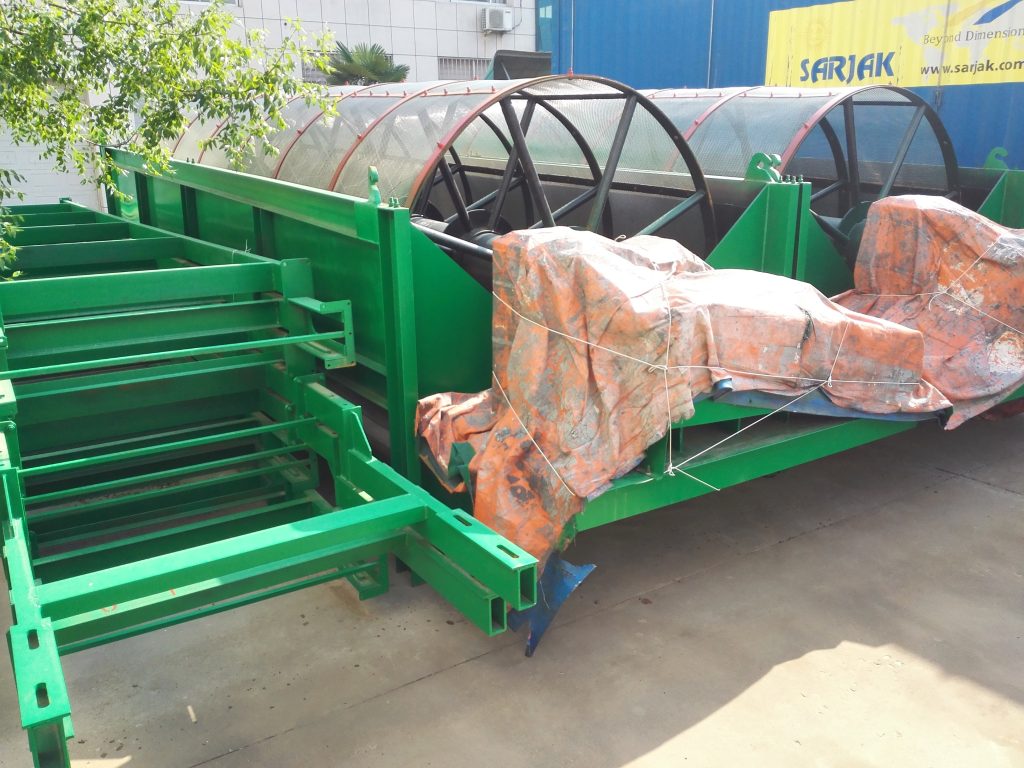
Features: No central axis, roller lifting drum, transparent interior, extremely strong passability;
Applicable: construction waste, household waste, wet clay, large stone materials, high humidity fermented manure;
Advantages: Almost no material blockage, higher output, washable screening;
Disadvantages: Equipment weight and higher procurement costs.
Not blocking the net: Rolling self-cleaning, the screening ability of sticky and wet materials far exceeds that of vibrating screens;
Smooth and low-noise operation: low-speed rotation, no high-frequency vibration, and the body is not easily cracked;
Large production capacity: single unit processing capacity of 20-1000 tons per hour, suitable for large-scale production lines;
Easy maintenance: Segmented screen mesh, single section damage can be replaced separately without the need for overall disassembly;
Dust control: Fully enclosed shell, matched with dust removal for environmentally friendly production;
Wide material adaptability: dry materials, wet materials, viscous fermentation materials, and block ores can all be screened.
Organic fertilizer/compound fertilizer industry (most commonly used)
Screening of fermented and decomposed manure, grading of finished particles, removal of clumps and return materials, separation of impurities and stones, and use of a complete line of turners and granulators.
sand and gravel building materials
Classification of river sand, mountain sand, and gravel, separation of soil and stone powder, and use of mobile drum screen for sand screening on construction sites.
Mining coal
Separation of lump coal/coal powder, screening of coal slurry, classification of limestone and pebbles.
Solid waste environmental protection
Household waste sorting, construction waste crushing material screening, and garden nutrient soil screening.
table
Model: Cylinder diameter × Cylinder length, Power (kw), Processing capacity (t/h), Applicable scenarios
GS1015 Φ 1000 × 1500 3 30~50 Small Organic Fertilizer Plant
GS1230 Φ 1200 × 3000 3~5.5 50~80 medium-sized fertilizer production line
GS1530 Φ 1500 × 3000 5.5~7.5 80~150 Large scale organic fertilizer and nutrient soil
GS1830 Φ 1800 × 3000 7.5~11 150~200 sand and gravel, shaftless large output payment
Dry and wet materials: For high humidity manure and clay, priority should be given to using shaftless and tapping cleaning devices; Dry particles can be selected with an economical axial sieve;
Grading requirement: use single-layer tubes for two types of materials at a time; Select double-layer drum for fine/medium/coarse grades;
Production matching: Increase production line capacity by 1.2 times and select models to avoid material blockage and overload;
Mesh aperture: 2-5mm is commonly used for organic fertilizer products; sand and gravel are customized according to aggregate specifications;
Site conditions: The site is not fixed, and mobile wheeled drum screens are selected for mobile operations on the construction site.
Regularly check the lubricating oil of the reducer and the wear of the idler roller;
Clean up the clumps on the sieve in each class, and promptly supplement any missing balls;
After screening wet materials, idle for 5 minutes before stopping to clean the drum and prevent the materials from drying up;
The partial damage caused by the wear of the screen mesh can be replaced separately with segmented mesh to reduce the cost of consumables.
 WhatsApp
 Email
Email
 + 8613905485429