Professional Fertilizer Equipment, Straw Processing Equipment, Waste Processing Equipment and Mining Equipment Manufacturer.
Contact Info
Apartemen Neo Soho Lantai 10 Unit 10, Jl. Letjan S parman kav.28, Kel. Tanjung Duren Selatan Kec.
Professional Fertilizer Equipment, Straw Processing Equipment, Waste Processing Equipment and Mining Equipment Manufacturer.
Apartemen Neo Soho Lantai 10 Unit 10, Jl. Letjan S parman kav.28, Kel. Tanjung Duren Selatan Kec.
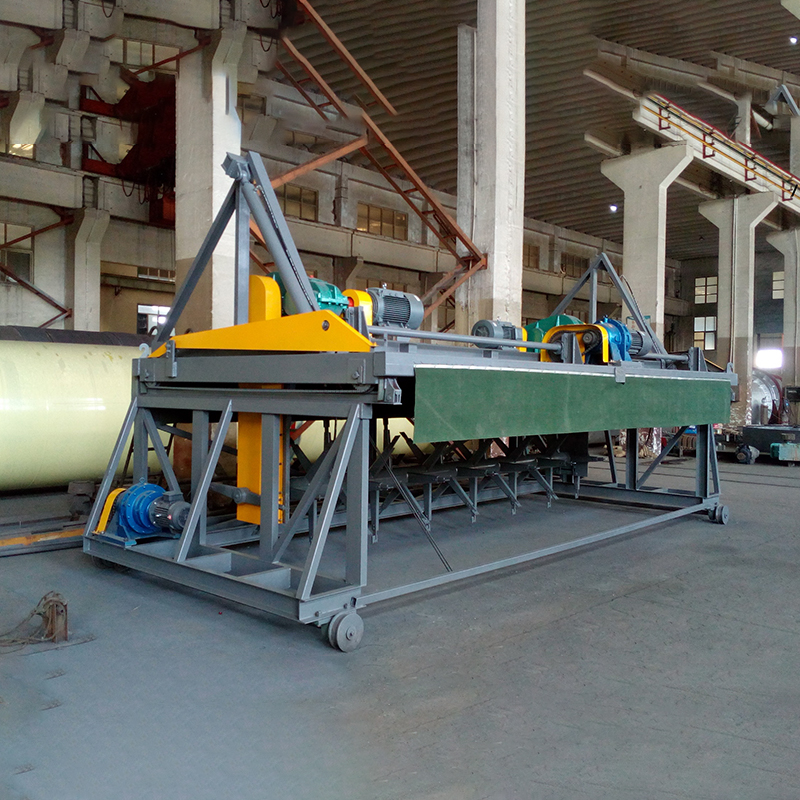
Groove type flipping machine, commonly known as groove type flipping machine, is a specialized equipment for aerobic fermentation of organic fertilizers. It requires the construction of concrete fermentation grooves in advance, and the equipment travels back and forth on the tracks on both sides of the grooves to continuously flip the organic materials in the grooves, achieving ventilation, heating, and maturation.
Fermentation trench: a long cement trench with embedded tracks on both sides;
The equipment spans between two tracks, and the entire trench material can be flipped through;
Can be paired with a shift truck, with one flipping machine rotating multiple fermentation tanks to reduce equipment investment.
Laying chicken manure, sludge, straw, bacterial residue and other raw materials into the trench;
The machine horizontally rotates the rolling cutter deep into the bottom of the material layer, walking forward while dispersing the bottom material upwards and throwing it backwards;
The flipping process brings in a large amount of oxygen, causing the pile to rapidly heat up, killing insect eggs and bacteria, and completing harmless decomposition;
Automatic heat dissipation, uniform water adjustment, to avoid local anaerobic odor.
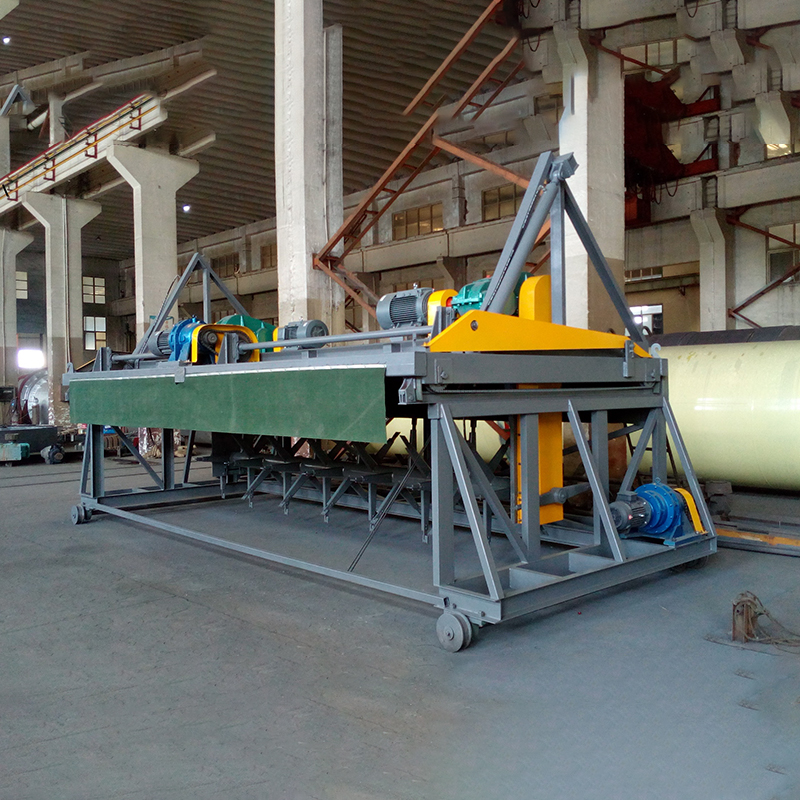
Walking frame: The main body spans the groove, and the two ends of the walking wheels move along the track;
Flipping spindle+crushing teeth: deep flipping, breaking up clumps;
Hydraulic lifting mechanism: can lift the rolling cutter for easy cleaning, maintenance, and displacement;
Drive and electronic control: dual motors (walking+flipping), PLC automatic timed flipping, limit protection.
Flip width (trench span): 3m, 4m, 5m, 6m, 8m, 10m;
Flipping depth (maximum stacking height of materials): 1.0m to 1.8m;
Large processing capacity, suitable for large-scale continuous production.
Large and medium-sized organic fertilizer processing plants;
Large scale cattle, pig, and chicken breeding manure treatment station;
Harmless treatment of municipal sludge and kitchen waste;
Fermentation of distiller’s grains, traditional Chinese medicine residue, mushroom residue, and garden straw;
Production of nutrient soil for seedling cultivation and landscaping substrates.
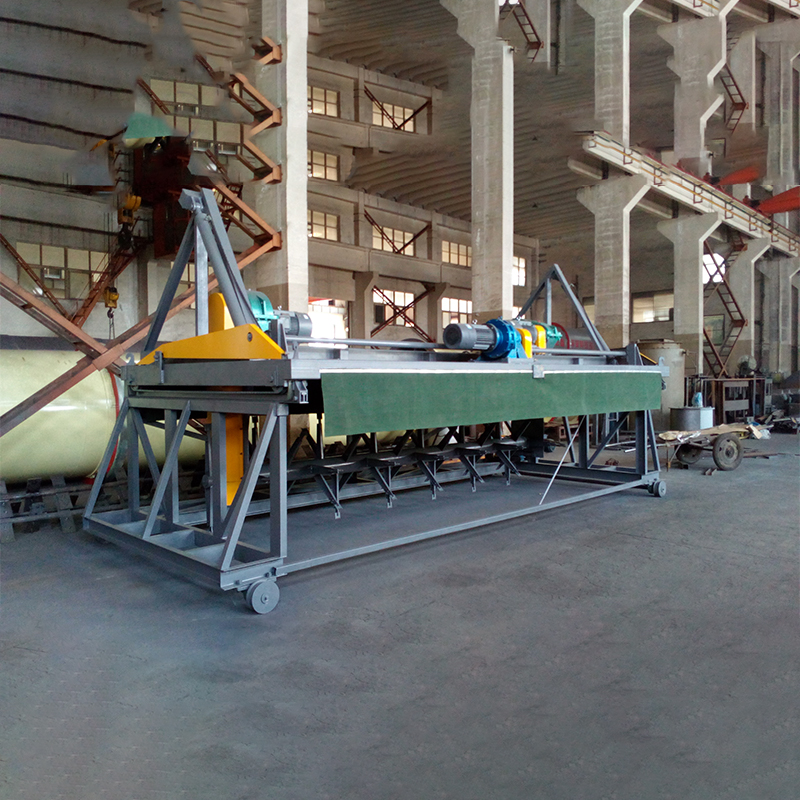
advantage
Stable fermentation, unaffected by rain and snow weather, suitable for indoor factory operations;
The flipping depth is sufficient, the heap is evenly decomposed from top to bottom, and the odor is controllable;
High degree of automation, one person can supervise multiple fermentation tanks;
Large production capacity, suitable for organic fertilizer projects with an annual output of over 10000 tons.
shortcoming
Civil construction is required to pour fermentation trenches, which incurs high initial infrastructure costs;
The venue is fixed and the fermentation location cannot be changed arbitrarily;
Small retail investors and temporary composting are not suitable, priority should be given to using a track flipping machine.
Groove type: fixed groove track, with high production capacity and standardized factory use;
Crawler type: Stacking strips directly on flat ground without the need for grooves, suitable for small and flexible site scenarios.
 WhatsApp
 Email
Email
 + 8613905485429