Professional Fertilizer Equipment, Straw Processing Equipment, Waste Processing Equipment and Mining Equipment Manufacturer.
Contact Info
Apartemen Neo Soho Lantai 10 Unit 10, Jl. Letjan S parman kav.28, Kel. Tanjung Duren Selatan Kec.
Professional Fertilizer Equipment, Straw Processing Equipment, Waste Processing Equipment and Mining Equipment Manufacturer.
Apartemen Neo Soho Lantai 10 Unit 10, Jl. Letjan S parman kav.28, Kel. Tanjung Duren Selatan Kec.
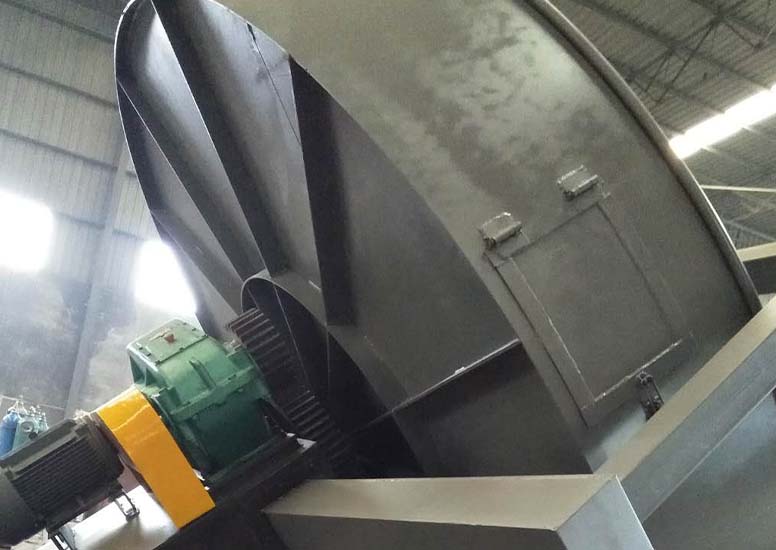
The disc granulator is a rolling and agglomeration granulation equipment for powdered materials. It is the most commonly used granulation equipment in organic fertilizer and compound fertilizer production lines, specializing in making round spherical particles of fermented manure, straw powder, mineral powder and other powders.
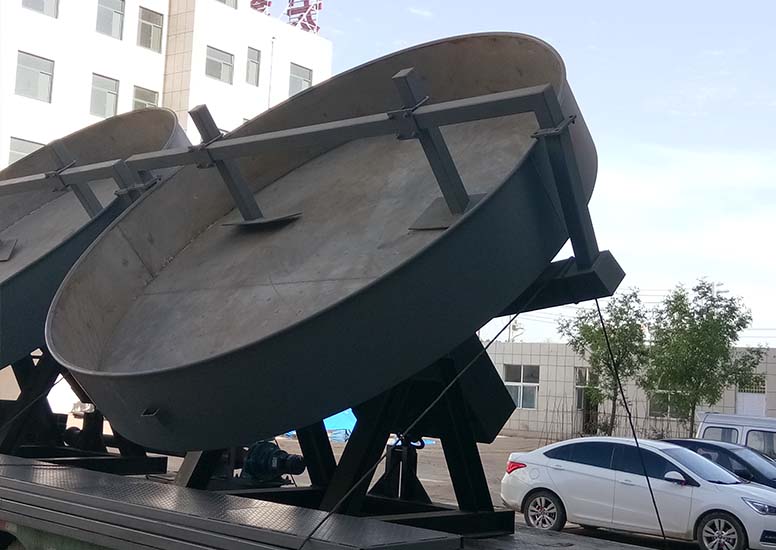
Tilted granulation disc: The overall arc-shaped pot bottom shape has an adjustable inclination angle (30 °~55 °), and the disc is lined with a wear-resistant and anti-corrosion layer;
Spray system: Spray clean water/binder (bentonite, starch solution) to provide viscosity to the powder;
Automatic scraper: Scrape off the sticky material at the bottom of the disc to prevent material accumulation and clumping;
Drive base: motor+reducer, adjustable speed, stable machine without the need for anchor bolts;
Angle adjustment mechanism: Change the inclination of the disc to control particle size and discharge speed.
Working principle (organic fertilizer granulation process)
Pre treatment: The decomposed organic fertilizer powder (with a moisture content of 25% to 35%) is fed into a tilted disc;
Spray humidification: The nozzle evenly sprays water/adhesive to make the powder sticky;
Rolling into a ball: The disk rotates, and the material continues to roll under the combined action of gravity, centrifugal force, and friction; Fine powder first forms tiny crystal nuclei, continuously adsorbing the powder and gradually growing;
Automatic discharge: After the particles reach the target size (2-6mm), the gravity is greater than the adhesion, and they automatically roll off from the edge of the disc;
Fine powder reflux: The unformed fine powder is sieved and returned to the disc for secondary granulation, resulting in high utilization of raw materials.
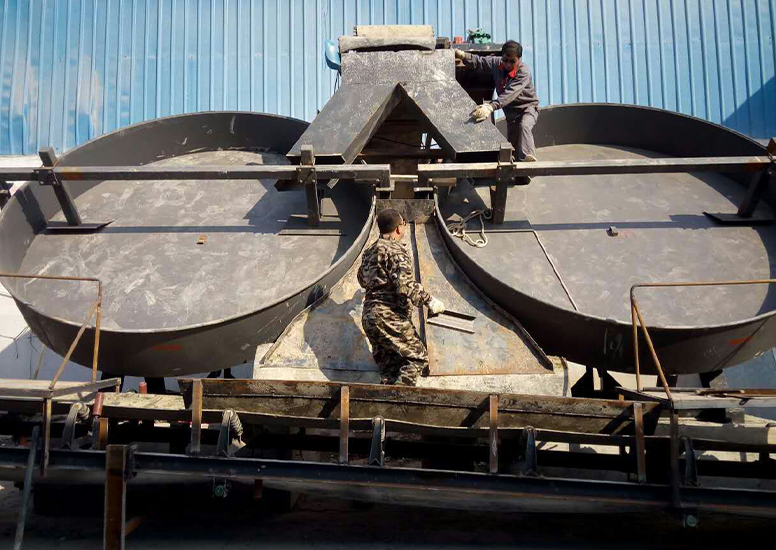
Main advantages (preferred reason for organic fertilizer factories)
Good particle quality: The round balls are smooth and uniform, with a granulation rate of over 90%, and the finished fertilizer sells well;
Simple operation and low threshold: Workers can get started in a short period of training, and maintenance is easy;
Small investment and minimal land occupation: The price is much lower than that of a rotary drum granulator, with a single unit occupying only 3-5 square meters;
Flexible particle size control: By adjusting the inclination angle, rotation speed, and water spray volume, larger/smaller particles can be produced;
Room temperature granulation: No heating required, suitable for organic fertilizer raw materials with high organic matter and low temperature resistance;
One machine dual-use: granulation and rolling polishing at the same time, without the need for additional polishing equipment.
Sensitive to moisture and viscosity of raw materials: powder that is too dry cannot form balls, and too wet can easily stick to the plate;
The upper limit of production capacity is not high, making it more suitable for small and medium-sized organic fertilizer factories. Large production lines often use rotary drum granulation;
It is difficult to pelletize dry powder materials with excessively high fibers and completely non viscous properties, and they require the use of binders.
Fertilizer industry (mainstream): fermented chicken manure/cow and sheep manure organic fertilizer, bio bacterial fertilizer, compound fertilizer, amino acid fertilizer granulation;
Other fields: feed, mineral powder, clay, coal powder, chemical powder balling.
Supporting process (complete process of organic fertilizer)
Fermentation and maturation of raw materials → crushing and screening → disc granulation → drying → cooling → screening → finished granular
Fermented organic fertilizer is the raw material, and the disc granulator is the core equipment for processing powdered organic fertilizer into commercial granular organic fertilizer. After granulation, the fertilizer does not raise dust, is easy to apply, and releases nutrients more stably.
 WhatsApp
 Email
Email
 + 8613905485429