Professional Fertilizer Equipment, Straw Processing Equipment, Waste Processing Equipment and Mining Equipment Manufacturer.
Contact Info
Apartemen Neo Soho Lantai 10 Unit 10, Jl. Letjan S parman kav.28, Kel. Tanjung Duren Selatan Kec.
Professional Fertilizer Equipment, Straw Processing Equipment, Waste Processing Equipment and Mining Equipment Manufacturer.
Apartemen Neo Soho Lantai 10 Unit 10, Jl. Letjan S parman kav.28, Kel. Tanjung Duren Selatan Kec.
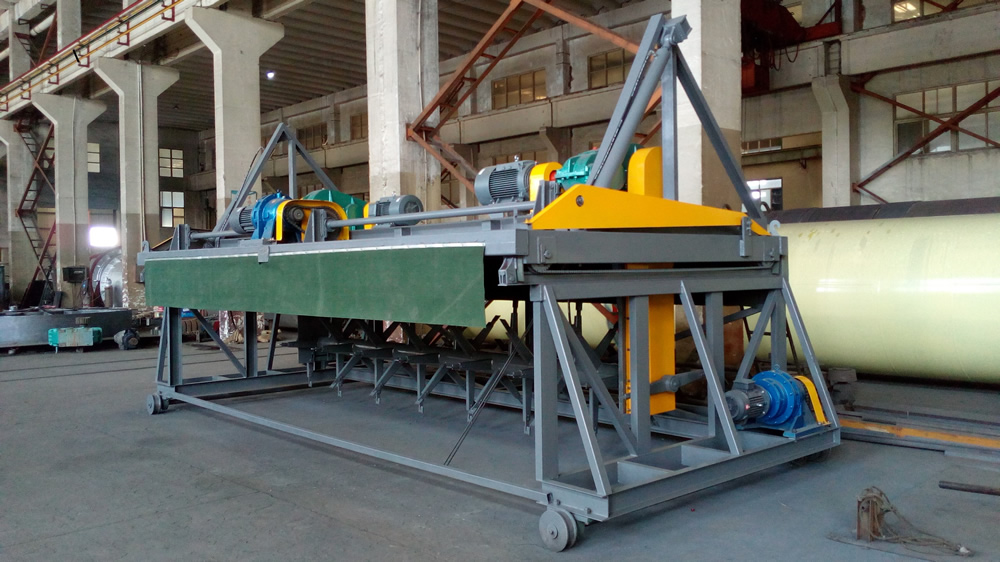
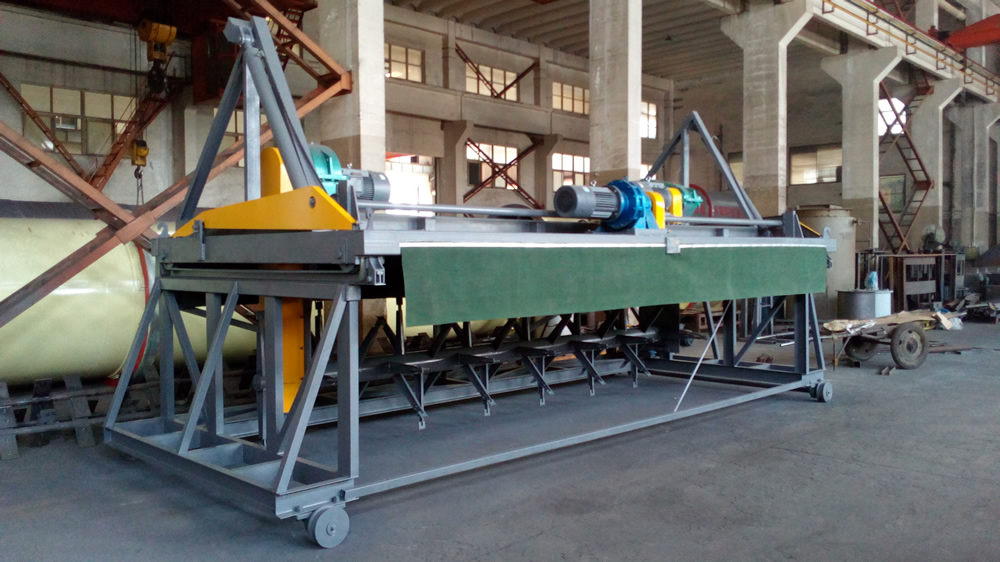
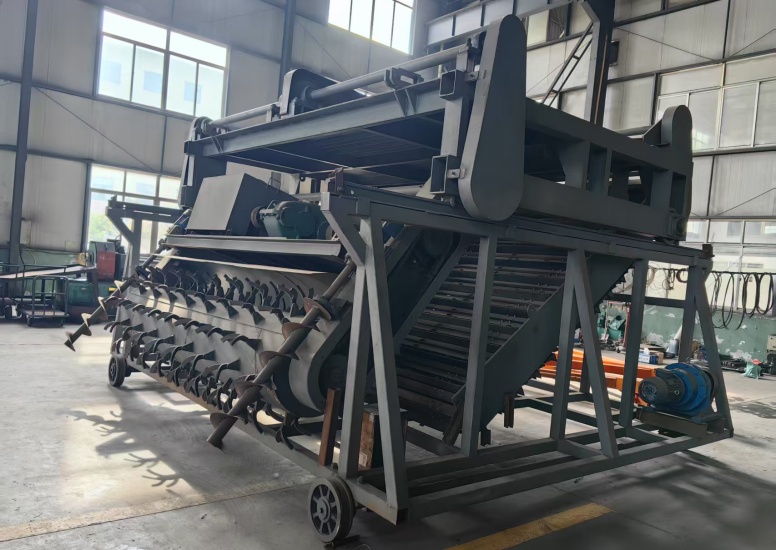
Trench flipping machine (also known as trough flipping machine) is a specialized equipment that travels along a fixed concrete fermentation tank track and flips and mixes organic materials in the tank. Its core is used for organic fertilizer production and aerobic fermentation and maturation of organic solid waste.
Rack and walking mechanism: Equipped with walking wheels at both ends, it spans the tracks on both sides of the fermentation tank and can move along the length of the tank.
Flipping spindle and cutting tools: horizontally arranged rotating blade rollers with plate or rotary tillage flipping blades, deep into the material layer at the bottom of the groove.
Drive and control: including walking motor, flipping motor, reducer, PLC control cabinet, can be manually/automatically controlled, with soft start and limit protection.
Lifting system: mostly driven by hydraulic pressure, it can lift the knife roller for easy slot replacement or maintenance.
The materials are placed in a long concrete fermentation tank, with I-beam tracks laid on the top of the tank.
The equipment spans on the track, and the walking mechanism drives the longitudinal movement of the machine body. The knife roller rotates at high speed, flipping up, dispersing, and throwing the material at the bottom of the tank backwards.
Flipping enables material oxygenation, heat dissipation, moisture regulation, and crushing of clumps, promoting aerobic microbial fermentation and achieving uniform maturation; It can be timed and quantified for operation, with a fermentation cycle of about 15-20 days.
The mobile phone can have multiple slots per machine, reducing equipment investment.
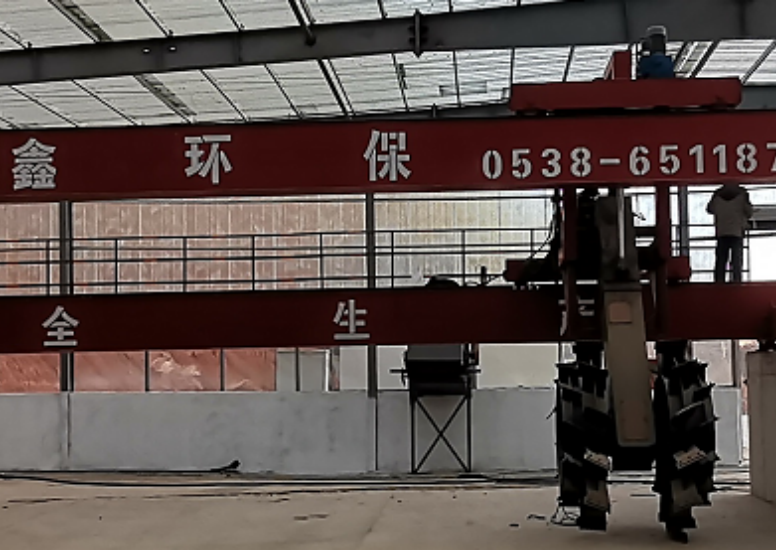
Processing organic waste such as animal manure, sludge, straw, sugar mill filter sludge, mushroom residue, etc., widely used for:
Organic fertilizer plant, compound fertilizer plant
Large scale livestock farm manure treatment
Sludge disposal plant, kitchen waste treatment station
Horticultural field, edible mushroom plantation
Evenly flipping and throwing: The knife roller reaches the bottom of the groove, avoiding “heating up and cooling down”, and the fermentation is more thorough.
Efficient and energy-saving: The track type walking has low resistance and energy consumption, suitable for continuous and large-scale production (annual output of 100000-40000 tons).
High degree of automation: PLC can set the flipping frequency and speed, reducing manual labor and ensuring stable operation.
Compact footprint: The fermentation tank can be arranged in multiple layers or parallel, and the unit production capacity occupies less space than the stack composting.
The trench turning machine must be equipped with a concrete fermentation tank, suitable for large-scale, fixed, and continuous production. It is the main equipment for organic fertilizer fermentation and solid waste composting. The specific scenarios are divided into the following categories:
1. Livestock and poultry farm manure treatment
Pig farms, chicken farms, cattle farms, sheep farms
Mixing animal manure with straw and husks, aerobic fermentation in the tank, and making organic fertilizer to solve environmental pollution and convert waste into fertilizer
Suitable for centralized processing in medium to large-scale aquaculture parks
2. Organic fertilizer factory, bio organic fertilizer factory
Professional organic fertilizer production enterprise, compound fertilizer supporting fermentation workshop
Raw materials: chicken manure, sheep manure, cow manure, straw, mushroom residue, etc
Continuous tank fermentation, with high yield, uniform fermentation, and unaffected by weather, is a standard configuration for regular organic fertilizer factories
3. Agricultural waste disposal
Straw, rice husks, peanut shells, dead branches and leaves, garden waste
Fruit and vegetable scraps, agricultural product processing waste residue
Concentrate the fermentation in the storage tank and make it into farm manure and matrix fertilizer
4. Disposal of mushroom residue and edible mushroom waste
Mushroom residue, shiitake mushroom residue, and waste mushroom material from shiitake mushroom sticks
After flipping, fermenting, and maturing, it is returned to the field for secondary use, used as seedling substrate, and as fertilizer for landscaping
5. Municipal sludge and kitchen waste treatment
Urban sewage sludge, kitchen waste, and slaughter waste
Trough type high-temperature aerobic fermentation, harmless and reduced, later used as land improvement fertilizer and greening soil
6. Industrial waste from distilleries, sugar factories, and pharmaceutical factories
Wine lees, vinegar lees, sugar paste, traditional Chinese medicine residue, brewing residue
High organic matter, suitable for trough type flip fermentation, resource utilization
7. Seedling substrate, landscaping, soil improvement
Fermentation production of nutrient soil, seedling substrate, lawn soil
Production of decomposed organic fertilizer raw materials for improving wasteland and saline alkali land
Groove type: A fixed fermentation tank and track need to be built, with equipment moving along the tank and materials fixed; Suitable for large-scale, standardized, and continuous production, with high one-time infrastructure investment.
Crawler type: no fixed groove, equipment can move freely and flip the ground stack; Flexible, low infrastructure cost, suitable for small and medium-sized or diverse site scenarios.
 WhatsApp
 Email
Email
 + 8613905485429