Professional Fertilizer Equipment, Straw Processing Equipment, Waste Processing Equipment and Mining Equipment Manufacturer.
Contact Info
Apartemen Neo Soho Lantai 10 Unit 10, Jl. Letjan S parman kav.28, Kel. Tanjung Duren Selatan Kec.
Professional Fertilizer Equipment, Straw Processing Equipment, Waste Processing Equipment and Mining Equipment Manufacturer.
Apartemen Neo Soho Lantai 10 Unit 10, Jl. Letjan S parman kav.28, Kel. Tanjung Duren Selatan Kec.
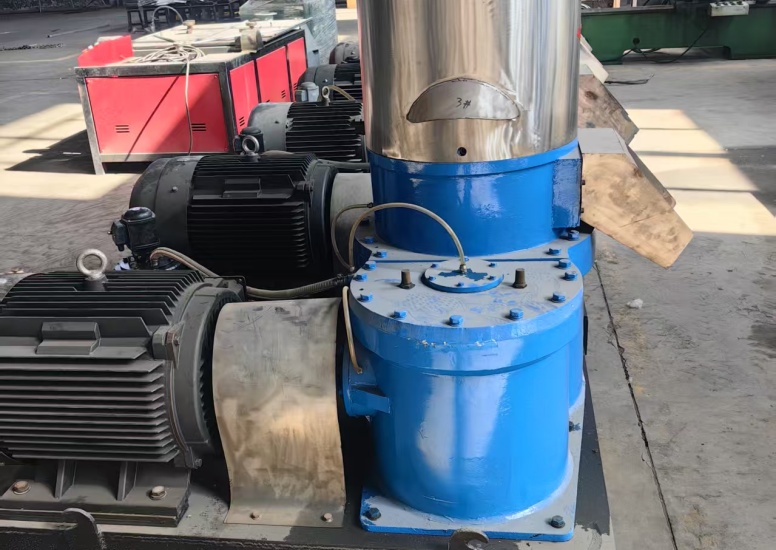
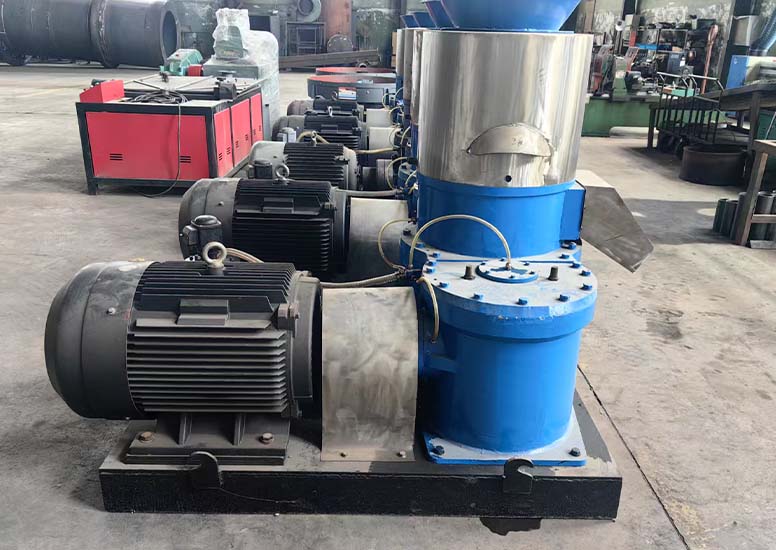
Double roll extrusion granulator (also known as counter roll extrusion granulator, dry counter roll granulator) is a room temperature dry granulation equipment: it relies on a pair of parallel and counter rotating pressure rollers to directly extrude dry powder materials under high pressure, and then crush and screen them to obtain uniform particles without adding water, drying, or using very little adhesive. It relies on the molecular strength/crystal bridge/plasticity of the material itself to achieve bonding.
Forced feeding pre pressing: Powdered materials (with a moisture content generally ≤ 15%) are fed into the double roller wedge-shaped gap through a spiral feeder, and pre pressed to remove air and form a dense material layer.
High pressure roll forming: Two rollers rotate synchronously in reverse, with a hemispherical/cylindrical/strip-shaped mold cavity on the roller surface. Under hydraulic pressure of 15-30MPa, the material is forcefully pressed into the mold cavity, compacted into continuous strips/cakes/ball blanks, and formed by intermolecular forces, crystal bridges, and mechanical bonding.
Demoulding and crushing of whole particles: The formed embryo is demoulded with the rotation of the roller, falls into the crushing device, and is cut/crushed into a set particle size (usually 2-10mm).
Screening and grading cycle: The vibrating screen separates qualified particles, and the fine powder/large block returns to the granulation system, resulting in high material utilization rate.
Host rack: supports the whole and ensures the parallelism of the rollers
Squeezing roller set: active/passive roller, alloy steel/tungsten carbide wear-resistant roller surface, with customized mold cavity, hydraulic/spring pressure adjustment, adjustable roller gap
Transmission system: motor+hard tooth surface reducer+synchronous gear, ensuring consistent speed and reverse rotation of the two rollers
Hydraulic system: provides stable squeezing force, overload protection, and anti jamming
Feeding device: Spiral forced feeding to ensure uniform feeding
Crushing/granulation+screening system: subsequent molding, grading, and material return cycle
Dry process at room temperature, energy-saving and cost reducing: no drying, no large amount of water/adhesive, eliminates the drying process, reduces energy consumption by 30% -60% compared to wet process, has a shorter process, smaller footprint, and lower investment.
High particle strength and good compactness: High pressure forming, high compressive strength of particles, not easily broken, not clumped, easy to store and transport, and uniform dissolution.
Wide applicability and strong adjustability: suitable for dry powder materials such as compound fertilizers, organic fertilizers, ammonium chloride, urea, snow melting agents, mineral powder, chemical raw materials, etc; Roller mold, pressure, and particle size can be adjusted.
Continuous production, environmentally friendly and dust-free: closed operation, low dust, material recycling, no wastewater or exhaust gas, suitable for large-scale continuous production.
Fertilizer: compound fertilizer, compound fertilizer, organic fertilizer, BB fertilizer, nitrogen phosphorus potassium elemental fertilizer (ammonium chloride, urea, monoammonium phosphate, etc.)
Chemical industry: snow melting agents, salts, pigments, graphite, flame retardants, feed additives
Other: mineral powder, coal powder, building materials powder, etc
Not suitable for materials with high humidity, high viscosity, and extremely poor fluidity (such as sticky rollers and blockages)
Roller molds are prone to wear and require regular maintenance/replacement; Materials containing metal impurities are prone to damage the roller surface
 WhatsApp
 Email
Email
 + 8613905485429