Professional Fertilizer Equipment, Straw Processing Equipment, Waste Processing Equipment and Mining Equipment Manufacturer.
Contact Info
Apartemen Neo Soho Lantai 10 Unit 10, Jl. Letjan S parman kav.28, Kel. Tanjung Duren Selatan Kec.
Professional Fertilizer Equipment, Straw Processing Equipment, Waste Processing Equipment and Mining Equipment Manufacturer.
Apartemen Neo Soho Lantai 10 Unit 10, Jl. Letjan S parman kav.28, Kel. Tanjung Duren Selatan Kec.
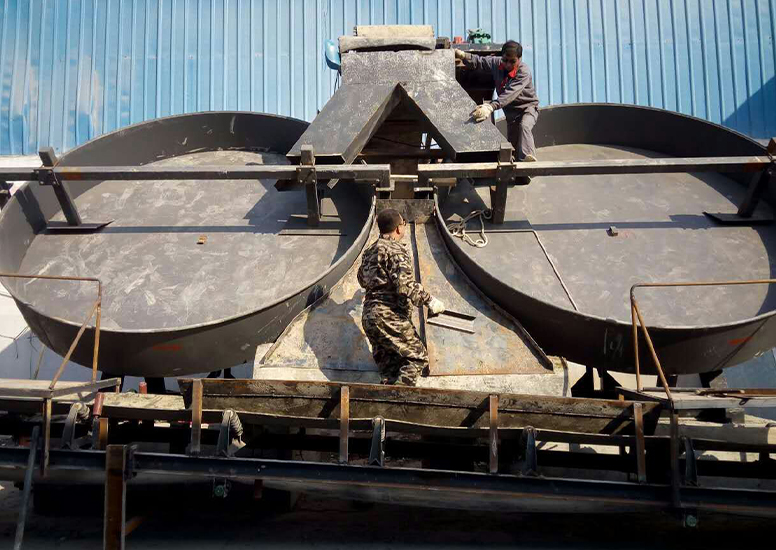
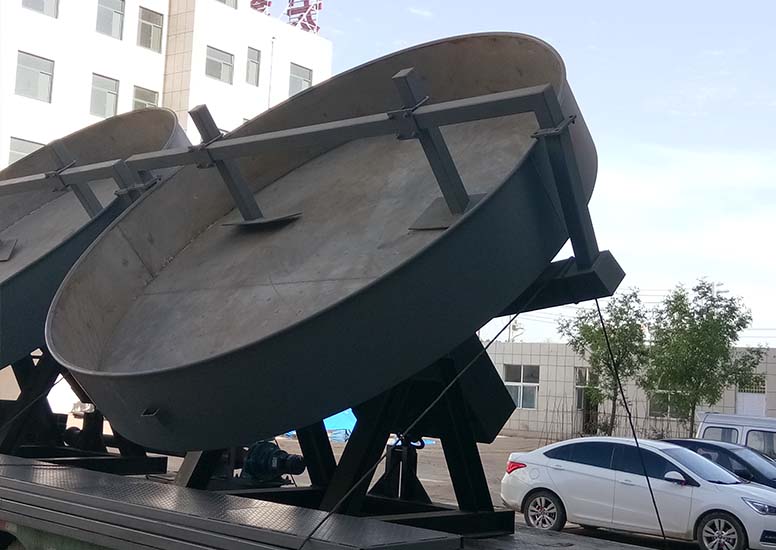
A disc granulator is a continuous wet granulation equipment, widely used for converting powder, fine raw materials into uniform round granules.
1、 Advantages
Good ball formation effect
Round and uniform particles, good appearance, high sphericity, and excellent sales of finished products; The ball formation rate can reach 85% to 95%.
Flexible adjustment and simple operation
By adjusting the tilt angle, rotation speed, water spray rate, and feed rate of the disc, the particle size can be freely controlled with a low operating threshold.
Simple structure and low failure rate
The whole machine has a simple structure, stable operation, few wear parts, convenient daily maintenance, and low maintenance costs.
Continuous production and stable output
It can operate continuously for 24 hours, with synchronous feeding, granulation, and discharging, suitable for small and medium-sized organic fertilizer production lines.
Widely applicable materials
Various powders and fine powders such as chicken manure, cow manure, sheep manure, straw powder, humic acid, sludge, and compound fertilizer powder can be granulated.
Low cost, high cost-effectiveness
The equipment procurement cost and power consumption are relatively low, making it the preferred model for small and medium-sized fertilizer factories.
Wet granulation with less dust
Spray humidification granulation reduces dust during the production process and makes the workshop environment more friendly.
2、 Disadvantages (must see selection)
Suitable for wet granulation, direct granulation of dry materials has poor effect and requires the use of binders/water replenishment;
The particle strength is average, and compared to extrusion granulation, the hardness of the finished product is slightly weaker, requiring subsequent drying and solidification;
Not suitable for materials with high humidity and high viscosity exceeding the standard, which are prone to sticking and material blockage.
1、 Capacity efficiency (common specifications of organic fertilizer operating conditions)
Taking organic fertilizers and conventional compound fertilizers as examples:
Diameter 2.5m small: about 0.8-1.5 tons/hour
Medium size with a diameter of 3.0m: approximately 1.5 to 3 tons/hour
Diameter 3.2-3.5m Large: 3.5-6 tons/hour
It can operate continuously for 24 hours, with continuous production and high overall efficiency.
2、 Particle formation efficiency
High ball formation rate: 85% to 95% under normal operation, with few defective products and powders;
Good particle uniformity, no need for extensive secondary screening rework;
The granulation molding speed is fast, and the material stays in the tray for a short time.
3、 Energy consumption and operational efficiency
Small power and low power consumption, with lower energy consumption per unit output compared to extrusion granulation and rotary drum granulation;
Simple structure, low resistance, smooth operation, no complex transmission, and few downtime due to faults;
Easy adjustment: By adjusting the speed, tilt angle, and water spray volume, the particle size can be quickly switched, and the efficiency of material replacement and debugging is high.
4、 Key factors affecting efficiency
Material: Powder with appropriate fineness and moderate moisture content has the highest efficiency; If the material is too wet to stick to the disc or too dry to form balls, it will significantly reduce production;
Operation: Spray atomization effect and feed uniformity directly affect production capacity and balling rate;
Equipment configuration: Increasing the panel size, installing automatic sprinkler, and variable frequency speed regulation can significantly improve work efficiency.
1、 Core principle
By utilizing the centrifugal force, gravity, and friction of a tilted rotating disk, combined with spray humidification, the powdered material is continuously rolled, clumped, and wrapped layer by layer, gradually rolling into circular particles, which belongs to wet rolling granulation.
2、 Complete workflow
The powdered organic fertilizer raw materials (manure powder, straw powder, humic acid powder, etc.) are uniformly fed into the inclined granulation disc.
The atomization humidification tray is equipped with a spray device that sprays clean water or specialized adhesive to keep the surface of the powder moist and adhesive.
The rolling nucleating disk tilts and rotates at low speed, causing the material to rise, slide, and circulate with the disk surface; Wet fine powders first adhere to each other, forming small particle nuclei.
Layer by layer, the crystal nuclei continue to roll and adhere to the subsequently added dry powder material, wrapping and compacting layer by layer, gradually increasing in particle size.
The forming discharge controls the particle size by adjusting the disc inclination angle, rotation speed, water spray rate, and feed rate; The qualified finished particles automatically overflow from the edge of the disc due to gravity difference, completing continuous granulation.
3、 Key adjustment parameters (determining the quality of particles)
Disk inclination angle: The larger the angle, the faster the discharge and the smaller the particles
Rotary speed: suitable speed, uniform rolling effect, high ball formation rate
Spray water volume: Water is the key to forming clusters, too much sticking to the plate and too little not forming balls
4、 A brief summary
Dry powder+humidification+tilting and rotating rolling → forming small nuclei first → layer by layer coating → rolling into round balls
1、 Fertilizer industry (most commonly used)
Organic fertilizer: Granulation of powdered raw materials such as chicken manure, cow manure, sheep manure, pig manure, straw, humic acid, sludge, and bacterial residue.
Compound fertilizer/compound mixed fertilizer: granulation of nitrogen, phosphorus, potassium powder, mineral fertilizer, and trace element fertilizer.
Granulation of raw materials and auxiliary materials for biological fertilizers, soil amendments, and organic fertilizers.
2、 Chemical industry
Various powdered chemical raw materials, inorganic salts, additives, and wet rolling ball granulation of powder materials.
3、 Metallurgical and mining industries
Mineral powder, iron powder, coke powder, dust removal ash, and metallurgical powder are agglomerated and granulated for subsequent sintering and smelting.
4、 Building Materials and Environmental Protection
Granulation molding of industrial solid waste such as fly ash, lime powder, carbide slag, solid waste powder, desulfurization ash, etc.
5、 Other fields
Granulation and molding of feed raw material granules, clay powder, kaolin, plant ash and other powdery materials.
 WhatsApp
 Email
Email
 + 8613905485429