Professional Fertilizer Equipment, Straw Processing Equipment, Waste Processing Equipment and Mining Equipment Manufacturer.
Contact Info
Apartemen Neo Soho Lantai 10 Unit 10, Jl. Letjan S parman kav.28, Kel. Tanjung Duren Selatan Kec.
Professional Fertilizer Equipment, Straw Processing Equipment, Waste Processing Equipment and Mining Equipment Manufacturer.
Apartemen Neo Soho Lantai 10 Unit 10, Jl. Letjan S parman kav.28, Kel. Tanjung Duren Selatan Kec.
Latest news and technology on fertilizer equipment, straw processing equipment, waste processing equipment and mining equipment.
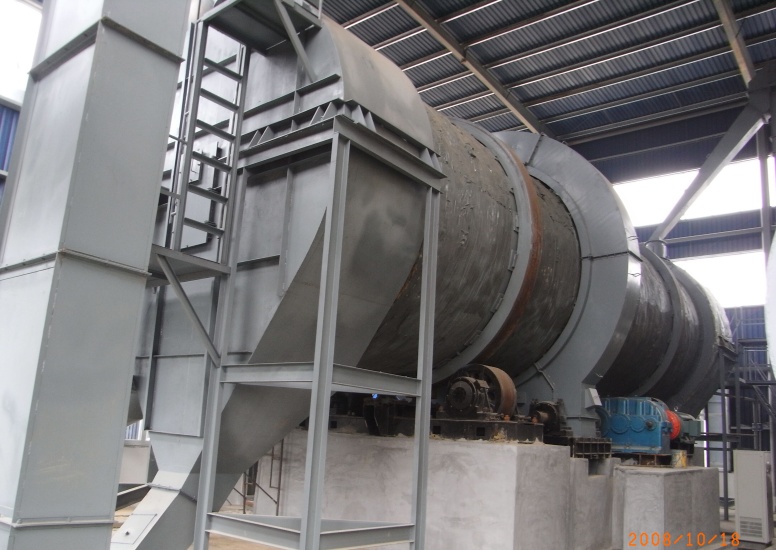
A compound fertilizer spray granulation production line is an industrial system designed to manufacture granulated compound fertilizers—fertilizers containing two or more essential plant nutrients (such as nitrogen, phosphorus, and potassium) in a single, uniform granule. This production line uses spray granulation technology, a process where liquid or slurry materials are sprayed into a granulator to form spherical granules through controlled conditions. It is widely used in modern agriculture for its ability to produce high-quality, efficient, and customizable fertilizers. Below is a detailed breakdown of its components, working principles, advantages, and applications. Compound Fertilizer Spray Granulation Production Line Key Components of…
Read More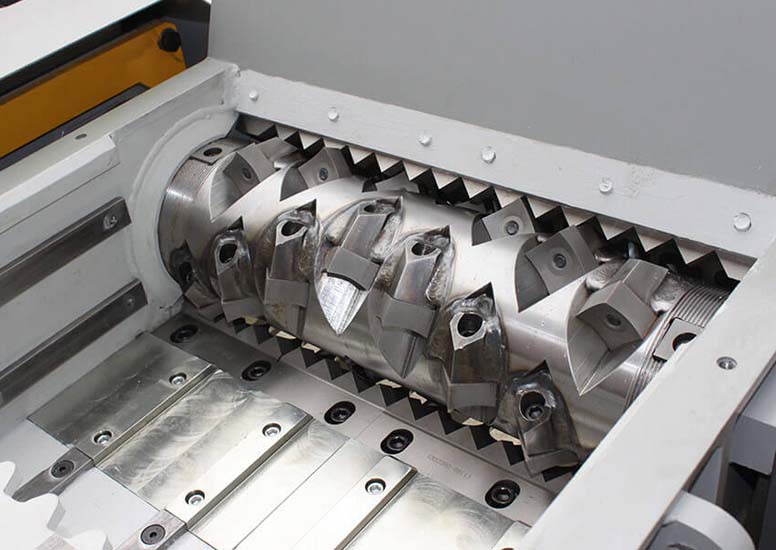
A Compound Fertilizer Stirring Gear Granulation Production Line is a professional industrial system designed for manufacturing compound fertilizers (NPK fertilizers, multi-nutrient fertilizers) through the stirring gear granulation process. It integrates multiple functional units to realize continuous, automated production from raw material preparation to finished fertilizer granulation, screening, and packaging. Below is a detailed breakdown of its core components, working principle, characteristics, and application scenarios: Compound Fertilizer Stirring Gear Granulation Production Line Core Definition & Core Purpose Key Concept: It uses a "stirring gear granulator" as the core equipment, combining mechanical stirring, gear extrusion, and material collision to granulate powdery compound fertilizer raw materials (e.g.,…
Read More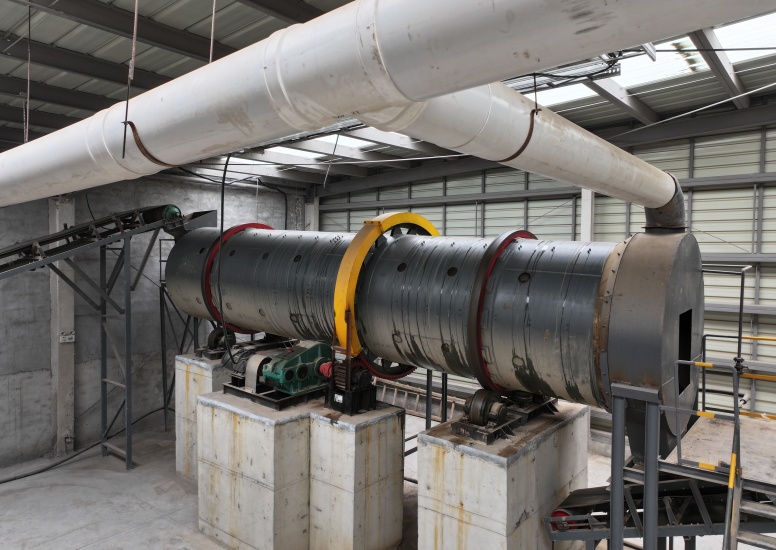
The compound fertilizer liquid ammonia dilute sulfuric acid granulation production line is a dedicated production line that produces granular compound fertilizers as the final product, using liquid ammonia and dilute sulfuric acid as core raw materials, and employs granulation technology for production. Compound fertilizer liquid ammonia dilute sulfuric acid granulation production line Core Definition & Purpose The production line integrates chemical reactions, mixing, granulation, drying, and screening. It mainly converts liquid ammonia (a nitrogen source) and dilute sulfuric acid (a sulfur source) into ammonium sulfate (a basic nitrogen-sulfur fertilizer) through neutralization reactions. It then mixes with other nutrient raw materials…
Read More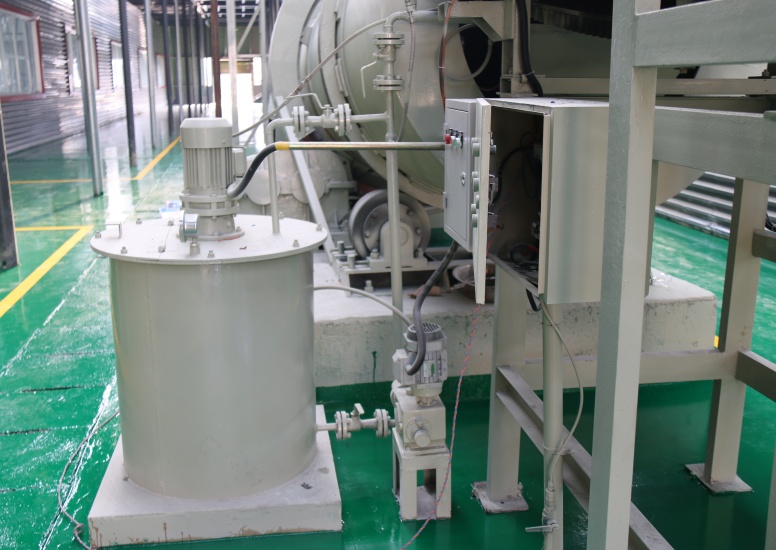
A Urea Melting Granulation Production Line is a specialized industrial system for producing granular urea fertilizer by melting urea raw materials and shaping them into uniform particles. Urea Melting Granulation Production Line Core Definition It is a continuous production line that converts solid urea (prills or crystals) into molten state through heating, then forms granular products via granulation equipment, and finally completes cooling, screening and packaging. It is the mainstream production technology for high-quality granular urea. Urea Melting Granulation Production Line Key Components and Working Process Melting System: Urea is heated to 132-138°C (melting point of urea) in a melter,…
Read More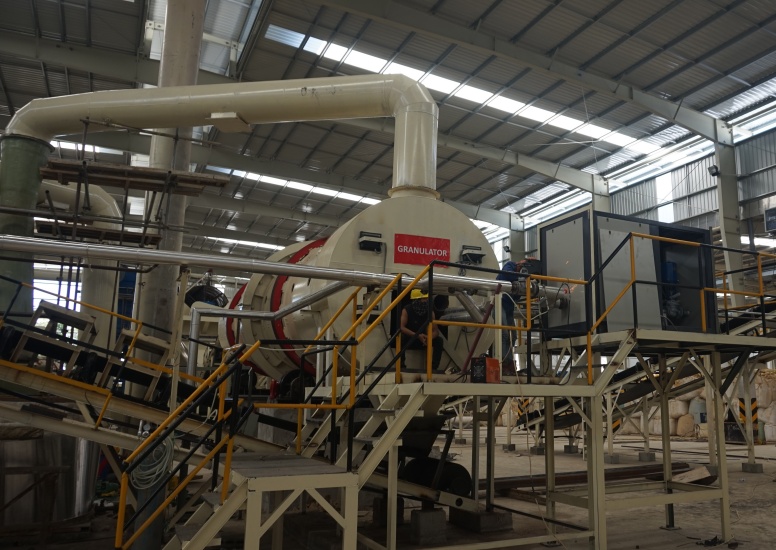
Compound fertilizer equipment is a complete set of production equipment used to process multiple nutrients (nitrogen, phosphorus, potassium, etc.) into granular, powdery, or columnar compound fertilizers. The core is to achieve raw material mixing, granulation, shaping, and post-treatment to meet the nutritional needs of different crops. Core definition and function of compound fertilizer equipment Compound fertilizer equipment is not a single machine, but a production line composed of multiple devices. Its core function is to process single element fertilizers such as urea, monoammonium phosphate, potassium chloride, organic fertilizers, minerals and other raw materials into compound fertilizer products with uniform…
Read More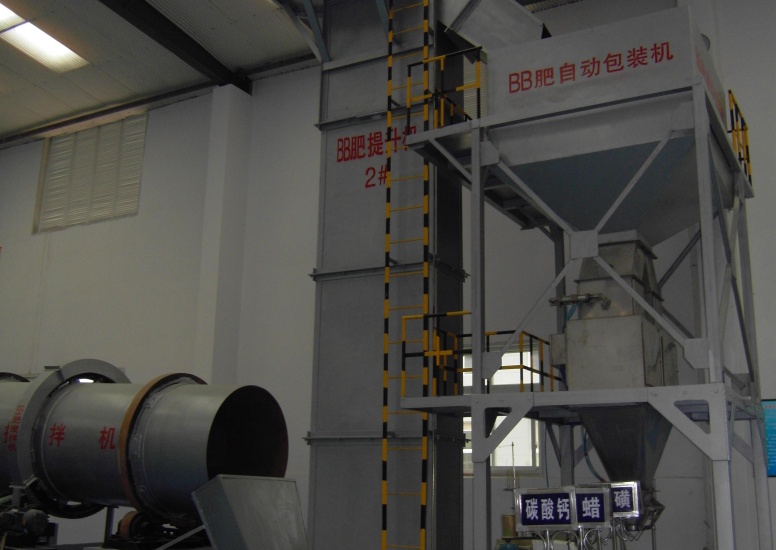
BB Fertilizer Production Equipment refers to the specialized machinery system used to produce Bulk Blending (BB) fertilizer, a type of compound fertilizer made by physically mixing multiple single-nutrient fertilizers (such as urea, ammonium phosphate, potassium chloride) without chemical reactions. BB Fertilizer Production Equipment Core Functions High ingredient accuracy: Equipped with electronic weighing, volumetric measurement and other precise ingredient systems, it can accurately feed according to the preset proportions of nitrogen, phosphorus, potassium and trace elements, with a coefficient of variation usually ≤ 5%, ensuring consistent nutrient ratios for each batch of fertilizer. Strong mixing uniformity: The core equipment (such as…
Read More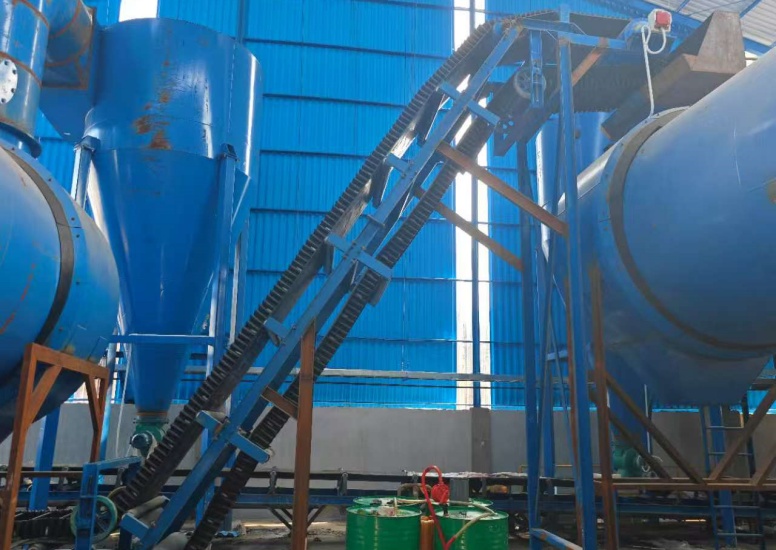
An incline conveyor is a material handling device designed to transport items at an upward or downward angle between different elevations. Incline Conveyor Core Features It has a sloped conveying surface (belt, roller, or chain-driven) to move goods vertically while maintaining stability. Equipped with anti-slip mechanisms (e.g., cleated belts, side guards) to prevent items from sliding during incline/decline travel. Used to connect workstations, storage areas, or processing stages at different heights, eliminating manual lifting. Incline Conveyor Common Applications Manufacturing: Moving parts between assembly lines on different floors. Warehousing: Loading/unloading goods from trucks or conveying packages to mezzanine storage. Food processing: Transporting bulk…
Read More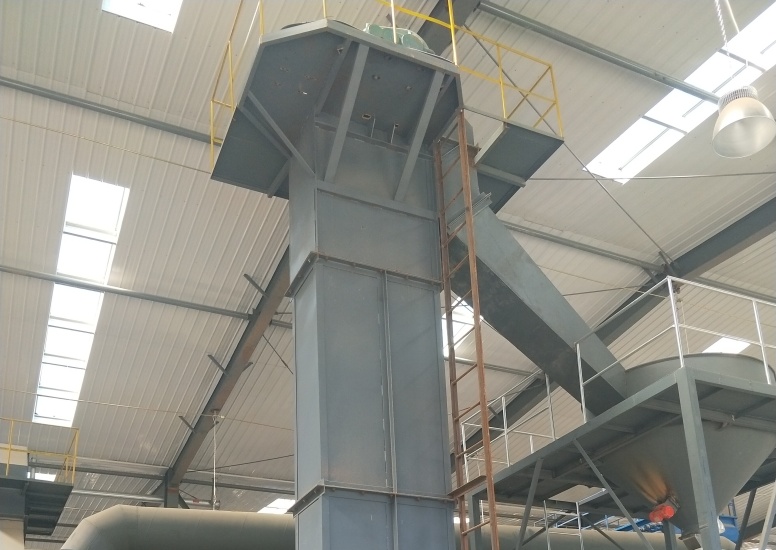
A bucket elevator is a continuous conveying machine that vertically lifts materials by using a series of buckets uniformly fixed on an endless traction member. The following is a detailed introduction: Basic Structure: It mainly consists of five major parts, namely the head, drive device, intermediate box, tail, and lifting components. The head houses the drive mechanism; the drive device transmits power to the head spindle; the intermediate box supports most of the machine's weight; the tail ensures the tension of the chain or belt; and the lifting components include chains or belts and buckets. Working Principle: The drive…
Read More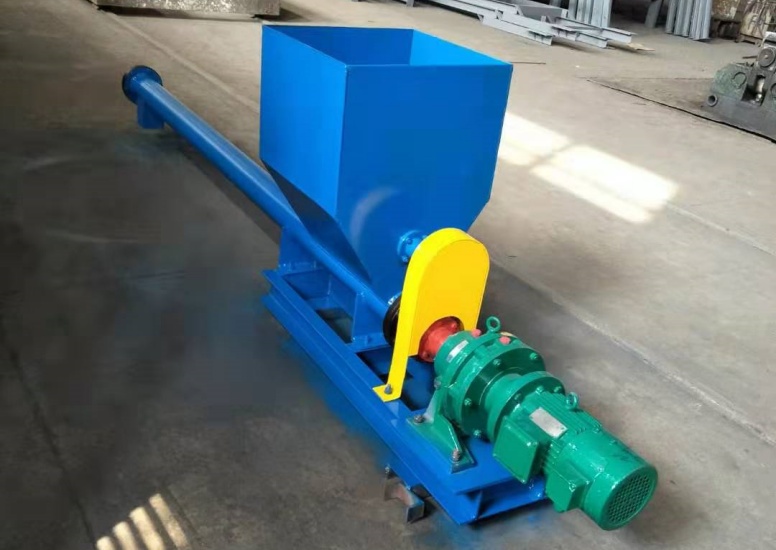
A screw conveyor is a mechanical device used to transport bulk materials (such as powders, granules, or small lumps) horizontally, inclinedly, or vertically. It relies on a rotating helical screw blade to push materials forward along a fixed trough or pipe. Screw Conveyor Core Working Principle The screw blade is driven by a motor and reducer to rotate continuously in the trough/pipe. When rotating, the blade generates axial thrust, which pushes the material in contact with it to move from the feed end to the discharge end. The trough/pipe acts as a closed or semi-closed container to prevent material leakage and ensure…
Read More WhatsApp
 Email
Email
 + 8613905485429